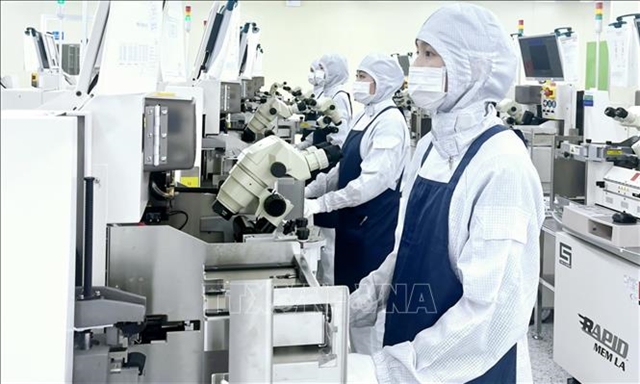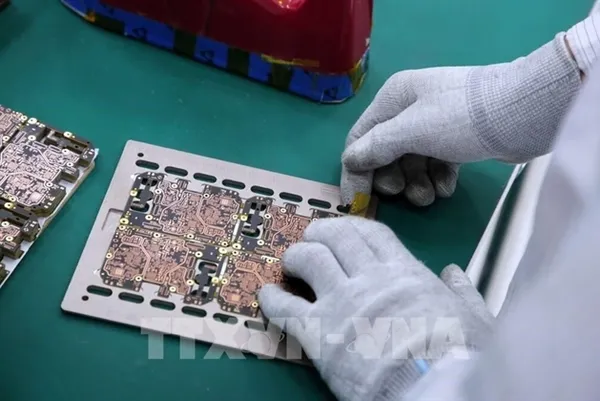
As global semiconductor supply chains are restructured, experts said Việt Nam’s opportunity lies not only in attracting projects but also in accumulating knowledge, technology and management expertise to move into higher-value activities.
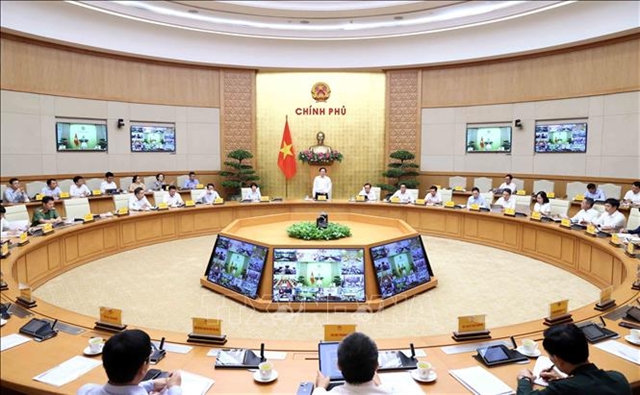
Deputy Prime Minister Hồ Quốc Dũng urged ministries, research institutes, universities and enterprises to point out inadequate regulations to strengthen the commercialisation of research outcomes.
Bilateral meetings between leaders of the Ministry of Science and Technology and international partners are also expected to be held on the sidelines of the event.
From Singapore’s perspective, connecting VNeID with Singpass could lay the foundation for a bilateral digital corridor, opening up greater opportunities for cooperation in trade, investment, services, tourism and finance.
The ministry has approved two research and development projects in September, proposed by military-run Viettel Group and state-owned Vietnam Posts and Telecommunications Group (VNPT).
According to a research released in 2026 by the International Labour Organization (ILO), around 11.5 million workers in Việt Nam – about one in five – are in occupations where some tasks could be affected by generative AI (GenAI).
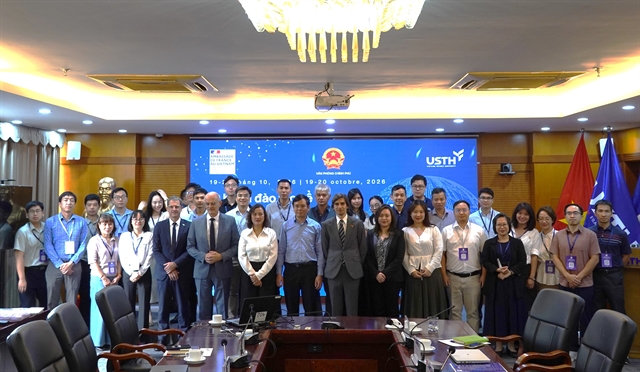
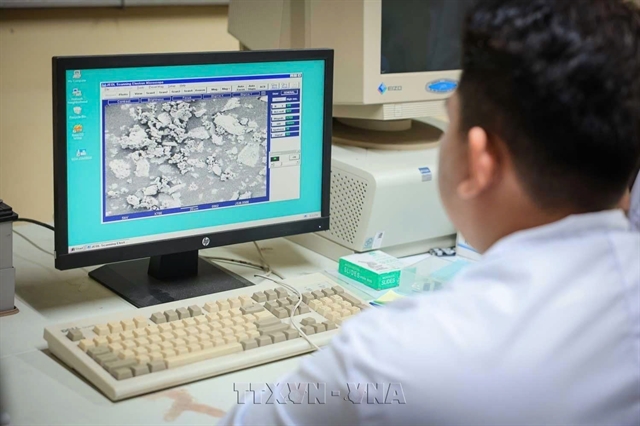
The University of Science and Technology of Hà Nội held a training programme to help State officials make well-informed decisions about semiconductor development projects.
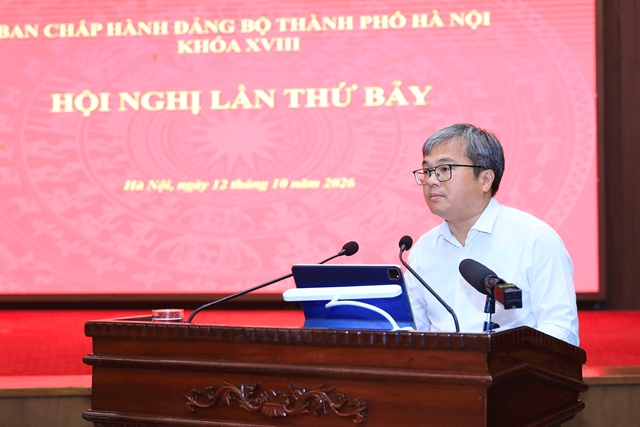
Value-added contribution from science, technology and digital transformation accounts for about 23 per cent of Hà Nội’s gross regional domestic product during the first nine months of the year, according to vice chairman of the city's People's Committee Trương Việt Dũng.
Việt Nam’s semiconductor exports grew at a compounded annual rate of 31.8 per cent between 2006 and 2025, while imports grew by 30 per cent a year during the same period.
AI is transforming workplaces, but experts say human judgement, critical thinking and the ability to apply knowledge to real-world problems will remain essential as technology accelerates.
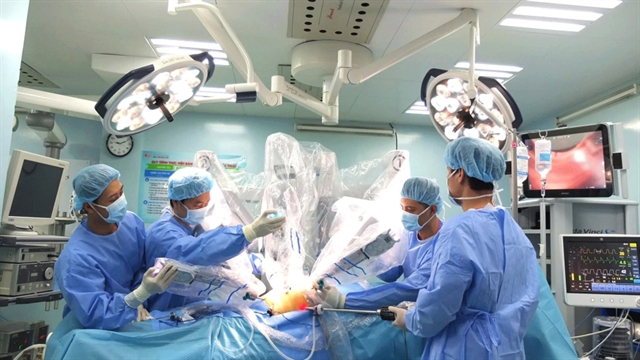
With 34 transplant centres now operating nationwide, Việt Nam has moved beyond single-organ procedures to master complex multi-organ and domino transplantation – advances now under the spotlight as related research is considered for the Hồ Chí Minh Prize for Science and Technology.
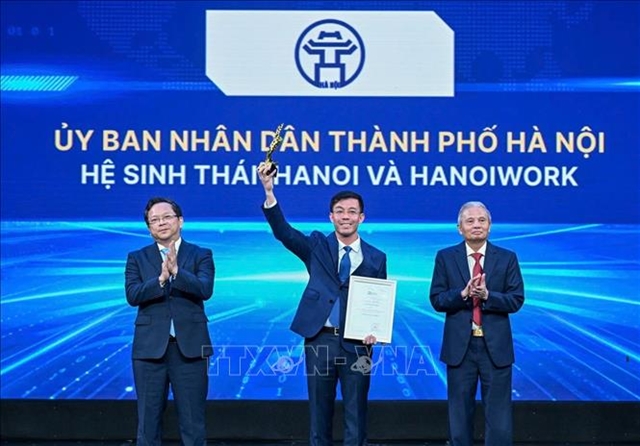
The award ceremony took place in Hà Nội on Wednesday, during which 56 organisations, products, solutions and three outstanding individuals were recognised.
The project aims to address fragmented, dispersed and overlapping programmes, improve resource efficiency, and strengthen links between research, application, technology transfer and commercialisation.
From 2028 to 2030, the project aims to complete the development of a centralised legal data repository, integrating 100 per cent of legal data sources from ministries, agencies and localities. It will also establish a National Legal Knowledge Graph to support smart search, analysis and data use, as well as digital applications for lawmaking and law enforcement.
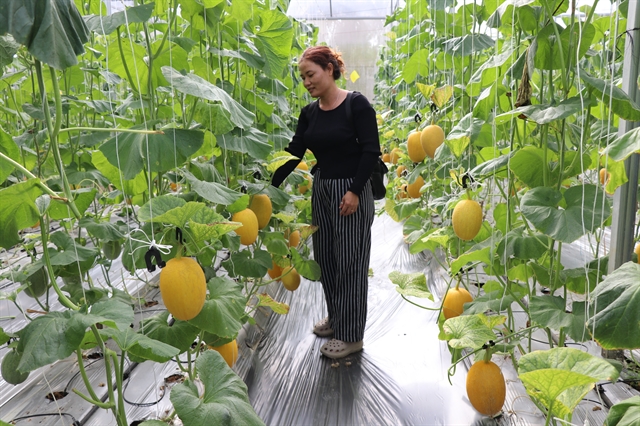
A landmark special project leveraging Resolution 57 is set to dismantle institutional bottlenecks and deploy regulatory sandboxes, shifting Việt Nam's primary agricultural hub toward sustainable, double-digit growth.
In implementing Politburo Resolution No. 57-NQ/TW dated December 22, 2024, on breakthroughs in science, technology, innovation and national digital transformation, Hải Phòng City has identified science, technology and innovation as important drivers of its new growth model.
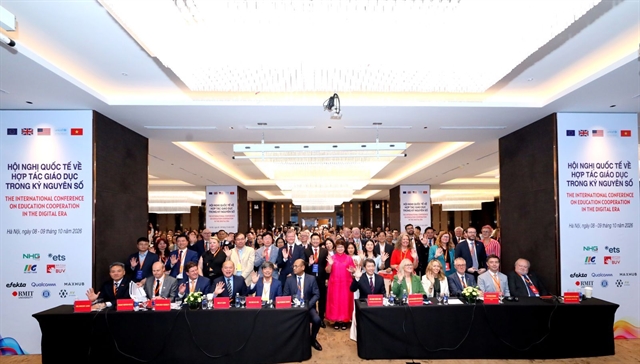
As artificial intelligence reshapes teaching, learning and education management, Việt Nam and international partners are exploring ways to harness technology safely and responsibly while ensuring equal learning opportunities for all.
Programme 562 focused on four fields, including chemistry, life sciences, earth sciences and marine sciences. Its main objectives were to develop highly qualified scientists and strong research groups, improve Việt Nam's scientific standing in the region and the world, and promote basic research with application-oriented, interdisciplinary and multidisciplinary approaches.