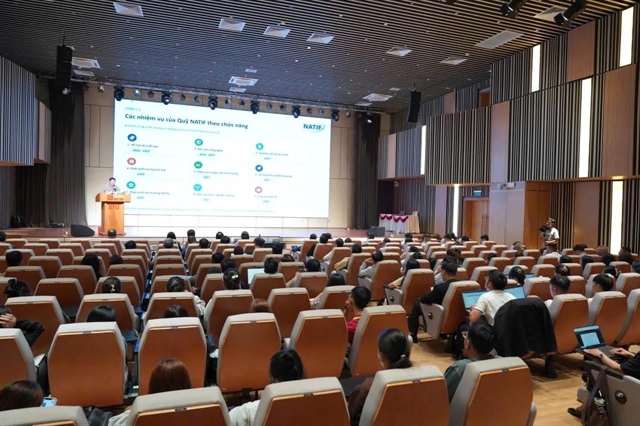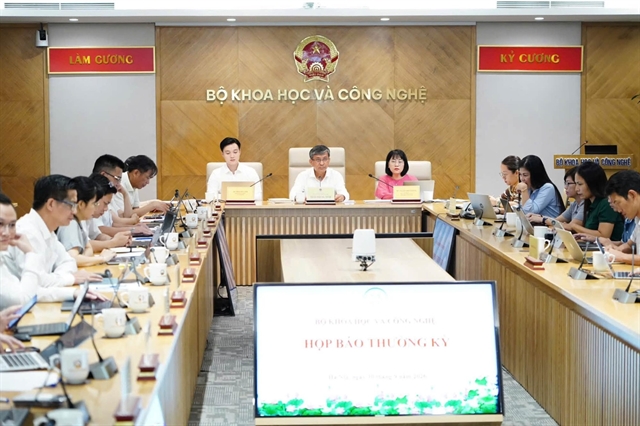
The National Technology Innovation Fund plans to fund up to 15 artificial intelligence projects in 2026, offering businesses state support of up to VNĐ3 billion per task, while laying the groundwork for wider technology innovation backing the following year.
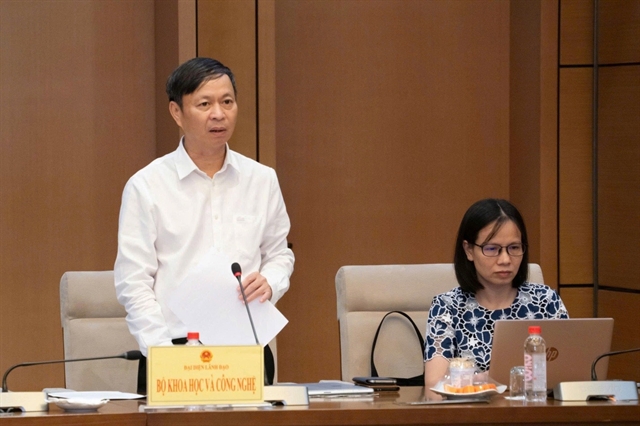
The Ministry of Science and Technology said Việt Nam will continue to harness the benefits of AI while enhancing governance capabilities commensurate with the risks that AI systems may cause.
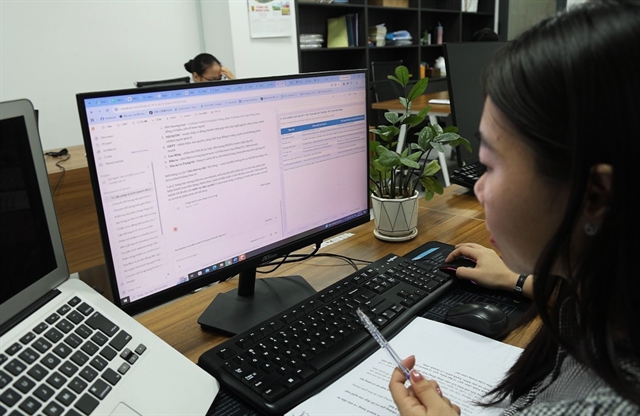
Việt Nam ranked second in Southeast Asia for the usage of generative artificial intelligence (AI) in the second quarter of 2026.
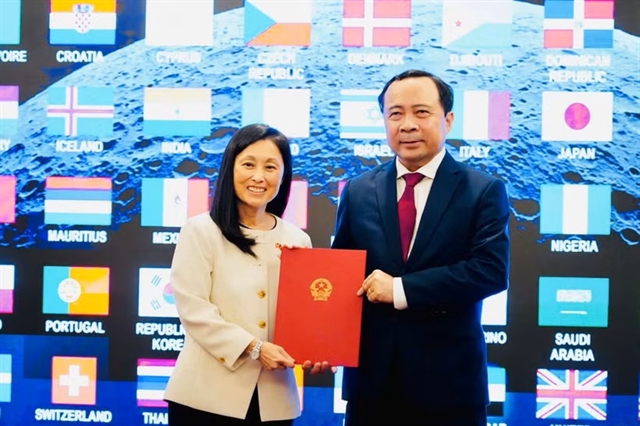
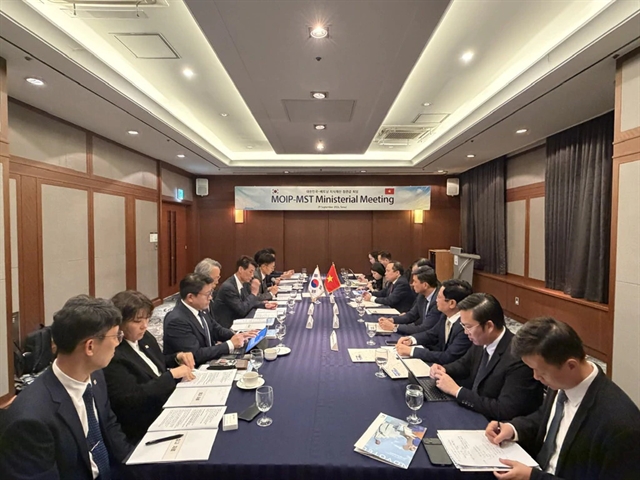
Vietnamese and South Korean leaders agree to boost cooperation in three key intellectual property areas during a high-level meeting.
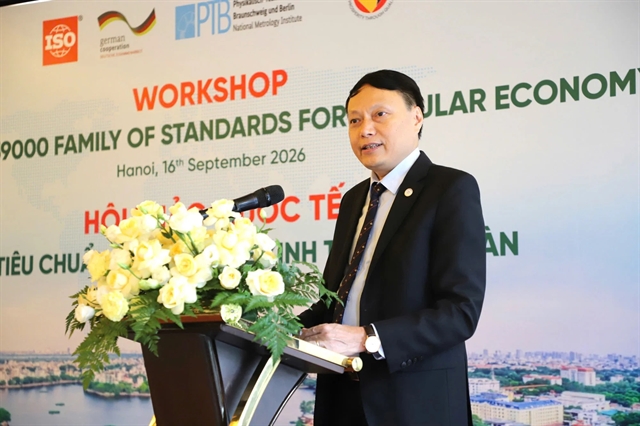
The ISO 59000 standards are expected to provide a unified framework for Vietnamese enterprises to progress from isolated recycling efforts to a systematic, measurable, and scalable circular economy model. Integrating these standards with robust data, accurate measurement, and sustainable production practices is vital to accelerating the nation's green transition.
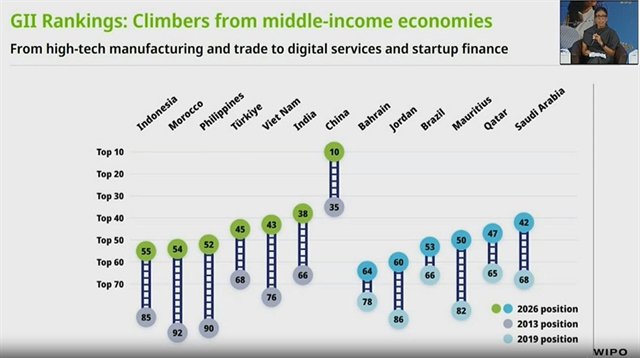
WIPO recognises Việt Nam as one of seven middle-income economies that have improved their rankings the fastest since 2013, alongside China, India, Türkiye, the Philippines, Morocco and Indonesia.
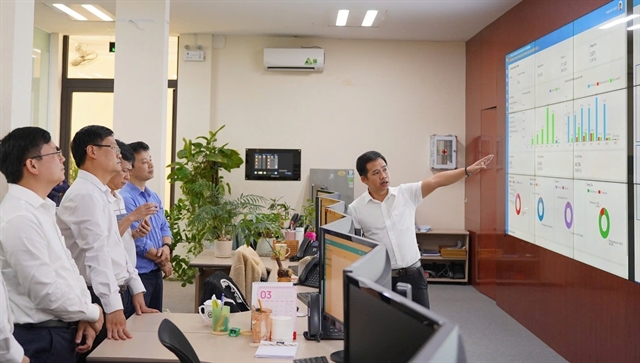
The city's Smart Urban Operations and Monitoring Centre (IOC) has worked with the Sub-Department of Irrigation and Climate Change to integrate the radar data into Hue-S.
NATIF plans to select and sign contracts for about 15 key AI application projects in 2026. From 2027, the programme is expected to expand to around 50 projects annually.
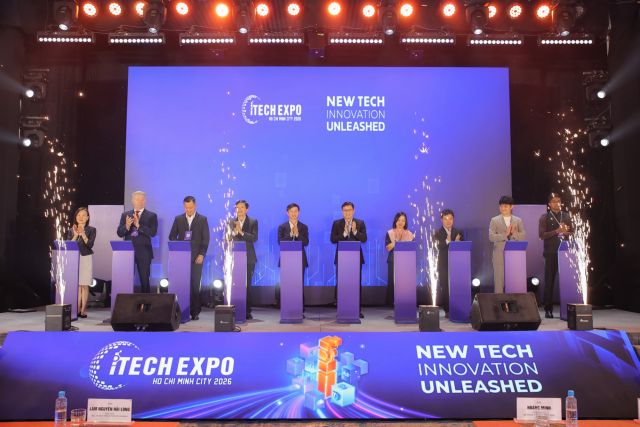
A series of high-level forums and technological exhibitions will kick off in Hà Nội to mark National Innovation Day 2026, aiming to turn research into a main driver for socio-economic growth and realise the goals of Resolution 57.
Rapid growth in broadband speeds, 5G subscriptions and next-generation networks is helping Việt Nam move beyond expanding connectivity towards building a modern, high-capacity and more inclusive digital infrastructure.
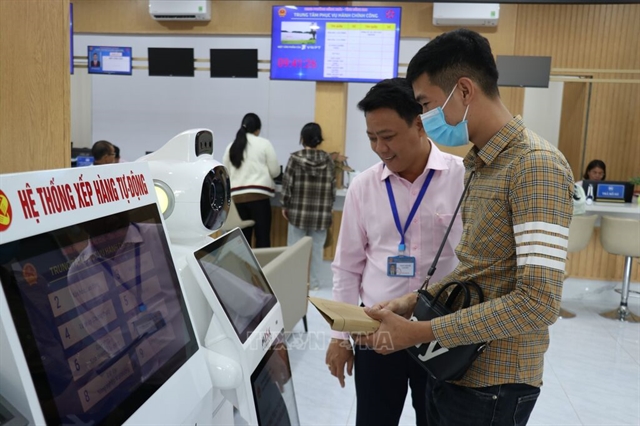
A receptionist robot and multi-channel AI system deployed at a ward-level public administrative centre in Đồng Nai City have lifted online submission rates to 100 per cent and earned the centre a near-perfect satisfaction score.
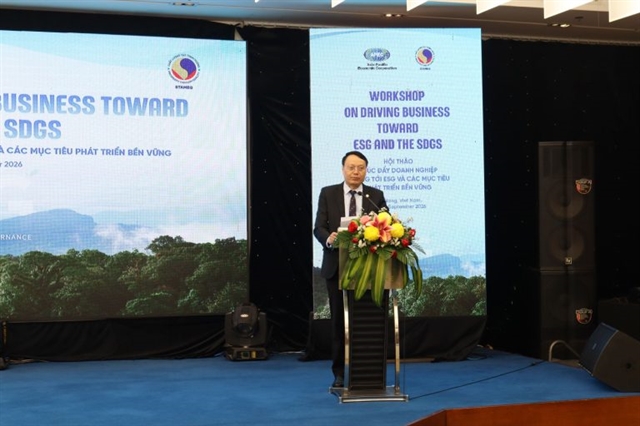
Experts at the APEC workshop, titled 'Driving Business toward ESG and the SDGs', proposed strengthening the links between ESG, standards, conformity assessment and sustainable business development.
Việt Nam proposes abolishing 18 intellectual property administrative procedures and cutting five business conditions under a draft law amending the Law on Intellectual Property, aiming to make it easier for individuals and businesses to establish and exercise IP rights.
The policy shift marks a significant step towards the country's goal of ranking among the world's top 50 in the E-Government Development Index (EGDI) by 2030, positioning cloud as the foundation of next-generation digital government.
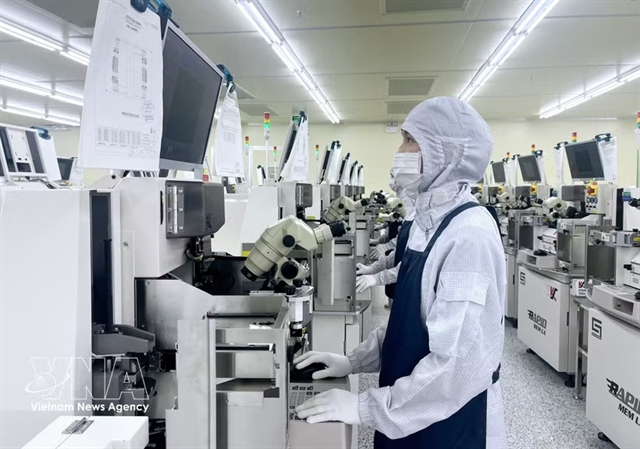
VJSS-2026 provides a platform for scientists, experts and businesses to discuss the latest advances across a wide range of areas, from chip design, semiconductor components and materials to manufacturing, packaging and testing technologies, artificial intelligence and quantum computing.
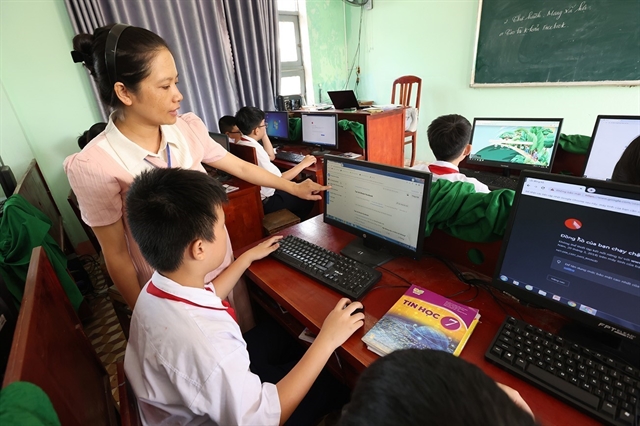
The increasing use of digital data, AI, STEM and robotics is helping make technology a practical tool for education management and teaching in Gia Lai Province, providing a foundation for students to develop scientific thinking, digital skills and the ability to adapt to the changing requirements of learning and work.
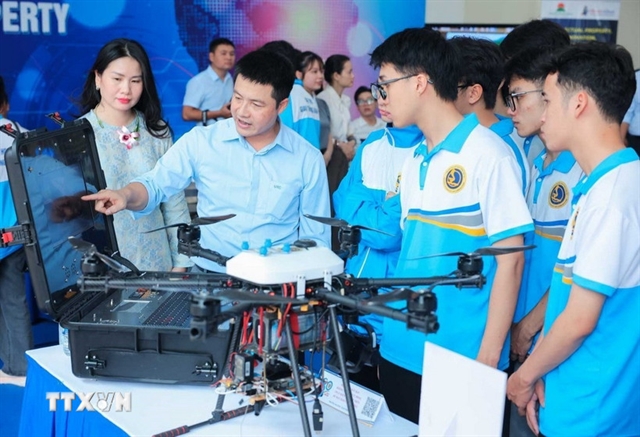
From artificial intelligence and unmanned aerial vehicles to digital platforms, Lai Châu Province is applying new technologies to address challenges posed by its rugged terrain and dispersed population, while improving production, management and disaster response.
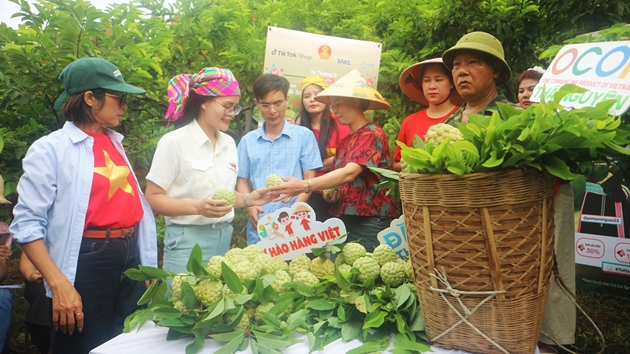
From emission-reducing rice farming and building carbon credits to digitalizing custard-apple orchards, managing tea areas with digital platforms, applying artificial intelligence (AI), the Internet of Things (IoT) and unmanned aerial vehicles (UAVs), Thái Nguyên's agriculture is steadily shifting from traditional production to a high-tech and eco-friendly agricultural sector.