 Sci-Tech
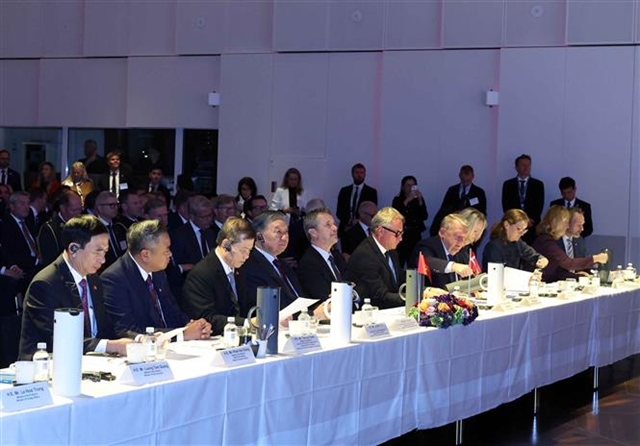
General Secretary and President Tô Lâm witnesses exchange of Việt Nam-Denmark cooperation agreements
1.
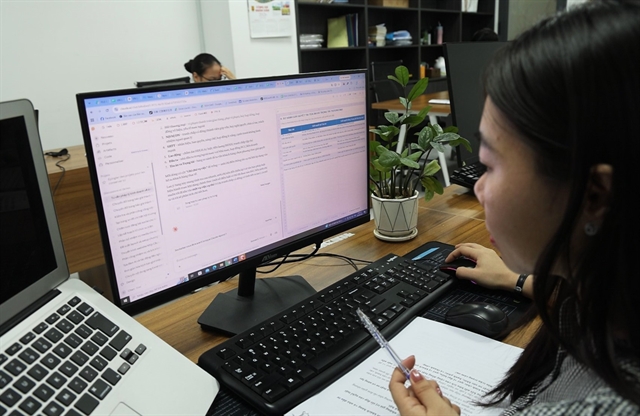 |
| A woman is using an AI to check information. — VNA/VNS Photo Hồng Đạt |
HÀ NỘI — Việt Nam ranked second in Southeast Asia for the usage of generative artificial intelligence (AI) in the second quarter of 2026, with 27.9 per cent of its working-age population using a generative AI product, according to a report by Microsoft's AI Economy Institute.
The figure rose 1.4 percentage points from 26.5 per cent in the first quarter, putting Việt Nam 33rd among the economies covered by Microsoft Global AI Diffusion report.
Singapore led the region with an AI user share of 64.3 per cent and ranked second globally behind the United Arab Emirates at 73.3 per cent.
Việt Nam's diffusion rate was higher than those of other Southeast Asian economies such as Malaysia 22.6 per cent, the Philippines 20.7 per cent, Indonesia 14.8 per cent and Thailand 13.4 per cent.
Việt Nam's quarterly increase of 1.4 percentage points also exceeded the gains recorded by Malaysia, the Philippines, Indonesia and Thailand.
Globally, AI usage was 18.8 per cent of the working-age population worldwide, an increase of about 1 per cent from the first quarter of this year. Microsoft said almost every economy covered by the index recorded growth.
Việt Nam's 27.9 per cent rate was also substantially above the 16.2 per cent average recorded for the Global South, a group that Microsoft places Việt Nam in. The Global North recorded an average rate of 28.8 per cent.
The report pointed out that said the gap between the two groups widened in the second quarter, with the difference reaching 12.6 percentage points, compared with 12.1 points in the first quarter.
Microsoft said differences in digital infrastructure, internet connectivity, access to devices and digital skills may contribute to variations in AI adoption between markets.
In developing economies, generative AI is being used relatively heavily for self-learning, skills development and educational support, the report said, with younger populations contributing to that trend.
By comparison, users in the Global North showed relatively greater use of AI for consumer activities including shopping, information searches and feedback. In the Global South, creating and editing text, code and images also accounted for relatively larger shares of use.
The report also highlighted open-weight AI models as a potential way to lower barriers to AI access in developing economies. Such models can be downloaded, modified and deployed by organisations, potentially reducing costs and allowing adaptation to local languages and needs.
But Microsoft said open-weight models cannot remove underlying constraints such as internet connectivity, electricity, digital skills and computing infrastructure.
Microsoft defines AI diffusion as the share of people aged 15 to 64 who have used a generative AI product during the reporting period.
This measure is derived from aggregated and anonymised Microsoft telemetry data and is adjusted to reflect differences in operating system and device-market share, internet penetration, and population.
The data therefore measure the use of generative AI products rather than overall AI deployment across an economy, including corporate or government systems that may not be captured by Microsoft's telemetry. — BIZHUB/VNS
Sci-Tech
 Sci-Tech
 Sci-Tech
 Sci-Tech
 Sci-Tech
 Sci-Tech
 Sci-Tech
 Sci-Tech
 Sci-Tech
 Sci-Tech
 Sci-Tech
 Sci-Tech
 Sci-Tech
 Sci-Tech
 Sci-Tech