 Society

Private conglomerates expand economic contributions through jobs, taxes and investments
1.
|
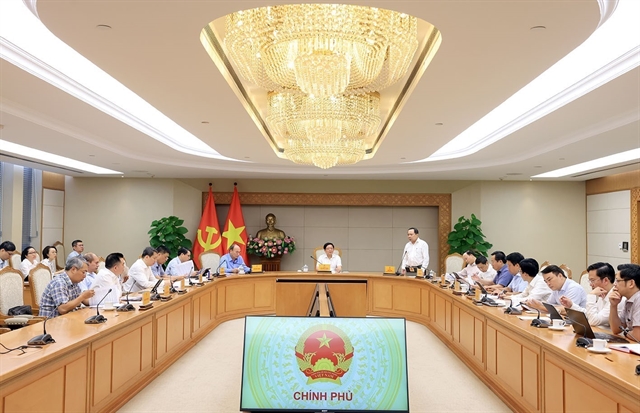
| Deputy Prime Minister Hồ Quốc Dũng chairs a meeting on strategic technology projects on Tuesday. — VNA/VNS Photo |
HÀ NỘI — Deputy Prime Minister Hồ Quốc Dũng on Tuesday urged ministries and agencies to finish approving pending strategic technology projects by the end of October and said no approved project should be left without funding.
Chairing a meeting with ministries and agencies, the Deputy PM set a target of at least 20 approved projects under the Government’s strategic technology programme, up from 17 so far.
The Ministry of Science and Technology, which coordinates the programme, said it has received 29 proposals under a prime- ministerial decision on June 5 assigning the work.
Six were ruled ineligible and 17 had been approved as of Monday, with total proposed funding of more than VNĐ2.3 trillion (US$90 million), of which 65.5 per cent is expected to come from the state budget.
Of the other six qualified proposals, two were put on hold by their sponsoring agencies, and four await approval. Ten more proposals have arrived since early September; three have been ruled ineligible and the rest are still being processed.
The ministry said the projects approved or awaiting approval focus on fields where Việt Nam still relies heavily on imported technology and equipment but has enough domestic demand to build production capacity, from space and high-speed rail to artificial intelligence and banking.
The construction and health ministries account for 10 of the 17 approved projects.
The senior official stressed funding in particular. He told the Ministry of Science and Technology to guide other ministries complete their funding requests, work with the finance ministry to allocate 2026 money quickly and start preparing the 2027 funding plan now.
He called for any bottlenecks in allocating money to be cleared promptly, and told ministries to register projects for 2027 so the programme continues without interruption.
He also told the science and technology ministry to lead the development of a unified mechanism with the public security and defence ministries and to issue a circular on managing the programme in November.
The ministry said it is finalising the circular, which will cover how projects are monitored, inspected, evaluated and accepted, and that issuing it will not delay approvals or contract signings this year.
Dũng asked the ministry to review rules on testing, standards, inspection and licensing for strategic technology products, saying any changes must speed up approvals and not interrupt the work. He also asked it to hold monthly meetings to track progress and resolve problems.
The legal framework is largely in place, the ministry said, and difficulties now arise mainly in individual cases. But approvals have been uneven, and three delayed projects risk holding up the selection of lead organisations, contract signings and the start of work this year.
Some proposals that were appraised were not approved by their sponsoring agencies, mostly because they did not meet the criteria set out in Decree 260, failed to show they could master core technology, or were vague about end products, local content and value for state money.
Others identified the right problem but amounted largely to equipment purchases and digitalisation, with little novelty or genuine research and development.
The Deputy PM urged ministries to act boldly. The aim, he said, is to create strategic technology products that solve national development problems, raise productivity and quality, serve people and businesses and spur growth.
Ministries at the meeting cited a lack of hands-on experience in new fields and proposed closer cooperation with research institutes and businesses to speed up commercialisation.
How the approved projects fare against their first evaluation milestones in 2027 will guide changes to the programme before it expands, the science and technology ministry said. — VNS
Society
 Society
 Society
 Society
 Society
 Society
 Society
 Society
 Society
 Society
 Society
 Society
 Society
 Society
 Society