 Society
Police rescue two foreign tourists lost in Đà Nẵng forest
1.
|
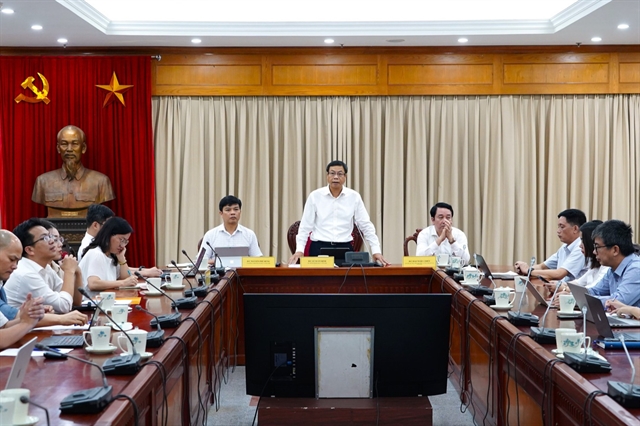
| Deputy Minister of Science and Technology Lê Xuân Định speaks at the conference on Thursday to launch the special national programme on science, technology and innovation in strategic technologies. Photo baochinhphu.vn |
HÀ NỘI — Deputy Minister of Science and Technology Lê Xuân Định has called for a shift from proposing research topics to developing strategic technology products with concrete outputs, mastery of core technologies and clearly identified users, helping bring research results into practical applications and the market.
The Ministry of Science and Technology is currently receiving proposals for strategic technology development tasks under the special national programme, with submissions open until September 30, 2026.
Speaking at a conference on Thursday to launch the special national programme on science, technology and innovation in strategic technologies, Định said the legal framework for strategic technology development was basically in place. The focus now is on high-quality implementation and substantive participation from businesses, research institutes, universities and localities.
For tasks requiring large investments, long development periods and carrying high risks but capable of generating widespread impacts, the State should identify the problems to be addressed, share risks and help create initial markets, he said.
Orders for technology development tasks should stem from actual user needs and include specific technical requirements, milestones, intended recipients and clearly assigned responsibilities. State agencies should define the problems and objectives, while businesses, research institutes, universities and end users should be involved from the task-design stage.
For technologies that are sufficiently mature to be developed into products, businesses should take the lead in finalising, manufacturing and commercialising them. For technologies still at the research stage, research institutes and universities should play the leading role, with support from public research organisations.
The deputy minister noted that some strategic technology tasks had already been proposed, evaluated and approved, but business participation and non-State funding remained below the level expected under the programme.
It is therefore necessary to make a clear shift from ‘proposing research topics’ to ‘proposing products’, accompanied by commitments on resources and the capacity to address specific problems, he said.
The programme’s effectiveness should be assessed based on mastery of core technologies, the products developed, the social resources mobilised, and the products’ ability to be applied and penetrate the market, he added.
Định also highlighted three key requirements for implementing the programme.
First, the roles of each stakeholder must be clearly defined. Ministries and sectors should publicly call for proposals, select the right problems to address and ensure progress. Local authorities should proactively identify needs, facilitate pilot projects and the use of new products, and help create markets for them. Businesses, research institutes and universities should participate from an early stage and clearly define the expected products, core technologies, resources and intended users.
Second, bottlenecks related to procedures, documentation, financial mechanisms, intellectual property, counterpart funding, testing and product acceptance need to be addressed.
Third, transparency and quality must be ensured throughout the process, from calling for proposals and approving tasks to selecting lead organisations. Selection should be based on actual capacity rather than the number of tasks, with each task required to have strategic significance, feasibility, technological capacity, sufficient implementation resources and a clear pathway to a product with an identified application.
Định asked relevant agencies to urgently carry out their responsibilities and work closely with the Ministry of Science and Technology to move the programme from a policy framework to practical implementation. — VNS
Society
 Society
 Society
 Society
 Society
 Society
 Society
 Society
 Society
 Society
 Society
 Society
 Society
 Society
 Society