 Society
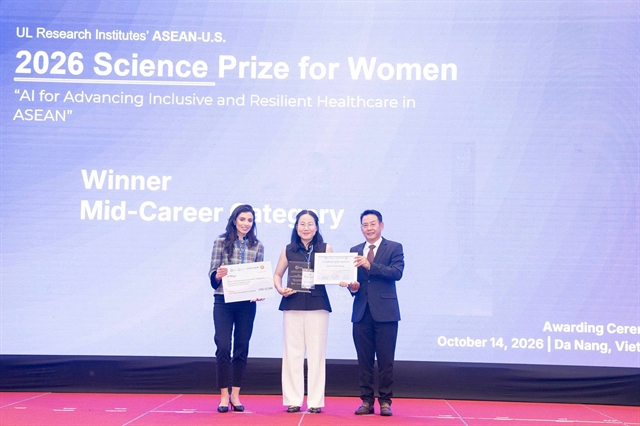
Vietnamese scientist wins ASEAN-US Science Prize for Women
1.
|
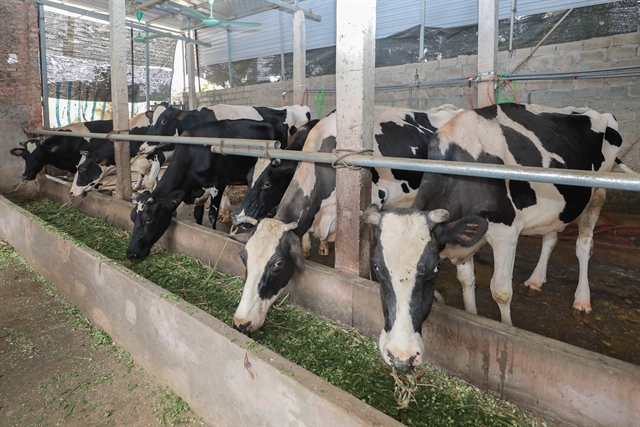
| A cattle farm in the southern city of Đồng Nai. — VNA/VNS Photo |
HÀ NỘI — Việt Nam needs a unified policy framework, accompanied by a system of technical criteria tailored to specific species and production stages, to effectively integrate animal welfare into agricultural production and meet the market's increasingly high standards.
The issue was discussed at a workshop entitled 'Animal Welfare: Proposals for Institutions, Policies and Enforcement', that was jointly organised by the Agriculture and Environment Newspaper and the Việt Nam Association of Farms and Agricultural Enterprises in Hà Nội on Wednesday.
According to Hạ Thúy Hạnh, vice chairwoman of the Việt Nam Association of Farms and Agricultural Enterprises, animal welfare has previously been addressed in Việt Nam’s legal system, particularly the 2015 Law on Animal Health and the 2018 Law on Animal Husbandry.
The Law on Animal Health stipulates responsibilities for the appropriate management, care, raising and transportation of animals according to each species, while minimising pain and fear and ensuring humane treatment in animal husbandry, aquaculture, transportation, slaughter, disposal, disease prevention and treatment, as well as scientific research.
Meanwhile, the Law on Animal Husbandry has a separate section on the humane treatment of livestock, setting requirements for feed, drinking water and housing, as well as measures to limit injury and fear and prohibit beating and mistreatment.
It also requires animals to be stunned before slaughter and prohibits animals from witnessing the slaughter of others.
Hạnh said Việt Nam needs to gradually shift from an approach based primarily on promoting humane treatment towards science-based animal welfare management, supported by assessment indicators and accountability mechanisms.
Nguyễn Thị Hồng Minh, deputy director of the Bắc Ninh City Sub-Department of Livestock Production, Animal Health and Fisheries, said that enforcing animal welfare requirements poses many challenges for large-scale production.
One of the key obstacles is the cost of transition.
Upgrading welfare conditions may require livestock farms to renovate housing, adjust stocking densities, invest in ventilation, lighting and cooling systems, change husbandry practices, strengthen herd health management and improve record-keeping and traceability, Minh said.
Meanwhile, goods produced under higher animal welfare standards do not always receive correspondingly higher prices in the market.
“If the costs of transition are borne by farmers while the added value is not yet recognised by the market, it will be very difficult to expand such models on a large scale,” Minh said.
Lê Trọng Đảm, deputy Editor-in-Chief of the Agriculture and Environment Newspaper, said that Vietnamese law contains numerous provisions concerning the care, raising, transportation, slaughter and use of animals in research.
However, assessment criteria, implementation guidelines and inspection and monitoring mechanisms still need further development.
In international trade, food safety, quarantine, animal health, technical standards and traceability requirements are receiving increasing attention. Animal welfare is also increasingly linked to product quality, sustainability and social responsibility.
The challenge is how to ensure that animal welfare does not become a requirement that adds to the burden on producers, but instead serves as a driver for improving the quality and value of livestock products.
Based on these issues, Hạnh proposed that the Government consider developing a National Animal Welfare Programme for 2027–35, with specific objectives, targets and resources.
The programme should aim to establish a unified definition, a national set of criteria, an indicator system, a database, technical guidelines and inspection mechanisms.
Standards should be developed for individual species and each stage of the process, from raising and transportation to holding areas and slaughter. — VNS
Society
 Society
 Society
 Society
 Society
 Society
 Society
 Society
 Society
 Society
 Society
 Society
 Society
 Society
 Society