 Society

Divo Tùng Dương reunites with hit songwriter for 25th-anniversary concert
1.
|
| Illustrative photo: qdnd.vn |
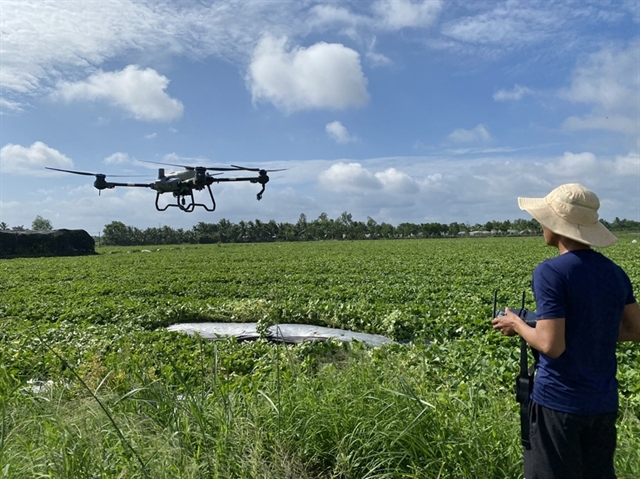
CẦN THƠ – A stakeholder consultation workshop on the Knowledge Hub platform was held in Cần Thơ City on September 16 to promote digital transformation, knowledge sharing and the use of advanced technologies to strengthen climate resilience and sustainable development in the Mekong Delta.
The event was jointly organised by the Japan International Cooperation Agency (JICA), Mekong Institute and Cần Thơ University.
The Mekong Delta, a major agricultural and fisheries production hub of Việt Nam, faces mounting challenges from climate change, saltwater intrusion, drought, flooding, environmental pollution, rising production costs and unstable markets. Changes in water resources and weather can have far-reaching impacts on farming, livelihoods and local development planning.
Experts said the region does not lack data, but valuable information collected by government agencies, universities, businesses, projects and communities is scattered across different locations and formats, making it difficult to access, compare and use effectively.
To address this issue, Model 12 under the second phase of a JICA-funded project for “enhancing science-based integrated collaborations towards sustainable development of the Mekong Delta region under climate change” has developed the Knowledge Hub – the Mekong Delta sustainable development data exploitation centre, implemented by the Mekong Institute of Cần Thơ University.
Assoc. Prof. Dr. Văn Phạm Đăng Trí, Director of the Mekong Institute and head of Model 12, said regional challenges stem not only from insufficient data but also from how data are generated, shared and transformed into knowledge for action.
The Knowledge Hub digitises, standardises and integrates multidisciplinary datasets through a common Web Geographic Information System (WebGIS), creating a dynamic platform for information sharing and decision-making.
It integrates land databases, land-use maps, and agricultural and fisheries statistics, enabling users to compare natural conditions with livelihood models and identify areas vulnerable to climate change.
The platform also links surface-water monitoring data with field information collected by communities, while incorporating groundwater data and providing six-day short-term salinity forecasts. The information can help authorities and residents plan water collection, operate irrigation gates and protect crops.
The Knowledge Hub Toolkit offers free digital tools for policymakers, technical officials, businesses and communities. Its VietMap-based system allows users to overlay datasets, including agrifishery business networks and salinity-risk maps, to support value-chain analysis and impact assessment.
The platform also translates scientific research into accessible thematic articles and provides a space for universities, authorities, businesses and communities to co-create knowledge.
Experts said the Knowledge Hub could facilitate links with other research models, improve database interoperability and incorporate more community initiatives, helping establish a “living” knowledge platform for the delta's sustainable development.
Dr. Lê Văn Lâm, Vice Rector of Cần Thơ University, said the platform should focus on three priorities: connecting and standardising data on climate, water resources, environment, agriculture, fisheries and socio-economic conditions; transforming data into practical maps, indicators, forecasts and guidelines; and connecting data providers with users according to the needs of localities, businesses and researchers.
At the workshop, scientists and experts from research institutes, universities and relevant ministries and sectors, together with JICA representatives, discussed measures to maximise the potential of digital transformation in addressing challenges facing the Mekong Delta. VNA/VNS
Society
 Society
 Society
 Society
 Society
 Society
 Society
 Society
 Society
 Society
 Society
 Society
 Society
 Society
 Society