 Society
VCCI proposes revision for VAT regulations
1.
|
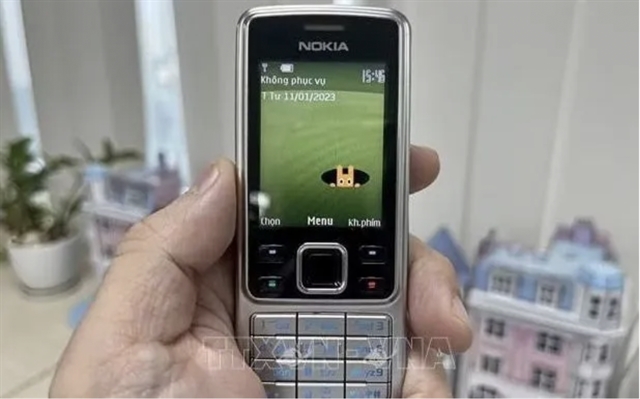
| The 2G networks nation-wide are switched off from September 15. VNA/VNS illustration photo |
HÀ NỘI — Vietnamese telecom operators will officially switch off 2G networks nation-wide from September 15, according to the Radio Frequency Department under the Ministry of Science and Technology.
Once 2G is switched off, the frequency spectrum, equipment and infrastructure previously used for the technology will gradually be reallocated to 4G, 5G and future generations of mobile networks.
According to the latest figures from the Global mobile Suppliers Association (GSA), as of June 30, 2026, a total of 313 2G and 3G networks had been, were being, or were scheduled to be switched off in 89 countries and territories.
The figure stood at 303 networks in December 2025 and 254 at the end of 2024.
Of the 313 networks, 158 2G or 3G networks had been completely switched off, 119 had scheduled shutdowns, and 36 were in the process of being switched off.
Switching off 2G and 3G is intended not only to reduce operating costs, but also to enable operators to reuse spectrum, save energy and focus resources on 4G and 5G networks.
This is particularly valuable in markets where spectrum allocated to mobile networks is becoming increasingly scarce.
Operators can also reduce power consumption by removing legacy radio equipment and network systems that carry little traffic. Meanwhile, 4G and 5G offer better spectrum efficiency, data transmission capacity and security mechanisms.
In Việt Nam, the Prime Minister’s decision approving the Information and Communications Infrastructure Plan for the period 2021–2023, with a vision to 2050, sets out directions for telecommunications infrastructure development, including a requirement to implement a roadmap for phasing out older mobile technologies (2G/3G).
Under the frequency-band plan of the Ministry of Information and Communications, now the Ministry of Science and Technology, telecom operators stopped providing services to devices supporting only the GSM (2G) standard from October 16, 2024, except in certain special areas such as the Trường Sa and Hoàng Sa archipelagos and DK offshore platforms.
Users of 2G-only phones were required to switch to devices supporting 3G or newer technologies to continue using mobile services.
However, 2G networks were not switched off immediately.
They were maintained for a further two years to support users of older 3G and 4G phones that do not support voice over LTE (VoLTE).
This transition period gave users more time to upgrade their devices or switch services.
Phasing out older-generation networks is an inevitable global trend and marks the completion of a stage in modernising telecommunications infrastructure.
It will enable more efficient use of radio frequency resources while improving voice and data service quality.
With 4G and 5G coverage, people will not only benefit from higher-quality mobile services but also gain access to digital services, helping drive the development of Việt Nam’s digital economy and digital society.
Ensuring service continuity
Switching off 2G is not simply a matter of discontinuing an old technology.
One of the biggest challenges is that millions of devices are still using legacy networks.
Operators and customers need suitable transition plans to determine how subscribers and devices can be migrated without service disruption.
Several major operators have notified subscribers whose devices need to be checked and VoLTE activated.
As 2G is gradually switched off according to the roadmap, devices without VoLTE enabled may experience interruptions to voice services, even though they can still use 4G to access the internet.
Most genuine smartphones sold in recent years have VoLTE built in and enabled by default. However, some older models or imported phones may not support the feature, or it may not have been activated. In such cases, the phone switches back to 2G to make or receive calls.
Therefore, after the 2G network is switched off, phones that do not support VoLTE – or support it but have not had the feature activated – may be unable to make or receive calls, although they can still access the internet over 4G.
After September 15, subscribers using 2G-only phones or SIM cards that do not support 4G/5G will be unable to make calls, send SMS messages or use mobile services.
Subscribers using 4G phones that do not support VoLTE, or have not activated it, may be unable to make voice calls.
To ensure continued connectivity, users should check whether their phones support VoLTE and whether their SIM cards support 4G/5G.
If not, they should contact their telecom operator for assistance with a free SIM replacement, subject to each operator’s policy, and advice on switching to a suitable device. VNS
Society
 Society
 Society
 Society
 Society
 Society
 Society
 Society
 Society
 Society
 Society
 Society
 Society
 Society
 Society