 Society

Việt Nam, Laos firms sign deals on property, smart farming projects
1.
|
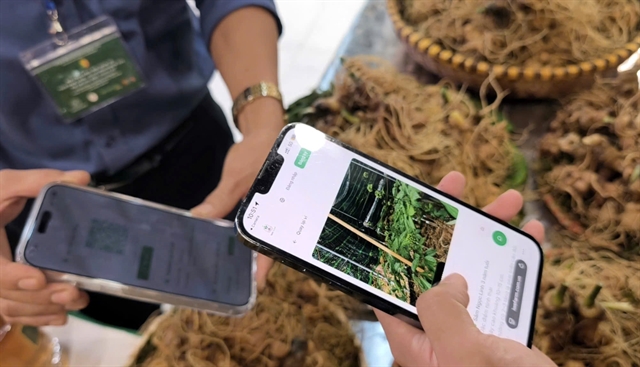
| A digital application allows Ngọc Linh ginseng buyers to locate their plants on a map, monitor cultivation records and watch them remotely through cameras installed at the farm. — VNA/VNS Photo |
ĐÀ NẴNG — Đà Nẵng City is using digital technology to improve the traceability and quality control of Ngọc Linh ginseng, a prized Vietnamese medicinal herb.
Ngọc Linh ginseng, regarded as a national treasure of Việt Nam, is highly valued for its rich saponin content and potential health benefits.
However, its high price, which can reach tens of millions of đồng per kilogramme, has also made the product vulnerable to counterfeiting and unclear origins.
Authorities and businesses in Đà Nẵng are therefore turning to digital technology to make the ginseng supply chain more transparent, allowing consumers to verify products from cultivation to harvest.
The move is also in line with Resolution No. 57-NQ/TW on breakthroughs in science, technology, innovation and national digital transformation, which identifies digital technologies as a key driver for improving productivity, transparency and the competitiveness of Vietnamese products across sectors.
Tracking each plant
Ngọc Linh ginseng grows naturally in the Ngọc Linh mountain range, with cultivation areas in Trà Linh Commune, Đà Nẵng, at elevations of around 1,800 metres.
The remote growing areas are nearly 200km from central Đà Nẵng and can be difficult to reach because of steep and winding roads. As a result, most consumers cannot visit farms directly, making reliable information about the origin of ginseng particularly important.
In June, Trà Linh Medicinal Materials JSC, in cooperation with IWE Homes Việt Nam JSC, introduced the iWE Farm application to connect consumers with individual ginseng plants in the cultivation area.
According to Lê Xuân Thạch, co-founder of IWE Homes Việt Nam JSC, customers can use the platform to purchase a young ginseng plant and have it cared for by the farm until it reaches maturity.
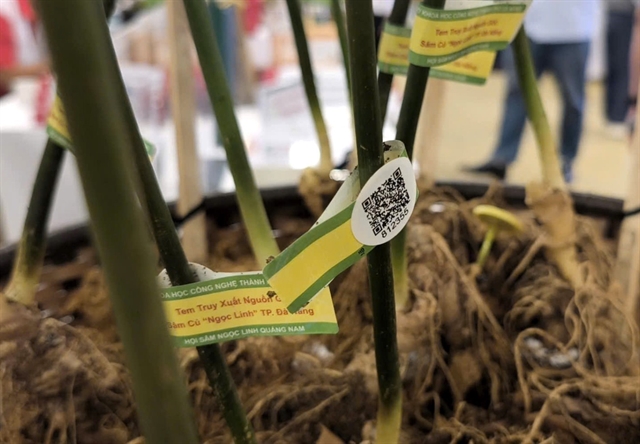
Each plant is assigned a QR code containing information about its origin. Its cultivation records are updated throughout the growing process, from the nursery to harvest and delivery to the customer.
The system allows users to check the location of their plant on a digital map, follow its cultivation records and monitor the farm through cameras.
Customers can also request harvesting, exchange the plant for ginseng products or transfer ownership through the application.
Châu Tấn Huynh, a representative of Trà Linh Medicinal Materials JSC, said the company introduced digital traceability because counterfeit and incorrectly sourced ginseng products remained a concern in the market.
“By attaching QR codes and origin information, we want consumers to be able to identify genuine Ngọc Linh ginseng grown in the Ngọc Linh area,” he said.
The company is also working with other local growers to expand the application and establish a network connecting growers and consumers.
|
| Each Ngọc Linh ginseng plant is fitted with a chip and QR code for identification and traceability from cultivation to market. — VNA/VNS Photo |
Digital database
Digital traceability is also being developed by State agencies.
Since 2022, authorities of former Quảng Nam, now part of Đà Nẵng, have implemented a project to build a database of Ngọc Linh ginseng cultivation areas and apply blockchain technology to manage, control and trace the origin and quality of ginseng products.
The system is also intended to support the promotion and commercialisation of Ngọc Linh ginseng products.
The application of blockchain and digital databases to Ngọc Linh ginseng also reflects the implementation of Resolution 57, which encourages the wider adoption of digital technologies in agriculture and other economic sectors to enhance traceability and product value.
Vũ Hồ Vũ, CEO of Digital Kingdom Investment JSC and a person directly involved in the project, said chip-based labels and bands carrying QR codes were an important component of the traceability system.
The technology is designed not only to identify individual plants and products, but also to support verification and monitoring throughout the ginseng value chain, from cultivation areas to finished products.
Around 900 ginseng-growing households in Trà Linh Commune have been provided with accounts, while the database is ready for use. Relevant agencies are working on the next steps to put the system into wider operation.
For consumers, smartphones and an internet connection are enough to scan the chip or QR code attached to a ginseng plant and access information about its origin.
The system can also use artificial intelligence to translate information into different languages, making it easier for foreign visitors and international consumers to learn about Ngọc Linh ginseng and verify its origin.
Vũ said the traceability system could eventually provide a foundation for developing digital assets linked to high-value agriculture and medicinal plants.
However, he stressed that such development should begin with standardised data, clear regulations, risk controls and measures to protect participants.
Experts said such efforts would also contribute to the goals of Resolution 57 by promoting innovation and digital transformation while helping build trusted brands for high-value Vietnamese agricultural products.
For Ngọc Linh ginseng, digital traceability is therefore more than a tool for consumers to scan a QR code.
It could provide a common information system connecting growers, businesses, regulators and consumers, while strengthening confidence in one of Việt Nam's most valuable medicinal products. — VNS
Society
 Society
 Society
 Society
 Society
 Society
 Society
 Society
 Society
 Society
 Society
 Society
 Society
 phát biểu tại buổi hội thảo.jpg) Society
Society
 Society