 Society
NA President sets June 2027 deadline for APEC projects, rules out delays, quality cuts and violations
1.
|
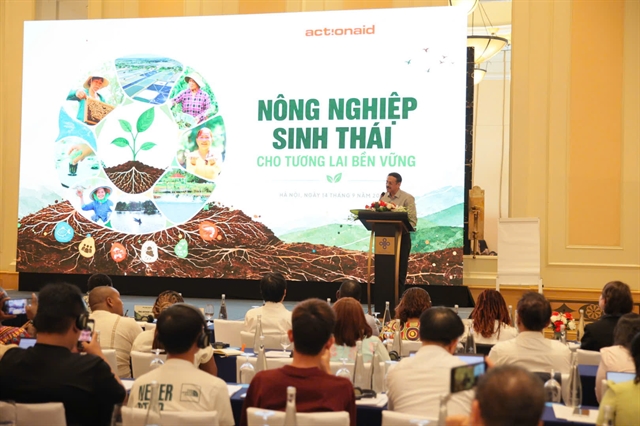
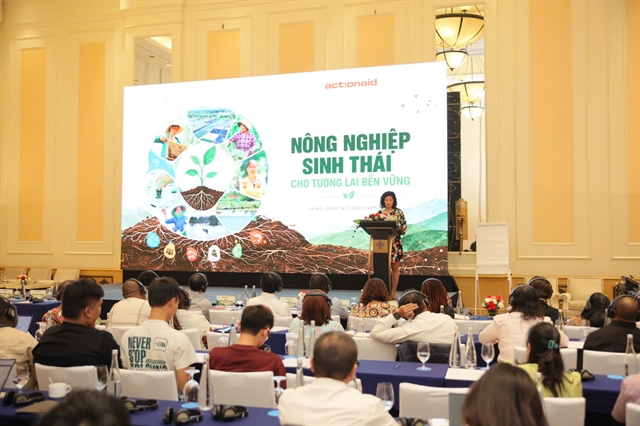
| More than 100 delegates, including nearly 30 delegates from countries in Asia and Africa, attend the event. — Photos courtesy of the ActionAid |
HÀ NỘI — Delegates discussed how ecological agriculture can contribute to ensuring livelihoods, enhancing resilience to climate change, and creating opportunities for women and young people to become subjects leading change during a workshop on Monday in Hà Nội.
The workshop “Ecological agriculture for a sustainable future”, organised by ActionAid International in Việt Nam, emphasised that women and young people must be the subjects and leaders of change, rather than merely participants or beneficiaries.
Women still face many barriers in accessing resources and decision-making rights, while young people have potential in innovation, technology, and new business models, noted the organiser.
More than 100 delegates, including nearly 30 delegates from countries in Asia and Africa, representing state management agencies, research institutes and universities, businesses, cooperatives, non-governmental organisations, and international development partners, created a diverse forum of experiences and practices promoting ecological agriculture in the context of climate change and an increasingly volatile market.
|
| Hoàng Phương Thảo, Country Representative of ActionAid International in Việt Nam, speaks at the workshop. |
Hoàng Phương Thảo, Country Representative of ActionAid International in Việt Nam, said: “In the Mekong Delta, during the period 2023–2025, ActionAid is proud to have accompanied communities and partners in successfully building and sustaining a number of livestock and aquaculture models that reduced emissions by more than 11 per cent.”
Monthly energy costs decreased about VNĐ480,000-1,200,000 (US$18-46) per household.
As many as 837 households, the majority of which were women-led, participated in and benefited from these models.
“We continue to promote South–South cooperation to share, learn, innovate, connect knowledge, initiatives, and resources, creating sustainable change,” said Thảo.
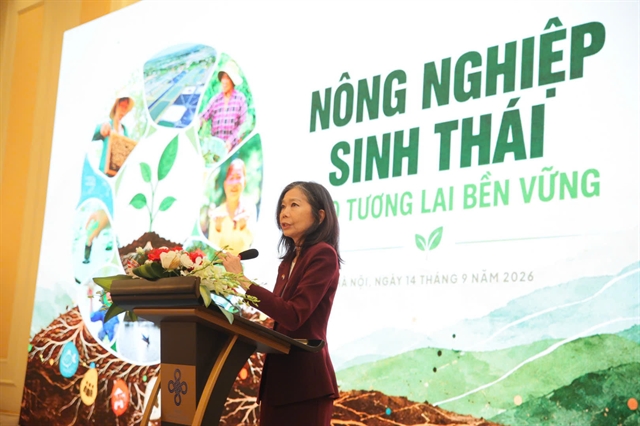
“2026 is the International Year of Women Farmers and we have only four years left to complete the Sustainable Development Goals by 2030. In that context, ecological agriculture offers a direction that has been proven effective for the future,” said Pauline Tamesis, UN Resident Coordinator in Việt Nam.
Ecological agriculture places people and ecosystems at the centre, while having the capacity to promote the implementation of up to 10 Sustainable Development Goals at once.
“To create impact at scale, over the long term, and effectively, countries need to build sustainable livelihoods and green markets; promote the role of women and young people as drivers of change; and synchronise policies, partnerships, and financial resources,” she said.
|
| Pauline Tamesis, UN Resident Coordinator in Việt Nam, says agriculture places people and ecosystems at the centre. |
Discussions at the workshop showed that the transition to ecological agriculture is not only about changing production methods, but must simultaneously create viable livelihoods, expand market opportunities, and enhance resilience to climate change.
This requires reducing barriers related to costs, capital, and production risks; developing competitive value chains; ensuring producers receive fairer value; and strengthening cooperation and mobilising resources to bring effective initiatives into implementation and scale-up. — VNS
Society
 Society
 Society
 Society
 Society
 Society
 Society
 phát biểu tại buổi hội thảo.jpg) Society
Society
 Society
 Society
 Society
 Society
 Society
 Society
 Society