 Society
SBV to curb property price inflation, enforce lending rate rules
1.
|
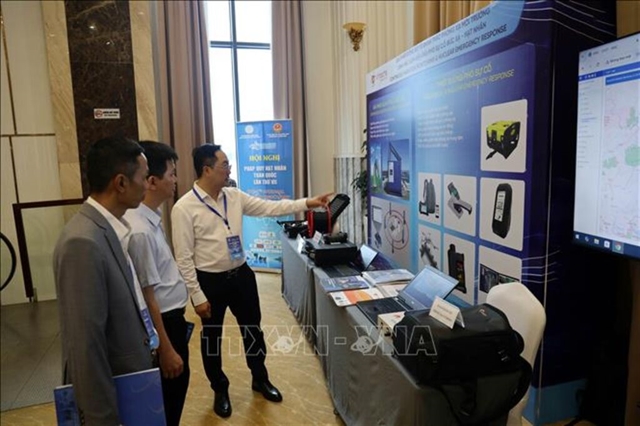
| Radiation processing and nuclear safety equipment was showcased at the 7th National Conference on Nuclear Regulation held by the Ministry of Science and Technology in Quảng Ninh Province in July. VNA/VNS Photo |
HÀ NỘI — As Việt Nam is preparing for a new phase in the development of nuclear energy, the use of radiation and radioisotopes is expanding, from medical diagnosis and treatment to various other areas of life and production.
As the scale of these activities grows, so do the demands on safety management, requiring a shift from administrative procedures towards risk-based management, with stronger decentralisation, supervision and data application.
Management must keep pace with development
Radiation and radioisotopes are increasingly used in medical diagnosis and treatment, as well as in research and technological applications.
At the same time, Việt Nam’s decision to revive its nuclear power programme is creating new requirements for radiation and nuclear safety management.
According to Dr Trần Bích Ngọc, deputy director general of the Việt Nam Agency for Radiation and Nuclear Safety under the Ministry of Science and Technology, the 2024–2026 period has seen significant changes in State management of radiation safety.
The National Assembly’s adoption of the 2025 Law on Atomic Energy, together with efforts to strengthen decentralisation, streamline administrative procedures and promote digital transformation, has laid the groundwork for a more modern and effective management approach in line with international practices.
"One notable change is the reform of licensing through the classification of regulated activities," Ngọc said.
"Medical X-ray equipment is licensed under a separate category, while radiation and nuclear equipment, nuclear materials, radioactive sources and radioactive waste are managed under corresponding categories," she said.
This approach requires management to take greater account of the characteristics and risk levels of each group of activities.
Alongside licensing, compliance monitoring, inspections and the capacity to manage activities after decentralisation are being strengthened.
The Việt Nam Agency for Radiation and Nuclear Safety has identified the development of management capacity at both central and local levels as a foundation for consistent, effective and safe oversight.
The scale of the work facing the radiation safety management system is evident at HCM City’s Chợ Rẫy Hospital.
Đặng Minh Phước, head of the hospital’s Occupational Safety and Health Department, said the hospital currently has 68 radiation devices and 37 radioactive sources, including radiotherapy accelerators, a cyclotron, PET/CT and SPECT/CT scanners, blood irradiators, a Gamma Knife system and various X-ray, digital subtraction angiography, C-arm and CT machines.
Given the large number of devices and radioactive sources, the hospital has established a unified radiation safety management system spanning its Board of Directors, the Occupational Safety and Health Department, and the departments and units that use radiation, Phước said.
Chợ Rẫy Hospital currently holds 56 licences related to radiation activities: 24 issued by the Việt Nam Agency for Radiation and Nuclear Safety and 32 by the HCM City Department of Science and Technology. The hospital renews or amends around 35 licences on average each year, he said.
This example shows that decentralisation does not mean lower safety requirements. Rather, it requires local authorities and facilities to strengthen their management capacity accordingly.
Another requirement is data-driven management.
As the number of facilities, devices and radioactive sources increases, oversight can no longer rely solely on administrative records. More effective monitoring, supervision and early warning mechanisms must gradually be developed on digital platforms.
Building regulatory capacity for a new phase
While changes made since 2024 have aimed to make the management system more flexible and effective, the 2026–2035 period will need to build strong regulatory capacity to oversee technologies and projects of greater scale and complexity.
Director General of the Việt Nam Agency for Radiation and Nuclear Safety Nguyễn Hoàng Linh said a key task is to establish a modern regulatory body capable of managing the entire lifecycle of nuclear power projects.
Personnel will be crucial to assessing and licensing new-generation nuclear technologies and supervising their safety, he said.
The target for 2035 is to safely implement two nuclear power projects in Ninh Thuận, undertake at least one small modular reactor (SMR) project, develop highly qualified personnel and establish a modern national radiation and nuclear safety authority.
To meet these goals, the 2026–2030 period will see further refinement of the legal framework governing adjustments to investment policies, site approval and nuclear power plant construction.
It will also support the development of SMRs and advanced nuclear technologies in line with standards set by the International Atomic Energy Agency.
However, regulatory capacity depends on more than a system of legal documents.
The decisive factor is a workforce with the expertise to assess technologies, conduct safety reviews and supervise projects throughout their lifecycle.
Under the plan, four key training programmes will be launched starting this year, covering regulatory systems, nuclear safety, site assessment and nuclear power plant safety documentation.
Specialist training in Việt Nam and advanced training overseas will be expanded from 2027.
Experience at Chợ Rẫy Hospital also shows that as the use of radiation expands, management challenges will become increasingly diverse.
The hospital has seven tanks for collecting radioactive wastewater. The wastewater is separated according to radionuclide, stored for at least 10 physical half-lives and discharged within permitted limits.
Several issues have been identified by the hospital, including the lack of a service provider for storing disused radioactive sources, inconsistencies between regulations governing radioactive wastewater and gaps in radiation safety and medical physics training.
Chợ Rẫy has called for the early establishment of a centralised storage facility for disused radioactive sources, harmonised management of radioactive waste and a framework for training and certifying medical physicists.
These practical issues show that radiation safety management cannot be the sole responsibility of the specialised regulatory agency.
The next phase will require close coordination among ministries, sectors, local authorities, businesses and organisations that use radiation.
Provincial and municipal People’s Committees are required to effectively carry out their decentralised responsibilities for licensing, inspection and supervision, while preparing for radiation and nuclear emergencies.
Businesses and organisations that use radiation must comply with the law and foster a culture of nuclear safety and security.
According to Linh, the agency’s priorities for the new phase centre on three requirements: building institutions, ensuring safety and guiding development.
These are also the core requirements for State management of radiation and nuclear safety in the years ahead to control risks rigorously while building sufficient capacity to keep pace with new developments in science, technology and nuclear energy. VNS
Society
 Society
 Society
 Society
 Society
 Society
 Society
 Society
 Society
 Society
 phát biểu tại buổi hội thảo.jpg) Society
Society
 Society
 Society
 Society
 Society