 Sci-Tech

HCM City honours fallen soldiers with solemn musical tribute
1.
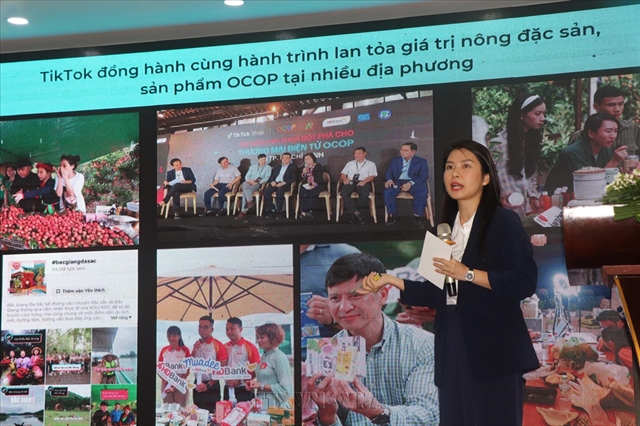 |
| Phạm Minh Trang, director of Strategic External Relations at TikTok, discusses supporting local agriculture on the platform. VNA/VNS Photos |
CẦN THƠ — Using digital technology that is simple, accessible and aimed directly at the challenges facing farmers is essential to helping the Mekong Delta boost productivity, cut costs and advance low-emissions agriculture.
Experts, businessmen and representatives of authorities discussed the topic at a seminar on using tech to develop low-emissions agriculture in the Mekong Delta, held in Cần Thơ City on September 11.
The event was organised by the Cần Thơ Department of Science and Technology in collaboration with the Department of Information Technology Industry under the Ministry of Science and Technology and the Việt Nam Software and IT Services Association (VINASA).
The event aimed to connect the practical needs of local workshops, cooperatives and agribusinesses with tech companies, encouraging the adoption of digital tools to boost productivity, raise product value and reduce emissions.
Technology must solve problems
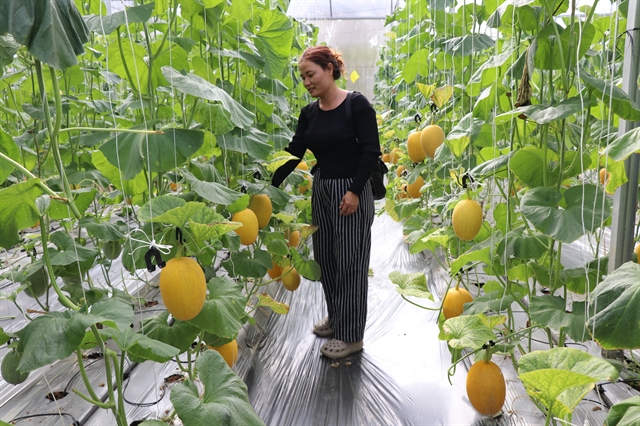
The Mekong Delta is Việt Nam's key agricultural region, playing a vital role in the production of rice, seafood and produce for both domestic and export markets.
However, the region is facing growing impacts from climate change, saltwater intrusion and shifting water availability. At the same time, rising input costs and stricter global market demands for quality, traceability and lower greenhouse gas emissions are forcing a shift toward new production methods.
In this context, digital transformation is expected to help solve many challenges in agricultural production, ranging from monitoring water sources and salinity levels and forecasting the weather to managing production, ensuring traceability and directly connecting agricultural products with consumers.
VINASA Vice Chairman Lâm Nguyễn Hải Long said the agricultural digital transformation must be closely tied to shifting production methods, especially while rolling out the project to develop one million hectares of high-quality, low-emissions rice in the Mekong Delta.
He added that the primary goal of agricultural digital transformation is to help farmers reduce input costs, increase profits and restore soil quality.
Instead of using complicated technology, the digital transformation process should therefore introduce simple and accessible solutions, such as familiar farming equipment that delivers direct and measurable results for producers.
Long concluded with a call to "democratise technology".
Digital apps can enable farmers to monitor water salinity and weather information via their smartphones. In rice cultivation, the use of microbial products to treat rice straw directly in the field can help reduce pollution, improve soil quality and open up opportunities to generate additional value through carbon credits.
Digital technology can also help producers list their agricultural products on e-commerce platforms, expanding market access and cutting out unnecessary middle steps in the distribution chain.
Long said the combination between traditional cultivation experience and smart digital tools would be a foundation for the Mekong Delta to establish its sustainable green agriculture.
Farmers' needs prioritised
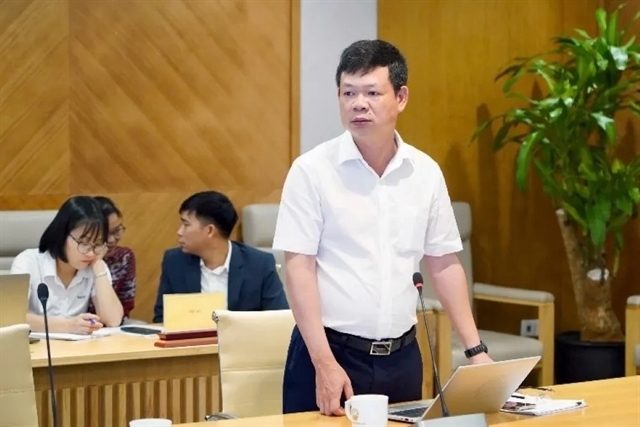
Đinh Thị Linh Hương, deputy director of the Department of Information Technology Industry, argued that the success of digital transformation shouldn’t be judged solely by how many technologies are deployed.
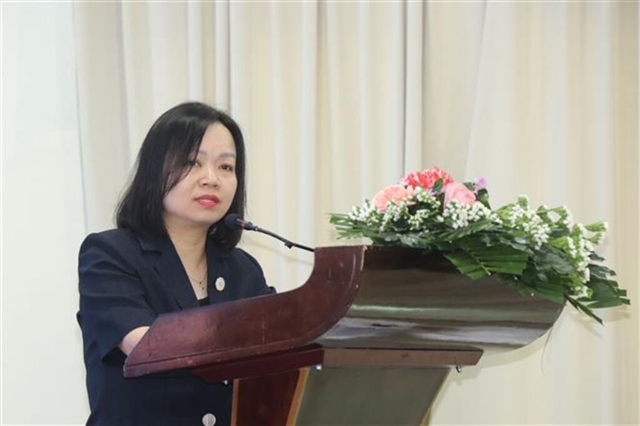 |
| Đinh Thị Linh Hương, deputy director of the Department of Information Technology Industry under the Ministry of Science and Technology, speaks at the seminar. |
She said the key is whether technology could solve producers' specific challenges. A solution only works if it aligns with practical conditions, generates clear economic value and is easy to operate and cost-effective.
Hương said deploying advanced tools such as AI, Internet of Things and Digital Twin must stem directly from the needs of farmers, cooperatives and businesses.
Technology must prove its worth through real-world results in tailored pilot programmes under strict monitoring and evaluation before being expanded.
This prevents spreading investments too thin, ensuring technology yields proven field results rather than remaining a basic demonstration.
Solutions for low-emissions agriculture
At the seminar, delegates discussed several solutions to promote digital transformation in agriculture.
Main focuses were mechanisms and policies to promote high-tech agriculture, the application of AI and digital twins for early warning of saltwater intrusion, weather forecasting and crop zone planning, and the use of high-cell-density fermentation technology to process agricultural by-products and improve soil quality.
Digital solutions for cooperative management, including accounting, tax compliance and electronic invoicing, were also discussed, along with the need for a better management model.
The seminar also featured the sharing of experiences regarding e-commerce, livestream selling skills and apps already in use at various cooperatives and farms.
Connecting technology businesses with manufacturing facilities is expected to narrow the gap between technology and practical needs, while also enabling suitable solutions to be tested, refined and scaled up.
In the long term, digital transformation is expected to help farmers manage their production effectively and support the Mekong Delta in meeting increasing market demands regarding quality, traceability and emissions reductions.
Achieving this goal requires integrating technology into an interconnected ecosystem of farmers, cooperatives, tech vendors and authority bodies.
Once digital solutions become affordable, user friendly and tailored to daily farming needs, digital transformation can drive productivity and advance low-emissions agriculture across the Mekong Delta. — VNS
Sci-Tech
 Sci-Tech
 Sci-Tech
 Sci-Tech
 Sci-Tech
 Sci-Tech
 Sci-Tech
 Sci-Tech
 Sci-Tech
 Sci-Tech
 Sci-Tech
 Sci-Tech
 Sci-Tech
 Sci-Tech
 Sci-Tech