 Society

Power transmission to be separated from EVN to develop a competitive electricity market
1.
|
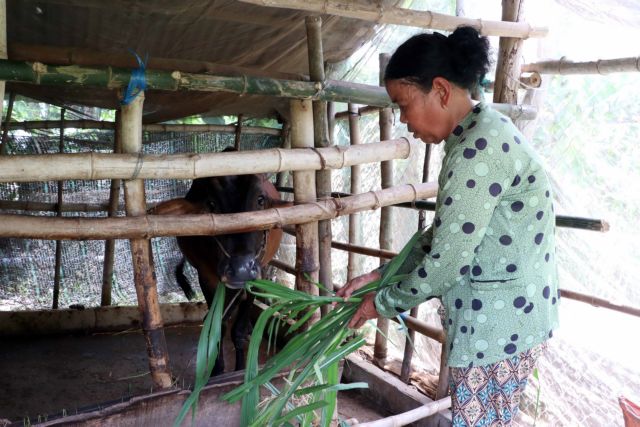
| A breeding-cattle farming model helps many Khmer households in Trần Đề Commune, Cần Thơ City, maintain stable livelihoods. — VNA/VNS Photo |
CẦN THƠ — Cần Thơ is diversifying livelihood support for Khmer households while expanding housing, healthcare, and vocational assistance to improve their living standards.
In Trần Đề Commune, poverty reduction programmes in Khmer communities are being tailored to individual households, with their circumstances assessed to identify suitable livelihoods.
Thạch Thị Quang, 78, of Lâm Dồ Hamlet, had no agricultural land and relied mainly on casual work for many years.
Three years ago, local authorities gave her family two breeding cows based on their experience in raising cattle and suitable conditions for building a cattle shed.
The family now has six pregnant cows and two calves.
“The model provides my family with an additional source of income and is gradually improving our living conditions,” Quang said.
The commune is promoting diversified livelihoods, including aquaculture, poultry farming, and vegetable cultivation, while expanding access to loans and vocational training and using digital technology to manage poor households.
Lý Hoàng Ngân, deputy head of the commune’s Culture and Social Affairs Division, said it would continue to raise public awareness and focus on vocational training for rural workers.
|
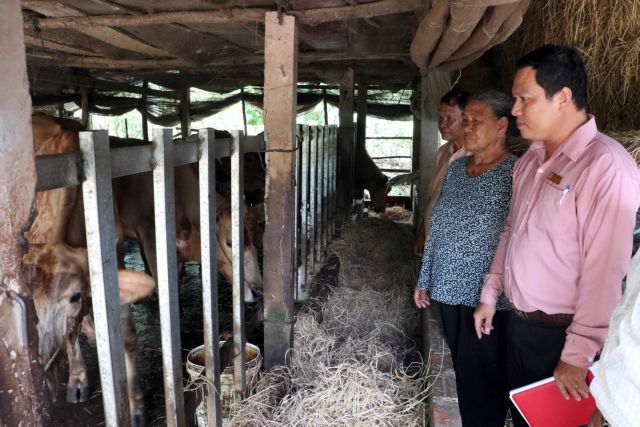
| Trần Đề Commune officials visit a Khmer household to assess the effectiveness of their cattle breeding model. — VNA/VNS Photo |
In Nhu Gia Commune, the Khmer account for 39.67 per cent of the population.
The commune has implemented a breeding cow project with total funding of more than VNĐ620 million (US$23,000), providing 28 cows to 17 households.
It had 71 poor households at the end of last year, 10 fewer than in 2024, and 214 near-poor households.
Hồ Thanh Tuấn, head of the commune’s economic division, said the strength of local poverty reduction efforts lies in the determination of Khmer households to improve their livelihoods.
“When provided with livelihood support suited to their actual needs, Khmer people work diligently.”
Under the National Target Programme on Socio-Economic Development in Ethnic Minority and Mountainous Areas for 2021–30, the Cửu Long (Mekong) Delta city supported job transitions for 5,802 ethnic minority households, implemented 130 production development models, and organised 542 short-term vocational training courses during 2021–25.
Agriculture remains the main livelihood for the Khmer. But with average farmland holdings being small and many households having little or no land for production, diversifying livelihoods has become an urgent need.
So authorities have introduced production models suited to household circumstances, making better use of available resources while helping the Khmer increase their incomes and build more stable lives.
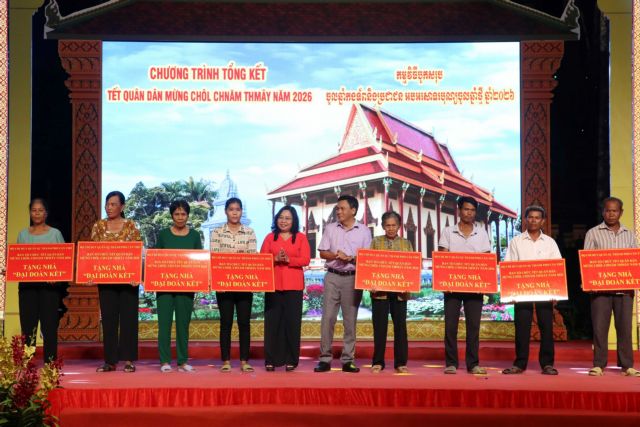
Housing assistance has also helped them achieve greater stability.
|
| Khmer households facing housing difficulties receive Đại đoàn kết (Great Solidarity) houses at a ceremony held to conclude the “Military–Civilian Tết to celebrate the 2026 Chol Chnam Thmay festival, the traditional Khmer New Year” activities in An Ninh commune on April 12. — VNA/VNS |
Long Phú Commune implemented the National Target Programme on Socio-Economic Development in Ethnic Minority and Mountainous Areas for 2021–30.
Last year, it allocated more than VNĐ2.7 billion ($103,000) to poverty reduction, focusing on livelihood diversification, agricultural production, clean water supply, and maintaining rural transport infrastructure.
Since 2021, the commune has built 46 houses for Khmer households at a cost of more than VNĐ2 billion ($76,000).
It has also allocated more than VNĐ3.1 billion ($120,000) to subsidise housing land and homes for disadvantaged households.
Lai Phước Điệp of Nước Mặn 2 Hamlet received assistance to build a new house last year, and his family also received a VNĐ30 million ($1,150) soft loan to build a pigsty.
He said: “After living in a temporary house for so many years, we are very happy to build a new home. We no longer have to worry about rain leaking through the roof.”
The city has also increased its focus on healthcare for ethnic minority communities.
Last year, it provided free health insurance to 2,359 disadvantaged people from ethnic minority groups.
Thạch Thị Sà Phép of Tân Thạnh Commune, who regularly needs medical check-ups and health monitoring, said the insurance has significantly reduced her medical costs.
“This policy gives poor people like me great peace of mind.”
The city aims to reduce its poverty rate by 1–1.5 percentage points a year from now through 2030, and take the proportion of poor households in ethnic minority areas to below 10 per cent.
It plans to move from a focus on quantitative targets towards improving the quality of poverty reduction, strengthening the self-reliance of poor households, and taking coordinated measures to prevent them from falling back into poverty.
Lý Minh Hà, deputy head of the policy and communications division at the Department of Ethnic and Religious Affairs, said infrastructure in ethnic minority areas has continued to improve through coordinated investment and timely support.
Irrigation, electricity, and water facilities basically meet needs, while healthcare services have also improved, he said.
|
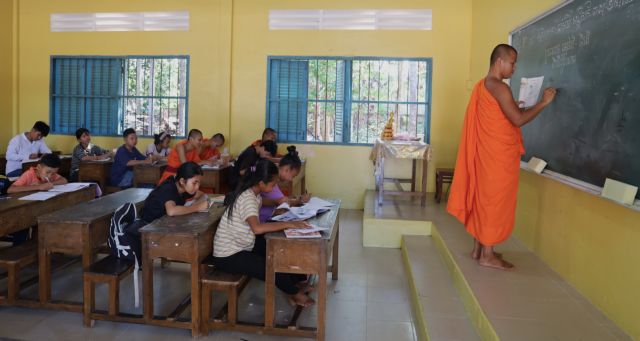
| Children attend a Khmer language class during the summer at Prum Visal Pagoda in Lịch Hội Thượng Commune. — VNA/VNS Photo |
Cần Thơ has more than 543,000 Khmer people, accounting for more than 14 per cent of its population.
The city is also working to preserve Khmer culture.
In many localities, Khmer language classes are held at pagodas and elsewhere, helping children read and write in the language, use it, and develop a deeper understanding of their history, culture, and traditions.
Many traditional festivals and art forms are being sustained. — VNS
Society
 Society
 Society
 Society
 Society
 Society
 Society
 Society
 Society
 Society
 Society
 Society
 Society
 Society
 Society