 Society

Manchester United, AC Milan and Inter Milan to play friendlies in Việt Nam in 2027
1.
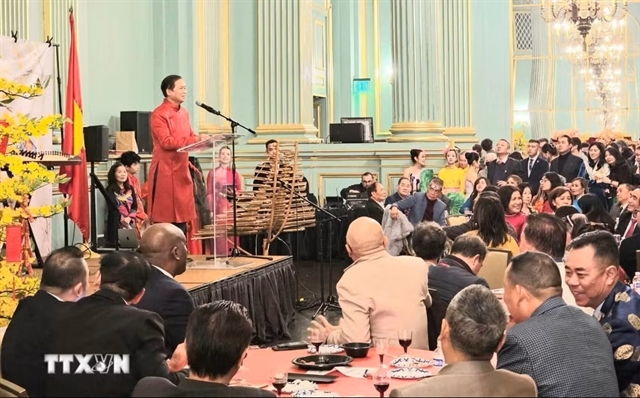 |
| Vietnamese people in the US's promote traditional culture at a celebration. VNA/VNS Photo |
Nguyễn Khánh Chi
Spread across more than 130 countries and territories, Việt Nam's community of more than 6.5 million people overseas is growing not only in size, but also in influence, expertise and its capacity to contribute to the homeland.
Among them is an increasingly younger generation of experts, intellectuals, scientists, entrepreneurs and high-tech professionals, some of whom have risen to influential positions in the political systems of their host countries.
They are considered not only an inseparable part of the Vietnamese nation but also a vital strategic resource contributing to the nation’s overall strength. That shift in perspective is central to a resolution issued by the Communist Party of Việt Nam on August 2 regarding overseas Vietnamese affairs.
According to Deputy Foreign Minister Lê Thị Thu Hằng, the resolution, dubbed Resolution 23, represents a significant evolution in thinking. Overseas Vietnamese serve as a dual force: acting as a bridge between Việt Nam and the world while simultaneously participating as partners in building, developing and protecting the homeland
Furthermore, Resolution 23 marks a shift in the conceptual framework of OV affairs. The approach has evolved from "mobilising and caring for" the community to "accompanying and creating mechanisms" that allow OVs to engage more deeply in the nation's journey of integration and development.
"The Resolution emphasises the facilitating role of the State and the Government in perfecting institutions, mechanisms and policies to effectively attract and harness the resources of overseas Vietnamese," Hằng said.
Regarding the methods of engagement, she noted that instead of focusing primarily on attracting individuals, the Resolution calls for the creation of databases, networks and a global ecosystem. These platforms aim to connect experts, intellectuals, scientists, entrepreneurs, artists and younger generations of overseas Vietnamese.
"The contributions of the diaspora are also becoming broader and more flexible," she said. "Beyond returning to work in the country directly, such overseas Vietnamese can now contribute remotely through various suitable and effective formats."
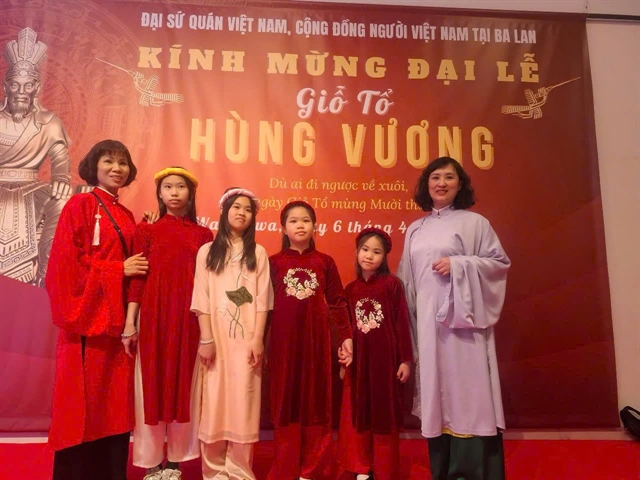 |
| Students and teachers at Lạc Long Quân Vietnamese School in Warsaw, Poland, prepare for an incense-offering ceremony and a dance performance to mark the 2026 Hùng Kings' Festival. Photo courtesy of Đỗ Bích Thảo |
Closer links
From the perspective of a Vietnamese diaspora member in Poland, Đỗ Bích Thảo observes that accompaniment and listening are the most important aspects of Resolution 23, signalling an important change in how the Vietnamese community abroad is viewed.
Based on her first-hand experience, she asserts that OVs want more than just attention and support; they want their voices to truly be heard and their contributions genuinely acknowledged.
“As a Vietnamese teacher in Poland, I see this clearly. We preserve our language and culture for the youth not just for bilingualism, but to keep them tied to their roots and homeland," says Thảo, vice principal of Lạc Long Quân Vietnamese School in Poland.
"For these efforts to thrive long-term, we need policy support, resources and a closer link with domestic agencies.”
Nguyễn Lam Giang, co-president of the Vietnamese Knowledge Network in New Zealand, says she has high expectations for the spirit of Resolution 23. This is because the overseas Vietnamese community is now being recognised as a key resource for the country, especially in terms of knowledge, technology and management skills, rather than just being the focus of government policies.
“This is a great inspiration for the Vietnamese community in New Zealand, which is home to many academics, experts and business leaders. With the right systems in place to connect people, the Vietnamese diaspora can contribute even more effectively to Việt Nam's growth,” says Giang, who is also Regional Engagement Lead for Southeast and East Asia at the University of Waikato.
She adds that the Resolution acts as a vital pillar of policy and trust. “It encourages overseas Vietnamese to integrate well into their new homes while keeping their roots alive and serving as a vital link between Việt Nam and the international community,” she says.
Emphasising that Resolution 23 conveys two strategic shifts in thinking, Phạm Quang Vinh, former deputy minister of foreign affairs and former ambassador to the US, says: “It regards the Vietnamese diaspora as a strategic resource for national construction, defence and development, and shifts towards accompanying them by creating the space, structures and mechanisms that enable their active participation in that process.”
Vinh also emphasises that Việt Nam’s foreign missions abroad need to act as strategic bridges, linking overseas Vietnamese communities with their home country and with each other.
“Resolution 23 clearly outlines the role of these missions in coordinating with domestic agencies to map out overseas Vietnamese resources. This entails digitising data on the diaspora, specifically regarding the potential and resources they can contribute to the nation,” Vinh says.
To do this well, these missions must stay informed about what the country needs, such as specific requirements in the semiconductor and chip sectors. By doing so, they can match supply with demand and build a network of government bodies, local provinces and businesses to act as a conduit for diaspora talent, Vinh says.
“We need to give our diplomatic missions clear assignments and tell the community exactly what Việt Nam is looking for so they can respond flexibly," he says.
"It’s essentially like an open call for proposals: if an idea is practical and valuable, the State should provide partial funding or counterpart funds to support those business ventures or technological projects.”
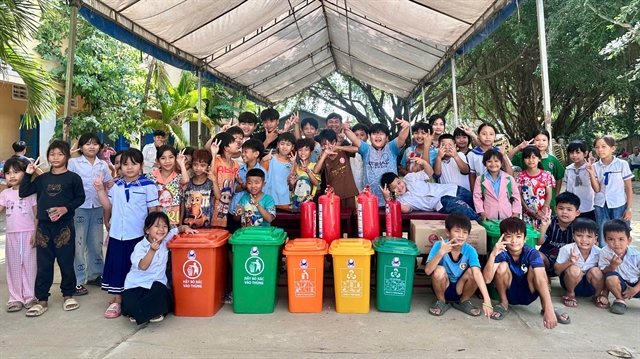 |
| Children from the Vietnamese-Khmer Friendship Primary School in Prey Veng Province in Cambodia receive brand new dustbins and firefighting equipment provided by Việt Nam’s Đồng Tháp Province authorities. Photo courtesy of Nguyễn Văn Hào |
Specific challenges
Having made considerable contributions to cultural exchange, community engagement and the promotion of international friendship in Japan, the president of the Vietnamese Diaspora Association in the Kansai region, Lê Thương, acknowledges that what the community needs is clear tasks and the mechanisms needed to carry them out.
“Once the State establishes an ecosystem where domestic agencies identify needs, overseas Vietnamese provide expertise and initiatives, and representative missions and associations serve as bridges, the space for contribution will be transformed into concrete projects, programmes and tangible results,” Thương says.
Sharing the same view, Thảo from Poland says that in the digital age, it is crucial for the State to establish a reliable and efficient "connectivity infrastructure".
“This would enable Vietnamese intellectuals and experts worldwide to network with one another and identify the specific challenges that Việt Nam needs to address,” she says.
“The State should first build a digital platform or a shared database of overseas Vietnamese experts and intellectuals. On this platform, individuals could register their fields of expertise, experience and capacity for collaboration."
It is not essential for them to return to Việt Nam for full-time work. They can contribute through remote participation, consultancy, online training, technology transfer, business networking or by joining forces to tackle specific projects, Thảo adds.
That is exactly what Nguyễn Văn Hào, principal of the Vietnamese-Khmer Friendship Primary School in Prey Veng Province in Cambodia, believes.
“With the rise of digital transformation, we should redefine how the Vietnamese diaspora contributes,” Hào says.
“Physical presence is no longer required to support or connect with the homeland; digital tools allow anyone to participate in domestic projects from abroad. This reflects the enabling spirit of Resolution 23.”
He emphasises that to facilitate this, the State should build professional, global-scale digital platforms across various sectors such as the economy, education and social life.
“The key is to shift our focus from simply inviting people back to creating more opportunities for them to contribute from wherever they are,” Hào says. VNS
Society
 Society
 Society
 Society
 Society
 Society
 Society
 Society
 Society
 Society
 Society
 Society
 Society
 Society
 Society