 Society
Việt Nam, China seek stronger substantive parliamentary cooperation
1.
|
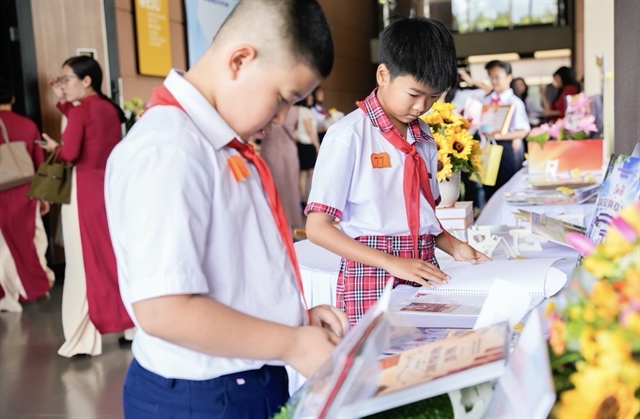
| Students immerse themselves in literary and historical works. — Photo VNA/VNS |
HCM CITY — For children, history is not only something to be learnt through classroom lessons. It can also begin with a book, a painting, a museum artefact or a technology-based experience.
In HCM City, a range of cultural activities are helping children explore the past through more accessible forms, while encouraging their ability to appreciate and create.
From a book to stories of history
For children, history can become more relatable when it is told through characters, places and specific stories, rather than simply as dates and milestones to be memorised.
The process of selecting a book, reading, reflecting and expressing their thoughts also helps students develop the ability to connect knowledge with everyday life.
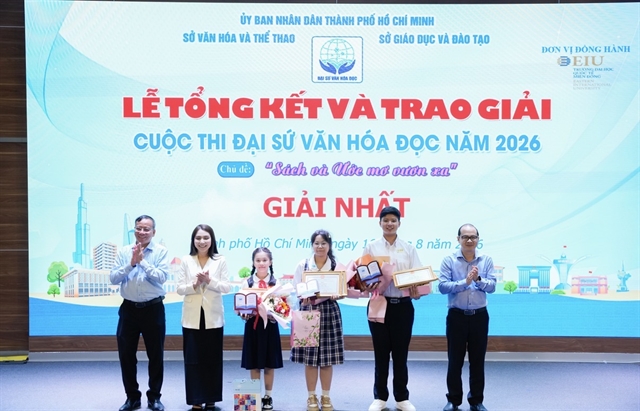
The 2026 HCM City Reading Culture Ambassador Competition is one such activity.
The competition was rolled out to wards, communes, special zones and education institutions, attracting 17,450 entries from 1,011 schools. Contestants came from 154 out of 168 wards, communes and special zones, equivalent to 91.67 per cent.
The organising board selected 5,205 entries for the city-level final round.
What stands out among the entries is that students not only introduced books they enjoyed, but also demonstrated their ability to appreciate literary works, relate their content to real life and propose initiatives to bring books closer to their peers, families and communities.
According to Dr Tạ Anh Thư, head of the judging panel, every entry that the judges read and reviewed was not merely a competition submission, but also a story of each student's reading, thinking and personal growth.
Many entries demonstrated a genuine love of books, an ability to appreciate literary works, connect them with real-life experiences and convey humane messages, while expressing innocence, purity and rich emotions through their writing.
Through these forms of expression, books can become a starting point for children to learn more about people, places, historical periods and stories within their communities.
Historical content told through books, when linked to specific characters and stories, also has greater potential to be absorbed through the emotions and curiosity of young readers.
Lê Phan Bảo Phúc, a Grade 11/10 student at Huỳnh Văn Nghệ High School in Tân Uyên Ward and one of three students named HCM City Reading Culture Ambassadors in 2026, said books had never been merely pages sitting quietly on a shelf, but that each book was a door opening into a new world.
In his view, the greatest value of reading lies not only in acquiring knowledge, but also in helping people learn to care for others, view life with an open heart and become more responsible towards their communities.
“Becoming a Reading Culture Ambassador does not mean that I read more than everyone else. It means I have to try to become someone who appreciates books, understands the importance of sharing, spreads the good values found in books and inspires more people to read,” Phúc said.
From a cultural management perspective, Lê Văn Thái, Deputy Director of the Department of Culture and Sports and head of the organising board of the Reading Culture Ambassador Competition, said the competition was not merely a playground for students, but also helped foster reading habits, encourage creative thinking and spread the positive values of books to schools, families and communities.
According to Thái, 2026 marked the first time the competition had been held across HCM City following the merger of HCM City with Bình Dương and Bà Rịa-Vũng Tàu.
The expanded scale helped create a broader and more diverse reading culture space across the city.
|
| The three 2026 “Books and Dreams Beyond Borders” Reading Culture Ambassadors of HCM City at the awards ceremony. — Photo VNA/VNS |
New ways to explore history
From a book, historical stories can continue to unfold through many other forms. Museums, in particular, bring these stories closer to visitors through tangible traces, artefacts and historical figures.
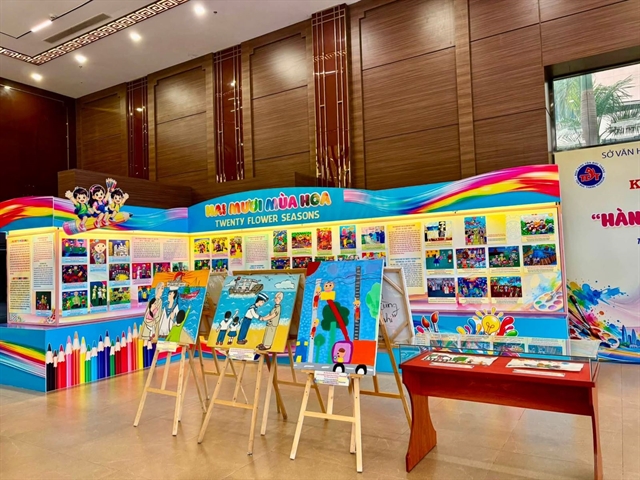
The children's painting competition “HCM City Children with President Tôn Đức Thắng” is one example of bringing history to children through artistic creativity.
Instead of simply receiving information about President Tôn Đức Thắng, the children learn about his life, character and contributions before expressing their impressions through images and colours.
The competition attracted 289 artworks by 319 contestants from 38 organisations.
The themes “Following in the Footsteps of Worker Tôn Đức Thắng”, “I Tell Stories about Uncle Tôn” and “Uncle Tôn – A Son of Southern Việt Nam – A Shining Example” were designed in an accessible way, helping children approach the historical figure from different perspectives.
According to Trần Anh Tuấn, Deputy Director of the Tôn Đức Thắng Museum, the painting competition about Uncle Tôn has been held for many years.
The annual event provides students with a useful creative space, allowing them to develop their artistic talents and express their affection for Uncle Tôn, while contributing to the education of patriotism and national pride.
Assoc Prof Dr Nguyễn Văn Minh, former Rector of the HCM City University of Fine Arts and a member of the judging panel, praised the diversity of materials and forms used in the entries. He said many works featured fresh compositions, as well as innocence and creativity.
Group paintings made flexible use of collage, relief techniques, recycled materials and environmentally friendly media.
Digital paintings, meanwhile, demonstrated a wide range of ideas, visual languages and techniques, while showing that many students had begun familiarising themselves with technology as a creative tool.
Nguyễn Văn Minh also encouraged contestants to continue exploring and experimenting with digital tools and AI, while paying attention to copyright issues and maintaining focus and consistency in their creative work.
|
| The exhibition features winning entries from the “HCM City Children and Uncle Tôn” contest at the Tôn Đức Thắng Museum. — Photo VNA/VNS |
Beyond painting, the application of technology in museums is also opening up new ways for young audiences to engage with heritage.
At the HCM City Museum, NFC technology has been introduced in several exhibition spaces.
By simply tapping a smartphone on an NFC point, visitors can access information about the museum, its spaces and artefacts, as well as the stories behind the heritage.
At the same time, hands-on activities held as part of programmes such as “Heritage Connection Week” give children opportunities to learn about the city's history, explore traditional musical instruments and decorate conical hats and pottery themselves.
Such activities provide an additional form of direct interaction alongside observing exhibits and listening to museum guides.
These activities show that books, art, museums and technology can complement one another in history education.
What children read in books can spark an interest in exploring artefacts, while museum experiences can in turn raise new questions and inspire further reading.
To ensure that this process does not remain limited to individual activities, many believe greater co-operation is needed among schools, libraries, museums and cultural institutions.
When children are given opportunities to read, observe, experience and then express themselves in ways suited to their age, they can engage with history through their own curiosity, emotions and creativity. — VNS
Society
 Society
 Society
 Society
 Society
 Society
 Society
 Society
 Society
 Society
 Society
 Society
 Society
 Society
 Society