 Society

Deputy PM urges removal of legal bottlenecks hindering development
1.
|
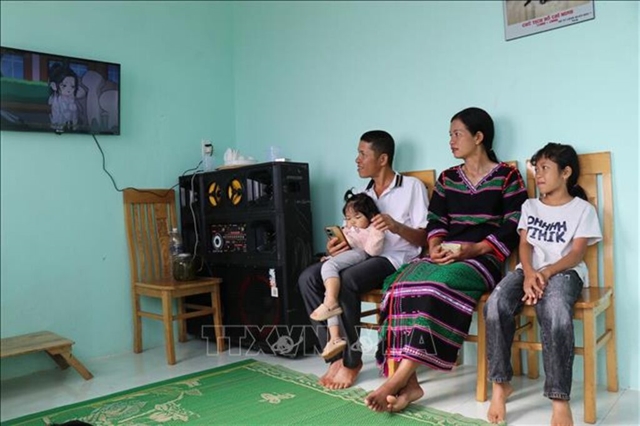
| A warm moment shared by a M’nông family in Quảng Trực border commune, Lâm Đồng Province. — VNA/VNS Photos Nguyễn Huy Thành |
LÂM ĐỒNG — Điểu Sranh, a M’nông farmer in Quảng Trực border commune, Lâm Đồng Province, has recently built a new house with income earned from his coffee and pepper plantations.
Like many local residents, Sranh once relied mainly on rice and other traditional crops that generated relatively low returns. Several years ago, after local authorities encouraged farmers to diversify their crops and agricultural extension officers provided technical guidance, he began learning to grow coffee and pepper, gradually adapting his farming practices and improving his techniques.
His coffee yield now averages 2-3 tonnes per hectare, while pepper production reaches around two tonnes per hectare. Coffee and pepper prices have remained relatively high in recent years, encouraging local farmers to invest in expanding production. For many households, the increased income has made it possible to build more spacious and better-equipped homes.
Sranh is among a growing number of M’nông households that have successfully shifted from traditional farming to higher-value crops. The coordinated implementation of support policies and resources has helped improve living conditions and contributed to significant progress in poverty reduction.
With its vast territory and uneven population distribution, Lâm Đồng has identified socio-economic development in ethnic communities and mountainous areas as a key priority. The efforts are closely linked to sustainable poverty reduction, improving living standards, preserving cultural identity and strengthening national defence and security, particularly in border regions.
From support to self-reliant livelihoods
Lâm Đồng is home to 49 ethnic groups, including more than 683,000 ethnic people, who account for 17.6 per cent of the province’s population. In recent years, national target programmes have been carried out with a focus on the most disadvantaged areas, prioritising investment in infrastructure, production development, livelihood creation and access to essential social services.
|
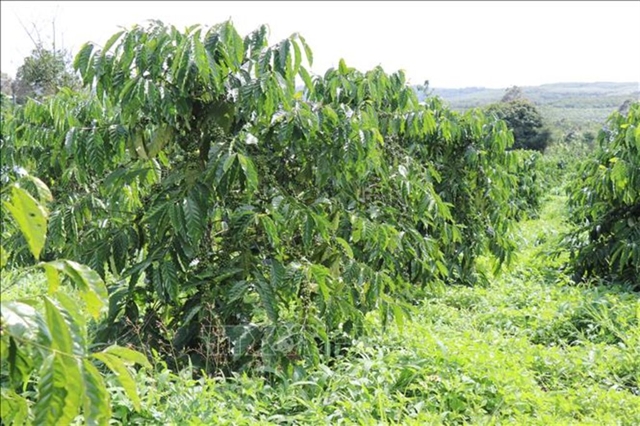
| Coffee farming generates high economic returns, helping increase incomes and improve living conditions for ethnic communities in Thuận An border commune, Lâm Đồng Province. |
The province’s multidimensional poverty rate fell from 9.3 per cent at the end of 2021 to 3.3 per cent at the end of 2025, representing nearly 50,000 fewer poor households. Among ethnic communities, the poverty rate dropped from nearly 27 per cent to 9.2 per cent between 2021 and 2025, an average annual decline of 3.6 percentage points.
Building on these results, the province is gradually shifting its focus from direct assistance towards creating conditions for people to take the initiative in developing production, increasing their incomes and becoming more self-reliant in securing their livelihoods. Quảng Trực border commune is one area where this transition is particularly evident.
Covering more than 55,800ha and sharing a 41.6km border with Cambodia, Quảng Trực has seen its transport network, public facilities and production infrastructure gradually improve in recent years thanks to state investment. These improvements have provided an important foundation for local people to stabilise their lives, while shifting towards farming models that better match local land and climate conditions and market demand.
In agriculture, Quảng Trực has focused on developing concentrated production areas and expanding crops with competitive advantages and high economic value. The commune currently has more than 2,700ha of coffee and over 1,350ha of macadamia.
According to Vice Chairman of the Quảng Trực Commune People’s Committee Đoàn Minh Thuận, the locality will continue mobilising resources for infrastructure development while providing farmers with guidance on key crops such as macadamia, coffee and irrigated rice.
The commune will also step up the transfer of scientific and technical advances and expand production and market links to increase the value of agricultural products and farmers’ incomes.
Focusing resources on local areas
Starting this year, Lâm Đồng will step up efforts to pool resources for infrastructure development, livelihood support, vocational training and improved access to essential social services, particularly in mountainous areas and border communities.
|
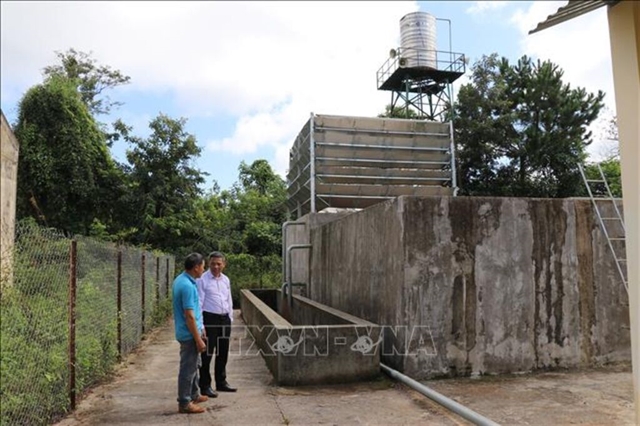
| A clean water facility in Quảng Trực border commune, Lâm Đồng Province, helps ensure a reliable supply of domestic water and improve local residents’ quality of life. |
For border areas, the province has approved a project to stabilise populations in five communes along the Việt Nam-Cambodia border through 2030. The project aims to reduce the poverty rate in the five communes to below 3 per cent by 2030, as well as allocate residential land to 860 households and production land to 1,027 households, support the construction of 402 houses and complete essential infrastructure in 36 hamlets and villages.
Under its new-style rural area development programme, Lâm Đồng aims to pursue comprehensive, modern and sustainable development with people at the centre, placing greater emphasis on quality and substantive results.
By 2030, about 65 per cent of communes are expected to meet the province’s new-style rural development criteria, while about 10 per cent of communes that have achieved the standard are expected to meet the criteria for advanced new-style rural areas. In addition, 10 more wards and the Phú Quý special administrative area are expected to complete the new-style rural development programme.
The province aims to reduce the multidimensional poverty rate by an average of around 0.68 percentage points annually from 2027 to 2030, while cutting poverty in ethnic communities by up to 3 percentage points each year. It also aims to help around half of ethnic communes and hamlets in mountainous regions currently categorised as 'extremely difficult areas' move out of this category.
To achieve these targets, Lâm Đồng has earmarked more than VNĐ5.8 trillion (US$221 million) in medium-term public investment funds for five-year national target programmes. Of this total, about VNĐ2.4 trillion will come from the central budget and VNĐ3.3 trillion from the local budget, with around 75 per cent of the resources prioritised for allocation to the commune level.
The funding will focus on transport, irrigation, electricity, clean water, schools, digital infrastructure and other essential facilities in rural areas and mountainous communities. These investments are expected to help localities gradually improve production conditions, expand access to social services and create a stronger foundation for people to develop their livelihoods and improve their quality of life.
Lê Trọng Yên, Vice Chairman of the Lâm Đồng Provincial People’s Committee, said the province will mobilise, integrate, and make effective use of, resources from both central and local governments and society at large to carry out comprehensive and sustainable multidimensional poverty reduction measures.
The province will also seek to narrow development gaps between rural and urban areas and between ethnic communities and mountainous regions and more developed areas.
Alongside economic development, Lâm Đồng will focus on preserving and promoting traditional cultural values, protecting the environment, adapting to climate change, ensuring national defence and security and maintaining social order and safety. — VNS
Society
 Society
 Society
 Society
 Society
 Society
 Society
 Society
 Society
 Society
 Society
 Society
 Society
 Society
 Society