 Society
Việt Nam seeks solutions to AI challenges in education through international cooperation
1.
|
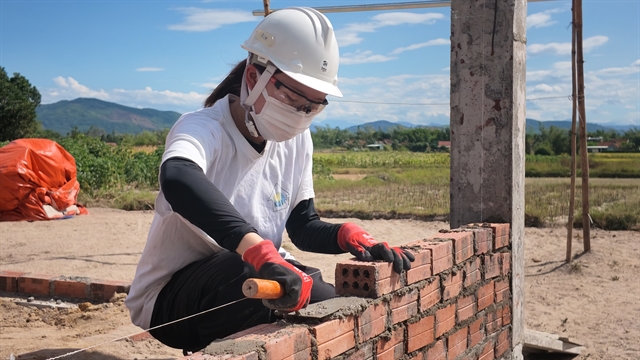
| A volunteer helps build a house in the mountainous area of Đà Nẵng City. More than 334,000 disaster-affected homes have been built or repaired nationwide. Photo courtesy of Habitat for Humanity Vietnam |
ĐÀ NẴNG – More than 334,000 disaster-affected homes have been built or repaired nationwide, while an approximate fund of US$1.2 million is needed for safe housing, water and sanitation, and community development initiatives in Đà Nẵng City.
The figure was reported at the international housing conference – ‘Inclusive Housing – Experiences and Practices in Việt Nam and Beyond’ – convening regional and global stakeholders at a critical time for Việt Nam’s housing sector amid rising affordability challenges, rapid urbanisation, and increasing climate risks.
The conference, co-organised by Habitat for Humanity Vietnam and the Đà Nẵng Union of Friendship Organizations (DAFO), coincides with accelerated government efforts to expand social housing, improve housing policy implementation, and eliminate temporary and dilapidated shelters and collaborate with markets to support the needs of low-income households.
“Việt Nam’s experience of climate adaptation offers valuable lessons for countries facing similar housing and climate pressures in the region,” said chairman of DAFO, Nguyễn Ngọc Bình.
“Through this conference, we can accelerate international collaboration and invest in bold, innovative solutions to scale housing that is affordable, inclusive, and resilient.”
|
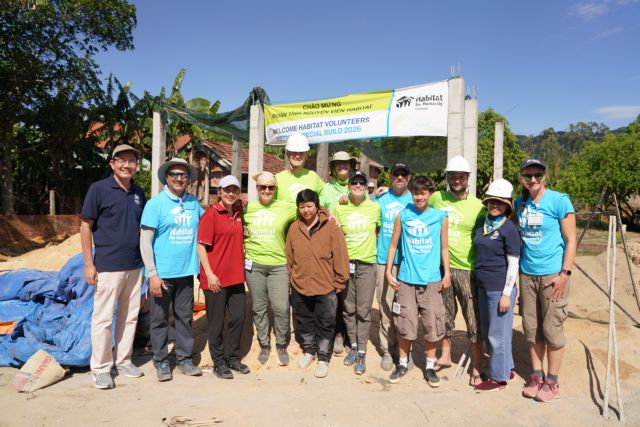
| A group of international volunteers join a supportive programmes in building and repairing disaster-affected house in central Việt Nam. Photo courtesy of Habitat for Humanity Vietnam |
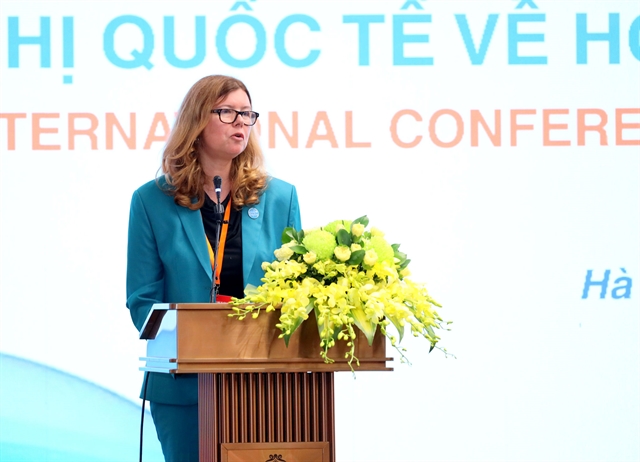
“Adequate housing goes beyond a physical structure – it is an entire system that needs national policy and market support, investment, and infrastructure to eliminate inadequate housing,” said Elizabeth Satow, Vice President for Asia-Pacific at Habitat for Humanity.
“Families can organise, save, and invest, but if access to land is limited, finance is inaccessible, or building materials are out of reach, progress remains fragile. Together, we must strengthen the systems that make decent housing possible for everyone.”
At the same time, climate change is intensifying housing vulnerability. Việt Nam, one of the most countries at risk globally, saw over 300,000 homes affected by disasters.
Habitat Vietnam continues to prioritise inclusive, climate-resilient housing solutions through climate-smart construction, expanded housing finance, and awareness-raising campaigns.
The conference also featured an exhibit highlighting key milestones from the organisation’s 25 years in Việt Nam. Since 2001, Habitat Vietnam has helped build or improve more than 36,000 homes nationwide, while also supporting thousands of families through housing finance, safe housing training and climate resilience initiatives. VNS
Society
 Society
 Society
 Society
 Society
 Society
 Society
 Society
 Society
 Society
 Society
 Society
 Society
 Society
 Society