 Society
Việt Nam News reporters win global journalism prize about child drowning
1.
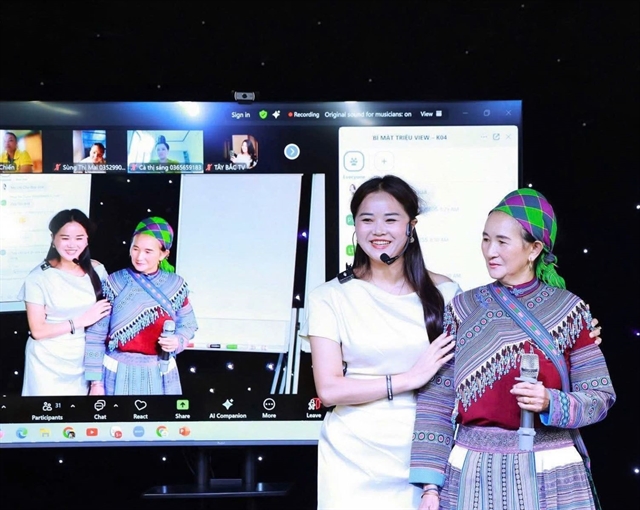 |
| Ma Thị Chú, a content creator in Lào Cai Province (left), guides ethnic minority women in building online sales channels. — Photo courtesy of Ma Thị Chú |
HÀ NỘI — Digital technology is changing how people work, sell and create in Việt Nam, opening new opportunities while raising new questions about trust and responsibility.
At the second National KOL Conference, KOL Summit 2026, in HCM City recently, speakers warned that as social media and artificial intelligence (AI) allow content to reach millions within minutes, creators face growing pressure to verify information and distinguish genuine content from manipulated material.
For people in remote areas, however, digital tools are also becoming a way to overcome geographical barriers and find new markets.
Ma Thị Chú, a content creator in Lào Cai Province, began selling farm produce online in 2020. When the COVID-19 pandemic disrupted the sale and transport of pears and crispy persimmons, she taught herself photography, video production, copywriting and livestreaming.
Instead of simply advertising prices, she tells customers about the land, local people, the cultivation and harvesting process.
Her livestreams can attract enough orders to sell around two to three tonnes of pears during a one- to two-hour broadcast.
Chú has also trained about 400 ethnic minority women in content creation, livestreaming, order management and online marketing.
The digital business has created work beyond farming, including sorting, packaging, transport, video production and online shop management. Some young people, including members of the Mông community, have found opportunities to work locally while helping their families market local products.
"Every smartphone can become a shop," Chú told Tin Tức (News) newspaper, adding that technology allows the value of local produce to reach customers more directly.
Lawyer Trần Viết Hà said digital platforms could reduce producers' dependence on traders and help them reach customers beyond their local markets and even overseas.
Smarter production
But sellers must also ensure product origin and quality and comply with regulations on transactions and advertising, he said.
Technology is also reshaping the work of KOLs – key opinion leaders – KOCs, or key opinion consumers, and media companies.
At Vitamin Network, which manages about 1,000 KOLs, creators previously handled everything from filming and scriptwriting to editing. A video could take six to eight hours to complete.
After the introduction of internal digital tools, production time has fallen to about one to two hours, according to Nguyễn Văn Khánh, the company's chief technology officer.
 |
| People in mountainous areas use smartphones to create content promoting the sale of local speciality products. — Photo courtesy of Ma Thị Chú |
The company tracks views, likes, comments, shares and other data to identify the characteristics of individual channels. Its in-house AI tools can then assist with scripts, shot selection and rough editing, while human editors complete the final product.
"AI cannot yet replace people," Khánh said, but added that it can significantly reduce the time spent reviewing and organising material.
Professional content creation, however, requires more than technology.
Phạm Xuân Hà, a senior event director and head of technology and automotive content at VCCorp, said creators also needed planning skills, production teams and an understanding of different platforms.
A video that attracts a huge number of views might not necessarily provide sustainable professional value, he said.
Trần Quốc Khánh, founder and chief executive of Vietsuccess, said data was also changing how businesses choose influencers. Follower numbers would no longer be enough; companies could assess audience characteristics, engagement and whether a creator matches a brand's image.
The 'speed trap'
AI could help creators produce scripts and videos within minutes, but the race to catch trends could come at the expense of verification, said content creator Đặng Nam Hải Triều.
He cited a video of himself buying a car worth about VNĐ600 million (US$23,000). With a few prompts, the logo and images could be altered to make the vehicle appear to be worth VNĐ2 billion.
For viewers, manipulated content could be difficult to distinguish from reality.
Hải Triều urged creators to "slow down by one beat" and follow a simple rule – check first, believe later.
Police Colonel Đỗ Minh Kim, PhD, deputy head of Division Three under the Ministry of Public Security's Department of Cybersecurity and Hi-Tech Crime Prevention, said influencers had a responsibility beyond attracting views.
They were also information sources capable of influencing people's decisions, he said.
Creators should check where information came from, cross-check it with reputable media and specialised agencies and take responsibility if false information was published.
Deleting a misleading post would not be enough, Kim said. Corrections should be made publicly and reach an audience comparable to that of the original content.
Colonel Nguyễn Hồng Quân, deputy director of the same department, said the growing use of AI to produce text, images, voices and video raised a fundamental question: who is ultimately responsible for the finished product?
AI could assist with production, he said, but could not replace human judgement about context, social consequences and whether content is appropriate.
 |
| Vũ Mạnh Tuyền, director of TVH Media (left, first row) attends the second National KOL Conference in HCM City on September 7. — VNA/VNS Photo |
Verification should begin before publication, rather than after false information has spread.
Vũ Mạnh Tuyền, director of TVH Media, said the company required KOLs to verify information with official sources. Security and public-order content was checked with police, while cultural issues were verified with relevant agencies or specialists. Images of storms, floods and local incidents were checked for their date, location and context.
When necessary, creators would contact residents or local authorities or visit the scene. The procedures helped prevent old or manipulated images from being presented as new events.
Tuyền said management companies also needed clear standards, with serious violations potentially leading to the suspension of cooperation or the termination of contracts.
Journalist Nguyễn Quang Sáng, deputy director of Vietnam Television's Southern Centre, said professional journalism had established procedures for collecting and verifying information, while KOLs had advantages in speed, accessible language and direct engagement with communities.
Combining those strengths could help accurate information reach wider audiences more quickly, he said.
Building trust
Police Lieutenant General Lê Xuân Minh, PhD, director of the Department of Cybersecurity and Hi-Tech Crime Prevention and deputy executive chairman of the National Cybersecurity Association, said influencers were emerging as a community capable of shaping trends and connecting social values.
The establishment of a Digital Trust Club Network in 34 provinces and cities could give creators opportunities to exchange information, access experts and work on community initiatives.
Nguyễn Tất Hồng Dương, chief of the Office of the National Cybersecurity Association, said influencers' strength lay in communicating in language close to their audiences.
But trust had to be earned through consistent values, responsible behaviour and a willingness to correct mistakes.
Hoàng Ninh, deputy director of the Department of E-Commerce and Digital Economy under the Ministry of Industry and Trade, said creators should define the values they wanted to promote rather than allowing their work to be driven solely by short-term attention.
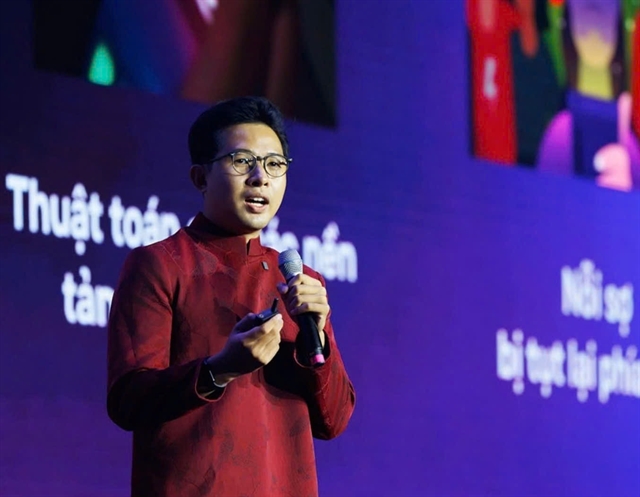 |
| Content creator Đặng Nam Hải Triều discusses the 'speed trap' at the second National KOL Conference in HCM City on September 7. — VNA/VNS Photo |
Chu Hải Công, director of public relations at Military Commercial Joint Stock Bank, said trust was becoming an important asset for influencers. Businesses should therefore consider shared values and audience characteristics rather than simply choosing creators with the largest followings.
The emerging professional standards are not intended to force creators into a single mould, but to establish basic responsibilities when influence is used in advertising, commerce or issues affecting the public.
The Influencer Trust Programme includes professional standards, a seven-topic training course and a Trust Assessment Platform. Training covers advertising law, personal data protection, crisis management, AI and copyright.
Copyright is another growing challenge.
Trần Thủy Tiên, director of commercial exploitation at FPT Play, said the ease with which music, images, videos and scripts could be copied and edited did not mean creators were free to use them.
Creators and their partners needed to establish the origin of materials, usage rights and responsibilities at the start of a project.
Creator Lê Viết Vũ Minh warned that widespread use of the same AI-generated formulas could make content increasingly uniform.
Technology could assist production, he said, but creators must retain their own voice and perspective while respecting others' intellectual property.
The challenge for digital transformation would therefore be not simply to make information move faster, but to ensure that what moves faster would also be accurate, responsible and valuable. — VNS
Society
 Society
 Society
 Society
 Society
 Society
 Society
 Society
 Society
 Society
 Society
 Society
 Society
 Society
 Society