 Society

Oriental Residence Bangkok Awarded One MICHELIN Key for the Third Consecutive Year
1.

|
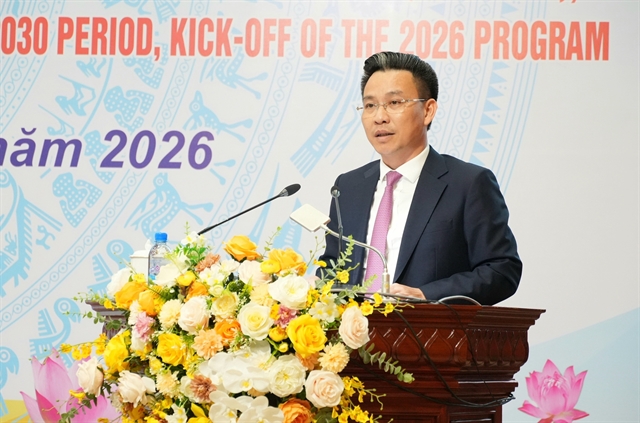
| The conference on the implementation of an artificial intelligence (AI) education plan for school students and continuing education learners was held by the Hà Nội Department of Education and Training on September 18. — VNA/VNS Photo Nguyễn Cúc |
HÀ NỘI — Hà Nội's education sector will integrate artificial intelligence (AI) education into existing curricula without creating a new subject or separate assessment grade, while ensuring equal access for students and making use of existing infrastructure and equipment.
The information was released at a conference on the implementation of an AI education plan for school students and continuing education learners held by the Hà Nội Department of Education and Training on September 18.
Director of the department Nguyễn Văn Hiền said developing students' technological skills is important, as science and technology, innovation and digital transformation are becoming key drivers of development.
Hà Nội piloted AI education in the 2025-2026 academic year and will roll it out across the education sector in the 2026-2027 academic year, he said.
According to Hiền, AI education is not simply about teaching students to use generative AI tools. It should first help them develop a proper understanding of the technology and learn to interact with, use and evaluate it, and gradually design technology themselves.
Hà Nội now has more than 1,700 educational institutions, with nearly 1.7 million students and learners accessing AI education content. Nearly 80,000 managers and teachers have received training, representing more than 98.2 per cent of the target group.
Around four out of five students showed interest in the programme, rising to 4.26 among lower-secondary students, according to the department.
The pilot showed that AI education could be implemented in practice, while also highlighting the need for standardisation and more consistent and sustainable implementation.
From the 2026-27 academic year, the programme will cover all educational institutions and all classes from Grade 1 to Grade 12. It will include 12 core periods, four competency strands, three delivery formats and three implementation levels.
No new subject or separate grade will be introduced, and students will not be required to pay additional fees for the programme.
Schools will follow five steps: completing their plans and arranging the 12 core periods; identifying and training teachers; preparing lessons and learning materials; organising teaching safely and in line with their conditions; and conducting assessments and keeping simple evidence of implementation.
The Department of Education and Training will provide teacher training at three levels. Level 1 will be an eight-period general course; Level 2, for teachers delivering specialised topics, will consist of at least 24 periods; and Level 3, for key teachers, will comprise 40 periods.
The department has asked schools to review AI tools before using them and protect students' data and privacy. Schools must not upload students' personal data, images or voices to platforms that have not been reviewed.
Students must not be required to purchase accounts, software or equipment to take part in compulsory AI education activities.
The programme will prioritise the use of existing infrastructure and suitable free or open-source software, ensuring a lack of equipment does not become a barrier to accessing core AI education content. — VNS
Society
 Society
 Society
 Society
 Society
 Society
 Society
 Society
 Society
 Society
 Society
 Society
 Society
 Society
 Society