 Society
AAAP 2026 promotes international cooperation in livestock
1.
|
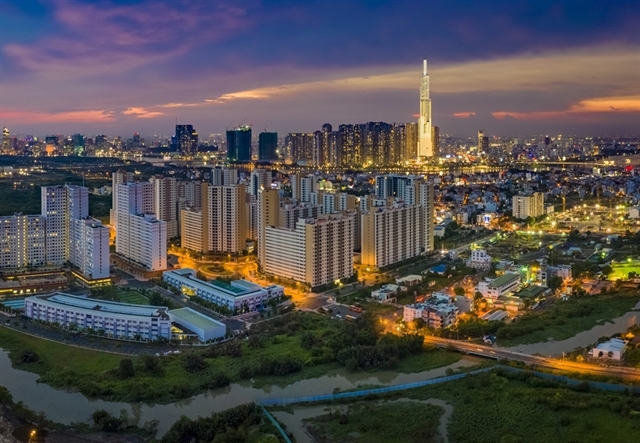
| A view of HCM City along the Sài Gòn River. The metropolis aims to leverage its infrastructure and digital transformation to achieve GRDP growth of at least 10.4 per cent in 2027. — VNA/VNS Photos |
HCM CITY — HCM City aims to achieve GRDP growth of at least 10.4 per cent in 2027 by combining traditional growth drivers with landmark initiatives such as its International Financial Center and digital transformation.
The targets were announced at a major municipal conference held on October 26 to implement resolutions of the fourth plenum of the 14th Party Central Committee.
This growth objective serves as a crucial foundation for implementing the Resolution of the 14th National Party Congress and the city’s Party Congress Resolution for the 2025–30 term.
The conference, chaired by Trần Lưu Quang, member of the Political Bureau and Secretary of the city Party Committee, was connected online to 168 wards, communes, and special zones across the southern metropolis, involving thousands of key officials and Party members.
HCM City People’s Committee chairman Nguyễn Văn Được said 2027 is determined as a period for a breakthrough that will build momentum for the entire term.
“To reach double digit economic growth, the city must make effective use of traditional growth drivers, such as industry, construction, trade, services, exports, and public investment.”
At the same time, it must rapidly develop new drivers including the International Financial Center, free trade zones, seaport and logistics services, science and technology, innovation, digital transformation, and strategic transport infrastructure, particularly railways and ring roads.
The city leader also outlined key priorities, such as accelerating public investment disbursement from the beginning of the year, linking capital allocation directly to project outcomes, and resolutely reallocating funds away from slow moving projects.
Furthermore, the city will restructure its industrial space towards high technology, promote the private sector, and attract strategic foreign direct investment (FDI) and institutional foreign indirect investment (FII).
To measure progress, it has established 76 indicators for 2027, including 38 key socioeconomic targets.
Under these targets, it aims for GRDP growth of at least 10.4 per cent, with GRDP per capita reaching US$10,561.
In terms of investment and productivity, total social investment is projected to average about 35 per cent of GRDP, while Total Factor Productivity (TFP) will contribute roughly 56.6 per cent of GRDP, accompanied by an annual labour productivity growth of about 8.5 per cent.
|
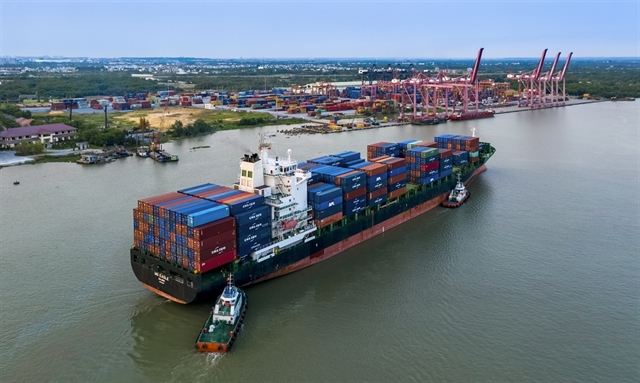
| Container operations at Saigon Newport Corporation, the largest port operator in Việt Nam. The corporation provides key logistics and maritime services to support HCM City in achieving its GRDP growth targets. |
Regarding the digital and innovation economy, the digital economy is expected to account for 30 to 40 per cent of GRDP.
Total social expenditure on research and development will reach 2 to 3 per cent of GRDP, with 4 to 5 per cent of total budget expenditure allocated to science, technology, and digital transformation.
For social welfare and healthcare, the city aims to secure 36 hospital beds, 19 doctors, and 32 nurses per 10,000 people.
In addition, it plans to construct 57,567 social housing units and complete the clearance or relocation of 11,813 makeshift houses along canals and waterways.
Transforming Party building and governance
The conference also featured detailed action plans presented by senior city officials regarding municipal governance and administrative reform.
Văn Thị Bạch Tuyết, deputy secretary of the city Party Committee, said the committee requires all agencies to strictly adhere to the "six clear" principle: clear lead agency, clear task, clear timeline, clear output, clear authority, and clear resources.
Among its key targets for 2030, the city aims for 100 per cent of leadership positions to have standardised job descriptions.
All managerial cadres will be evaluated quarterly and annually via a digital appraisal system.
In addition, at least 30 to 40 per cent of young cadres under 42 years old will be groomed for key leadership pools.
“The city will also mandate that 100 per cent of civil servants undergo digital competency training.”
Through comprehensive preparations in economics, infrastructure, digital governance, and public administration, the city aims to maintain its position as the nation's economic powerhouse while preparing to successfully host events within the framework of APEC 2027. — VNS
Society
 Society
 Society
 Society
 Society
 Society
 Society
 Society
 Society
 Society
 Society
 Society
 Society
 Society
 Society