 Society

Nuclear technology offers new growth opportunities for Đồng Nai
1.
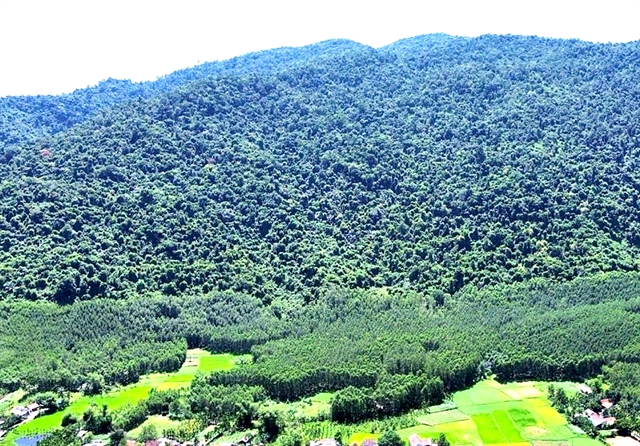 |
| Forest environmental services provide local communities with an additional source of income. — Photo https://baochinhphu.vn/ |
QUẢNG NGÃI — In remote areas of the central province of Quảng Ngãi, where agriculture is the main source of income, many households face economic hardship.
However, since being entrusted with forest management and protection, local residents have benefited directly from the policy on payments for forest environmental services.
The payments provide households with additional income to cover living expenses, escape poverty and improve their livelihoods.
They also help raise public awareness of the importance of forest protection and development.
Sơn Tây Thượng Commune in the province has nine hamlets, where more than 90 per cent of residents are Ca Dong ethnic people, a subgroup of the Xơ Đăng ethnic group.
More than 1,040ha of forest have been entrusted to 172 households and 13 residential communities for management and protection.
According to Võ Thế Vinh, Vice Chairman of the Sơn Tây Thượng Commune People's Committee, residential communities and households draw up detailed plans at the beginning of each year, assigning specific responsibilities to members for forest patrols and protection.
During the dry season, residents intensify patrols and inspect areas at high risk of forest fires, establishing firebreaks and clearing vegetation to minimise the risk.
Thanks to effective forest management and protection, residential communities and households in the commune receive more than VNĐ900 million (US$35,000) annually through the policy on payments for forest environmental services, he said.
This additional funding helps residents cover living expenses, purchase supplies and equipment, and pay for their children's education, contributing to a reduction in the commune's poverty rate to just 4.84 per cent.
"Public awareness of forest management and protection has also improved significantly. For many consecutive years, there have been no forest fires, forest damage or encroachment on forest land for agricultural production in the commune,” Vinh said.
A case in point is the family of Đinh Văn Rẫy in Nước Min Hamlet, which has been entrusted with the management and protection of 3ha of forest since 2020. In the same year, 25 households in the hamlet's residential community were assigned 11ha of forest to manage and protect.
As head of the community forest protection group, Rẫy develops patrol plans and assigns members to inspect and monitor the forest at least twice a month. If any unusual signs are detected, members report them to the group leader so that appropriate measures can be taken promptly.
In 2025, the Nước Min residential community received VNĐ4.6 million ($178) in payments for forest environmental services, while his family received more than VNĐ2 million ($77) for the forest area assigned to them.
Although these amounts are not substantial, they provide residents with additional income to cover daily expenses and improve their financial stability.
“People's awareness of forest protection has also improved considerably. Since 2020, there have been no forest fires or damage to the forest areas entrusted to us,” Rẫy said.
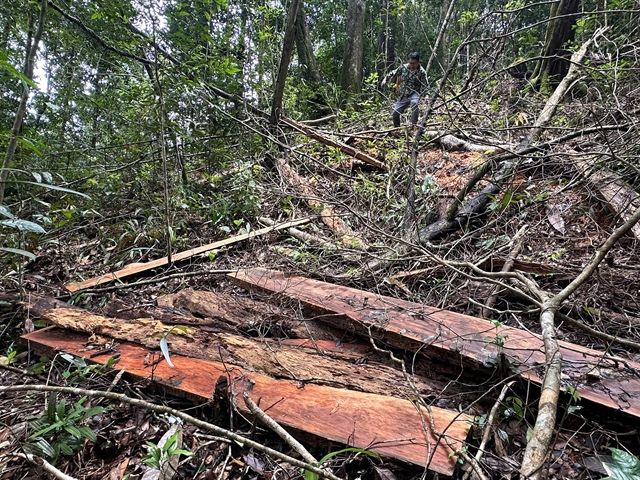 |
| Măng Ri Commune in Quảng Ngãi Province has more than 4,000ha of forest covered by the payment policy. — Photo https://baovanhoa.vn/ |
Meanwhile, Măng Ri Commune in the province has more than 4,000ha of forest covered by the payment policy, including over 2,573ha entrusted to 238 households for management and protection.
In recent years, households have effectively carried out forest protection activities, securing an additional source of stable income and helping them escape poverty.
The family of A Giỏi in Ba Tu 2 Hamlet, Măng Ri Commune, has been entrusted with 23.34ha of forest. Given the size of the area, Giỏi regularly patrols and monitors the forest.
During the dry season, which runs from November to April of the following year, his family steps up inspections and establishes firebreaks in areas at high risk of forest fires.
As a result, the forest area under their care has remained free of fires and damage for many years.
In 2025, his family received nearly VNĐ34.5 million in payments for forest environmental services.
"For households like ours, this is a substantial amount, allowing us to purchase household goods and equipment and support our children's education," Giỏi said.
He has also saved some of the money to buy cattle for livestock farming and coffee seedlings for cultivation.
"Thanks to this support, my family has sustainably escaped poverty, achieved greater economic stability and worked towards a better life,” he added.
According to Phạm Xuân Quang, Chairman of the Măng Ri Commune People's Committee, the commune considers forest management, protection and development, contracted forest protection, and payments for forest environmental services to be regular and important tasks.
These efforts help protect forest resources, preserve the ecological environment, create livelihood opportunities and improve local living standards.
Quang said the policy had not only contributed to economic development and sustainable livelihoods but also raised public awareness of forest management and protection.
In the past, some residents practised shifting cultivation, moved from place to place and encroached on forest land for agricultural production. Having recognised the benefits forests provide and the income they can generate, many have abandoned the idea of clearing forests and instead become more committed to protecting them as a source of their own livelihoods.
In 2025, Măng Ri Commune received more than VNĐ5.5 billion ($213,000) in payments for forest environmental services, of which over VNĐ3.45 billion ($133,000) went to 238 households and individuals.
The payments have helped local residents cover living expenses and purchase household goods, equipment, crop seedlings and livestock to develop their livelihoods and escape poverty.
“The results are clear. Previously, more than 50 per cent of households in the commune were poor. The rate fell to 17.6 per cent in 2024 and stood at just 9.73 per cent by the end of 2025,” Quang said. — VNS
Society
 Society
 Society
 Society
 Society
 Society
 Society
 Society
 Society
 Society
 Society
 Society
 Society
 Society
 Society