 Society
VPS leads brokerage market share on HNX in Q3
1.
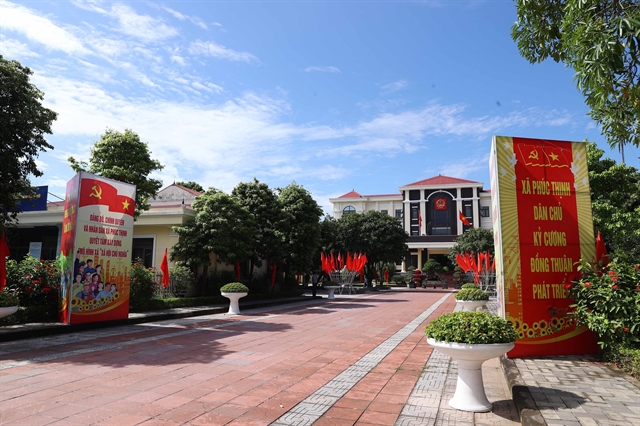 |
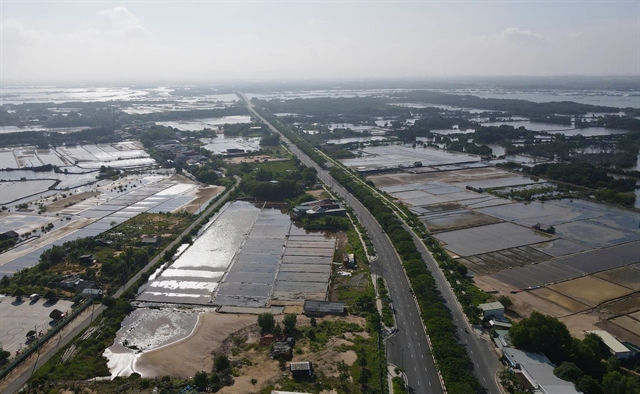
| On its journey toward new rural development, Phúc Thịnh Commune, Hà Nội, places local residents at the heart of all development policies. — Photos courtesy of the Hà Nội New Rural Development Programme Coordination Office. |
HÀ NỘI — Once a typical peri-urban rural area, Phúc Thịnh is now presented with an opportunity to develop a new identity as part of Hà Nội’s transformation. Here, roads, residential areas, agricultural land, rivers and green spaces are viewed not simply as matters of infrastructure or planning, but through a broader question: how can development help people live better, safer and happier lives?
As one of the first two localities in Hà Nội selected to pilot the model of a “socialist commune and ward,” Phúc Thịnh is translating this vision into reality by linking new rural development with improvements in people’s quality of life. From economic development and environmental protection to digital transformation, healthcare, livelihoods and cultural life, local residents are placed at the heart of the development process.
When quality of life becomes the measure of development
To implement Resolution No 16-NQ/TU, dated July 8, 2026, of the Hà Nội Party Committee on piloting the “socialist commune and ward” model, the Phúc Thịnh Party Committee issued Resolution No 59/NQ-ĐU, setting out comprehensive development goals through 2030.
What stands out is that Phúc Thịnh is not focusing solely on economic growth or infrastructure development. Healthcare, the environment, culture, social welfare and people’s satisfaction are all given an important place in the development agenda.
By 2030, the commune aims to build a modern, service-oriented local government; develop a sustainable economy; establish synchronous and smart infrastructure; create a green living environment; preserve and promote cultural values; accelerate digital transformation; and ensure social welfare.
In particular, Phúc Thịnh aims to achieve a happiness index of 9 out of 10 and an overall satisfaction rate of at least 95 percent among its residents.
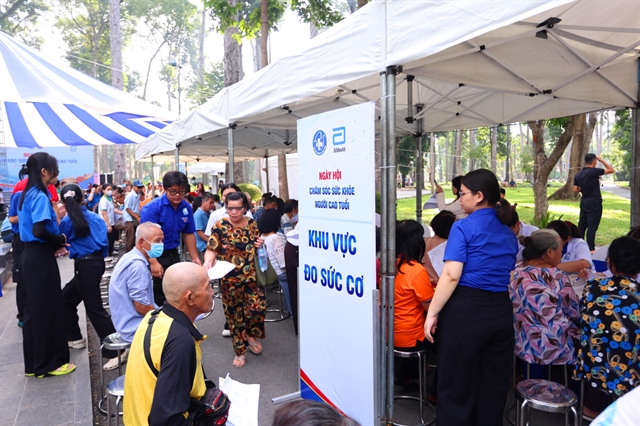
These targets are translated into concrete goals closely connected to everyday life. Residents are expected to receive annual free health check-ups or screenings and have electronic health records, while universal health insurance coverage and the elimination of poor households are also targeted. More than 90 per cent of residents are expected to participate in cultural activities, with more than 95 per cent of households meeting the criteria for “cultural families.”
For a locality undergoing rapid urbanisation, environmental quality is an inseparable part of quality of life. Air and water quality, drainage systems, waste treatment, green spaces and water bodies are therefore being considered as integral components of development planning.
Đặng Việt Hà, Head of the Culture and Social Affairs Division of Phúc Thịnh Commune, said that local officials regard the initiative as an opportunity for Phúc Thịnh to make a breakthrough and build a model locality for the capital. “We are determined to turn the goals set out in Resolution No 59/NQ-ĐU into concrete results, so that people can truly feel the changes in every aspect of their daily lives,” he said.
This approach gives new rural development a broader meaning. It is no longer simply about building new infrastructure or widening roads, but about creating a living environment in which people can directly benefit from development.
Preserving rural greenery amid urban transformation
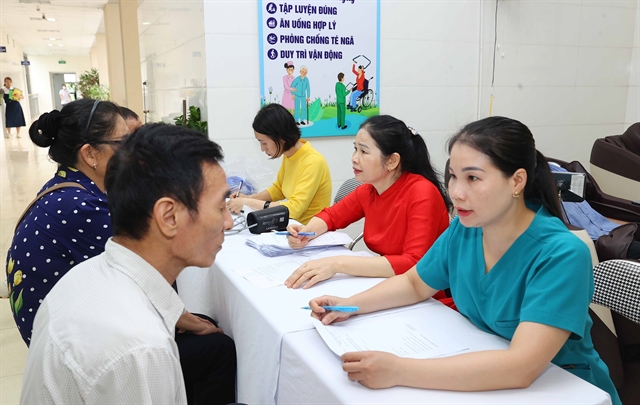 |
| Healthcare for residents in Phúc Thịnh Commune, Hà Nội. |
Urbanisation is bringing new opportunities for Phúc Thịnh in terms of infrastructure, services and employment, while also posing challenges to agricultural land, the environment and traditional livelihoods.
For this reason, agriculture and the environment are being closely linked to people’s daily lives in the implementation of the “socialist commune and ward” model. Land management is no longer simply a matter of records and planning; it is directly connected with the livelihoods of households whose agricultural land is reduced as development progresses.
Phúc Thịnh plans to combine urban services with agriculture, create new employment and opportunities for occupational transition, and increase the value generated from remaining agricultural land. Urban agriculture, safe production, traceability, digital production diaries, producer–consumer linkages and the development of OCOP-certified products are being encouraged.
Under this approach, agriculture is not simply a source of products. It also helps preserve green spaces, protect the landscape and sustain livelihoods in a rural area gradually taking on a more urban character.
Nguyễn Đình Hoa, Deputy Director of the Hà Nội Department of Agriculture and Environment, said: “Agriculture not only produces goods, but also helps maintain green spaces, preserve landscapes and create livelihoods in a rural area that is gradually taking on an urban character. The environment is another important part of Phúc Thịnh’s development picture. The commune needs to focus on controlling waste at source, sorting waste at the point of generation, treating organic waste from agricultural production, collecting bulky waste and gradually promoting circular-economy models.”
Rather than waiting for pollution to occur before taking action, Phúc Thịnh is moving toward controlling potential sources from the outset. Air and water quality, wastewater and areas at risk of pollution are monitored so that timely measures can be taken.
The Thiếp and Cà Lồ rivers and Vân Trì Lagoon are particularly important components of Phúc Thịnh’s natural landscape and environmental system. Protecting water bodies, irrigation canals, low-lying areas and drainage capacity is being pursued alongside the development of new residential areas and infrastructure.
Green spaces are also being expanded through additional tree planting, protection of water bodies, development of green corridors and community spaces. The goal is to ensure that rural values are not lost amid urbanization, but instead become part of Hà Nội’s modern landscape.
The idea of “villages within the city – cities within villages” therefore carries significance beyond urban planning. It reflects an effort to preserve the identity and memories of a rural community while creating a modern living environment that is changing day by day.
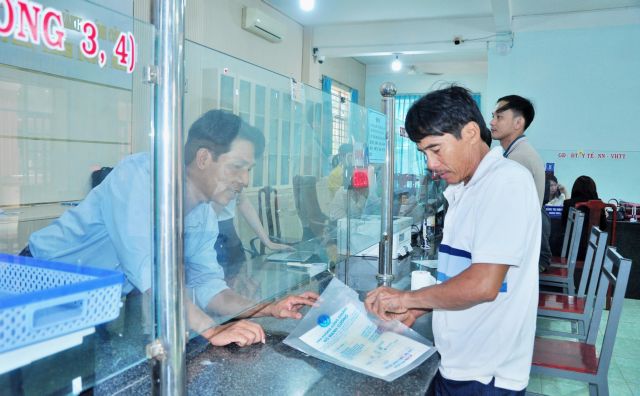
Alongside physical infrastructure, Phúc Thịnh is promoting digital transformation in local governance. Documents and administrative procedures are being processed electronically, while plans, budgets and investment progress are to be made public so that residents can monitor and oversee implementation. Online public services and digital skills are also being expanded so that technology can become a practical tool for improving everyday life.
More importantly, residents are not regarded merely as beneficiaries, but as active participants in the development process. Issues involving the environment, land, clean water, waste, livelihoods and green spaces are expected to be identified from people’s actual experiences. Residents can participate in identifying priorities, monitoring implementation and evaluating results.
According to Đặng Minh Thắng, Permanent Deputy Secretary of the Phúc Thịnh Party Committee, the “socialist commune” model is neither a slogan nor a purely theoretical concept. Instead, it has been translated into nine groups of criteria comprising 54 specific indicators. Each criterion is designed to improve governance, develop the economy, ensure social welfare, protect the environment, promote culture and improve people’s quality of life. Resolution No. 59/NQ-ĐU will serve as a foundation for the entire political system to strengthen leadership and direction, mobilise resources and build public consensus, gradually turning Phúc Thịnh into a model “socialist commune” of the capital.
The road ahead will certainly bring challenges. For Phúc Thịnh, however, new rural development in the new period is not simply about making the countryside more modern and attractive. It is also about creating greater opportunities for residents, securing livelihoods, providing a healthier environment and ensuring better access to essential services.
From protecting rivers, agricultural areas and green spaces to making public services more convenient; from supporting farmers’ livelihoods to encouraging community participation, these changes are helping shape a Phúc Thịnh that is both modern and firmly rooted in its rural heritage.
Ultimately, this new approach to development is measured in things that are close to everyday life: people living better, a greener environment, a more liveable community, and residents feeling that they are active participants in shaping their own future. — VNS
* This article was produced in collaboration with the Hà Nội New Rural Development Programme Coordination Office
Society
 Society
 Society
 Society
 Society
 Society
 Society
 Society
 Society
 Society
 Society
 Society
 Society
 Society
 Society