 Society
Vietnam Buddhist Sangha restructures for new five-year term
1.
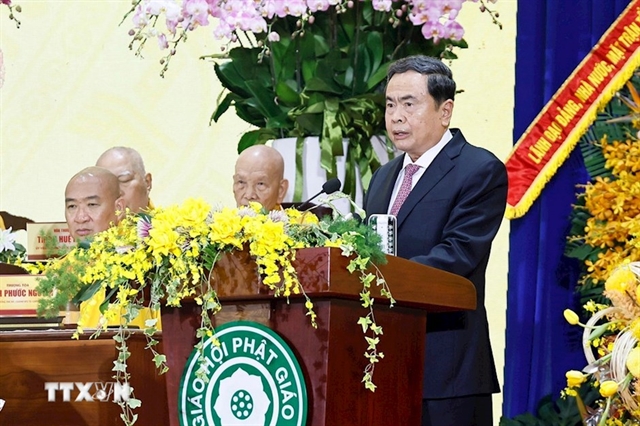 |
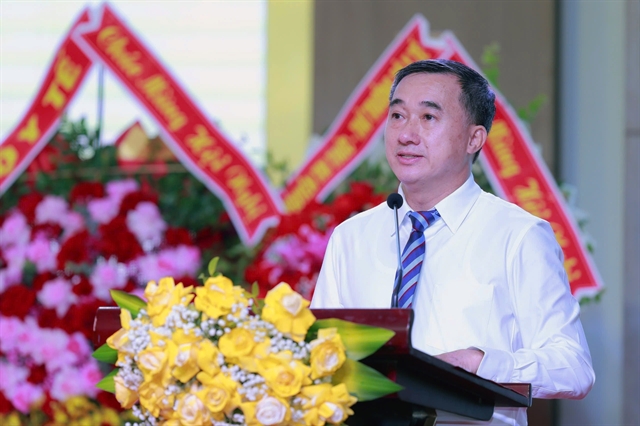
| National Assembly Chairman Trần Thanh Mẫn addresses the 10th National Buddhist Congress in HCM City on Saturday. — VNA/VNS Photo |
HCM CITY — The Vietnam Buddhist Sangha is reorganising its structure to adapt to Việt Nam’s new two-tier local government system, while setting out plans to improve management, expand digital operations and strengthen its role in social welfare.
The changes are among the priorities for its 2026-31 term, outlined at the 10th National Buddhist Congress, which opened in HCM City on Saturday with the chairman of the National Assembly in attendance.
The congress, held one year earlier than originally scheduled, also marks the 45th anniversary of the establishment of the Vietnam Buddhist Sangha on November 7, 1981.
In his opening address, Most Venerable Thích Thiện Nhơn, vice supreme patriarch of the Vietnam Buddhist Sangha and president of its Executive Council, said the organisation needed to adapt to changes in the country’s administrative structure, technological development and international integration.
Under the theme “Discipline – Innovation – Effectiveness – Efficiency”, the Sangha plans to strengthen organisational discipline, improve management and accountability, and modernise its administrative operations through digital technology.
It will also focus on Buddhist education and training, preserving Vietnamese Buddhist cultural identity, expanding international cooperation and encouraging monks, nuns and followers to take part in social activities.
The decision to hold the congress early was linked to the administrative restructuring and the introduction of the two-tier local government model.
The Sangha has been reviewing its organisational structure and charter to reflect the changes, including the end of Buddhist affairs administration at district level.
Addressing the congress, Trần Thanh Mẫn, chairman of the National Assembly, said Buddhism had made significant contributions to Vietnamese society through its charitable work, education, healthcare and other community activities.
He praised the Sangha for adjusting its organisation to the new local government model and called on it to address existing shortcomings, strengthen internal discipline and maintain solidarity.
He also urged monks, nuns and Buddhist followers to continue participating in national development and social welfare programmes, while asking government agencies and local authorities to facilitate the activities of religious organisations in accordance with the law.
During the opening ceremony, the State recognised the Sangha’s contributions to social and economic development.
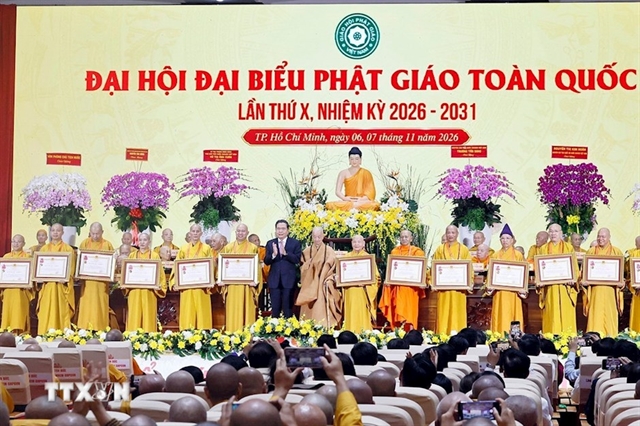
Mẫn presented the First-Class Labour Order to the Vietnam Buddhist Sangha, while other organisations and individuals received State decorations and certificates of merit.
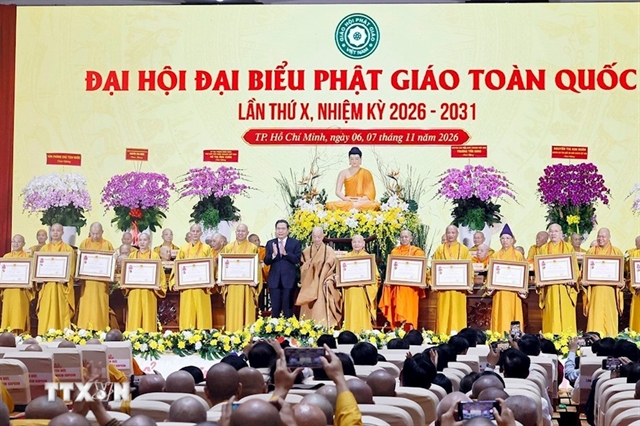 |
| National Assembly Chairman Trần Thanh Mẫn presents the First-Class Labour Order to the Vietnam Buddhist Sangha and Labour Orders to outstanding organisations and individuals. — VNA/VNS Photo |
Reviewing the 2022-26 term, Most Venerable Thích Thiện Nhơn said the Sangha had expanded its activities in Buddhist education, cultural preservation, international cooperation and social welfare.
One major event was the hosting of the United Nations Day of Vesak in HCM City last year, which brought international Buddhist leaders and delegates to Việt Nam.
The reception and display of the Buddha’s relics attracted more than 17 million visits by monks, nuns, Buddhists and members of the public, he said.
Charitable and social welfare programmes nationwide were valued at more than VNĐ7.5 trillion during the term, supporting disadvantaged people, disaster-hit communities and other vulnerable groups.
The congress is also reviewing the previous term’s activities, electing the Sangha’s leadership for 2026-31 and considering the eighth revision of its charter.
The event brought together nearly 2,000 delegates and guests from across the country and overseas. — VNS
Society
 Society
 Society
 Society
 Society
 Society
 Society
 Society
 Society
 Society
 Society
 Society
 Society
 Society
 Society