 Society
Experts call for stronger dengue fever prevention measures
1.
|
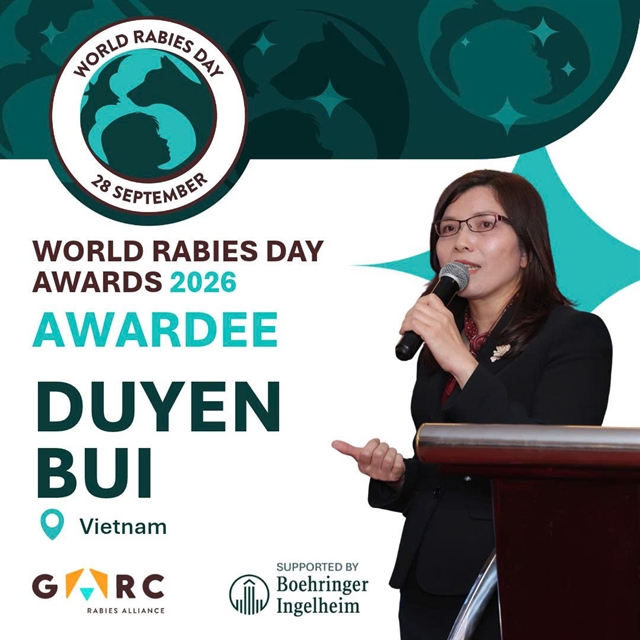
| The Global Alliance for Rabies Control presents the World Rabies Day Award 2026 to SBCC Vietnam Director Bùi Thị Duyên.— Photo courtesy of SBCC Vietnam |
HÀ NỘI — The Global Alliance for Rabies Control has presented the 2026 World Rabies Day Award to Bùi Thị Duyên, director of SBCC Vietnam.
SBCC Vietnam is one of the organisations carrying out a pilot project in several wards in Hà Nội to help dog and cat meat traders to gradually transition into other careers, helping to prevent rabies and advance sustainable economic development.
The award recognises the encouraging results of the pilot in 14 of the capital's wards, where people in the dog and cat meat trade are receiving support to transition into new livelihoods.
Results from 14 pilot wards
The pilot project was approved by the Hà Nội People's Committee in July 2025, with the municipal Department of Agriculture and Environment as the project owner. It has been carried out by the Hà Nội Sub-Department of Livestock, Fisheries and Veterinary Medicine, the Soi Dog Foundation and SBCC Vietnam.
After more than a year, 28 businesses have ceased operations while 25 others have registered to change their business model. Giảng Võ Ward has become the first in the project to completely eliminate dog or cat meat businesses.
The award comes as rabies remains a major public health challenge in Việt Nam. By mid-September, the country had recorded 54 rabies deaths.
Duyên said that the award was the result of shared commitment and joint effort by SBCC Vietnam and other partners.
"This award means a great deal to the entire project team. Our efforts have been recognised as a contribution to the global journey toward the elimination of rabies," Duyên said.
Why was the project recognised?
|
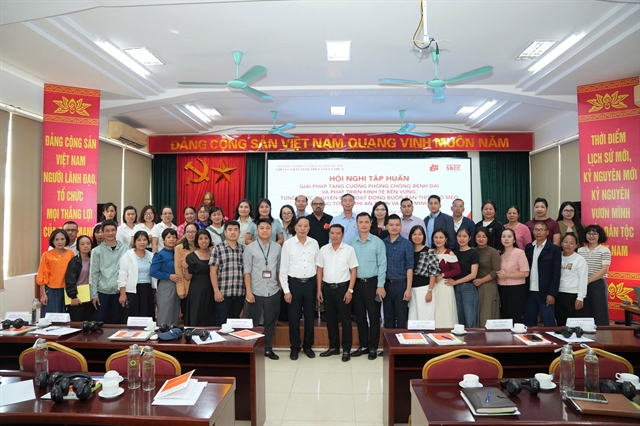
| A vocational training workshop for households currently engaged in the dog and cat meat trade in the project's 14 pilot wards in Hà Nội. — Photo courtesy of SBCC Vietnam |
Rabies is an extremely dangerous infectious disease transmitted from dogs and cats to humans. Yet behind the transport, slaughter and sale of dog and cat meat are people who still depend on this work for a living.
To support a coordinated response to rabies, the project has taken a One Health approach, balancing three priorities: human health, animal welfare and livelihood support for the community.
Speaking about this approach, Senior Manager at Soi Dog Foundation Faizan Jalil said: "The transport, trade and slaughter of dogs and cats are the weakest link in today's disease prevention chain."
For this reason, the award citation highlighted two key factors that set the project apart: multi-sectoral coordination between Government, communities, civil society organisations and international partners; and a focus on driving long-term, sustainable behaviour change.
This coordination extends to the ward level, where People's Committees and local veterinary staff go door to door to dog and cat meat businesses, reviewing their operations, encouraging change and helping owners to comply with regulations.
Meanwhile, the Soi Dog Foundation contributes international experience in sustainable livelihood transition, as well as a humane euthanasia protocol that has been introduced into training for the public veterinary system for the first time.
SBCC Vietnam, a social enterprise, leads the behaviour change communication strategy and works side by side with dog and cat meat traders as they learn new skills and build new ways of earning a living.
The initiative has also inspired private veterinarians to volunteer their time and expertise.
The results in the pilot wards are not only helping people change livelihoods and stabilise their lives, but are also gradually shaping a standardised model for rabies prevention linked to sustainable economic development.
Several other provinces and cities have already shown interest in learning from Hà Nội's example.— VNS
Society
 Society
 Society
 Society
 Society
 Society
 Society
 Society
 Society
 Society
 Society
 Society
 Society
 Society
 Society