 Society

Việt Nam steps up fight against counterfeits, IP violations
1.
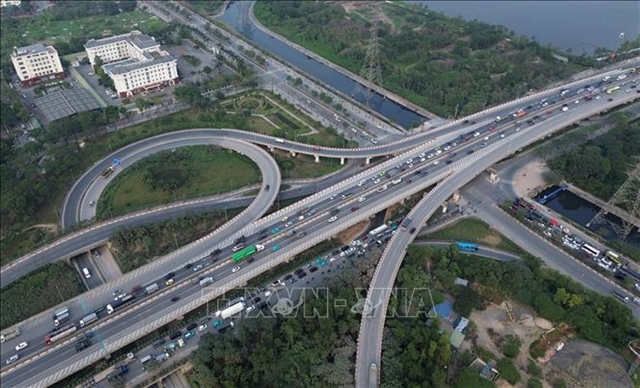 |
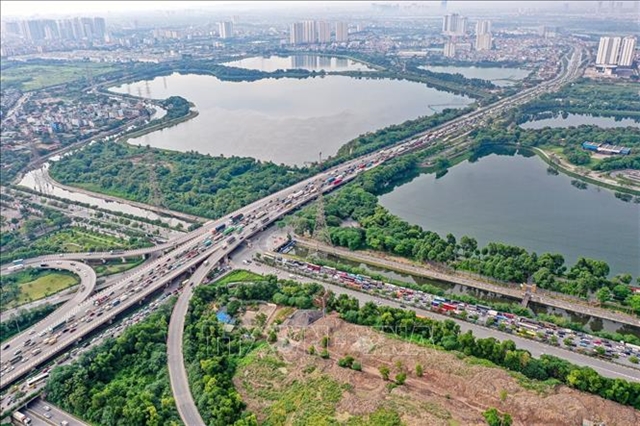
| The elevated Ring Road 3 in Hà Nội. Resolution 66 marks a notable step by placing urban renewal and redevelopment within a comprehensive policy framework. — VNA/VNS Photo Quốc Khánh |
HÀ NỘI — A resolution recently approved by the Hà Nội People’s Council is expected to create momentum for urban renewal linked to the reorganisation of space, supplementation of infrastructure, establishment of a housing fund and effective exploitation of land resources.
Resolution 66/2026/NQ-HĐND, which took effect in the beginning of July, outlines the city's policies on urban renewal, improvement and redevelopment, as well as transit-oriented development (TOD).
Authorities hope the resolution will help remove bottlenecks in planning, investor selection, compensation and resettlement.
The resolution marks a notable step by placing urban renewal within a relatively comprehensive policy framework, rather than policies dealing with each dilapidated building or street individually.
It outlines a variety of projects, including the improvement of buildings, the protection, restoration and conservation of areas of cultural, historical, architectural or environmental significance and the redevelopment of urban areas and mixed-use projects.
Under the resolution, areas where renewal, improvement and redevelopment may be carried out are clearly identified.
These include places with dangerous or dilapidated buildings, those that do not meet construction standards or fire prevention and fighting requirements, those lacking technical or social infrastructure, those incompatible with planning or those with population density exceeding standards.
According to experts, this approach is appropriate for Hà Nội, where many inner-city areas have old, deteriorating buildings, overloaded technical infrastructure and shortages of schools, parking lots, green trees and public spaces.
If buildings are renewed only on an individual basis without simultaneously addressing the surrounding space and infrastructure, it will be difficult to resolve fundamental urban problems.
The resolution puts in place special mechanisms not only to replace old buildings, but also to synchronise transport, schools, green spaces, public spaces and other essential needs for residents.
These mechanisms will allow the formation of multi-purpose urban areas linked to urban renewal, experts said. The areas can create funds for social housing, resettlement housing, official-duty housing and commercial housing, while permitting adjustments to land-use structure, housing structure and planning, and architectural indicators in line with infrastructure capacity.
The funds could also become an important resource for reinvestment in areas requiring renewal.
In particular, the resolution aims to remove obstacles in the selection of investors and to build consensus among residents.
The special mechanisms also impose strict requirements on planning. Adjustments to indicators must be linked to infrastructure capacity, and the exploitation of underground and elevated space, as well as multi-layer urban development, must comply with approved plans.
Momentum
Architect Dr Đào Ngọc Nghiêm, deputy chairman of the Việt Nam Urban Planning and Development Association, said that Hà Nội’s introduction of special mechanisms for urban renewal, improvement and redevelopment is a necessary step.
Over the past several years, the city's reliance on general mechanisms has made it difficult to address the capital’s huge list of needs.
But most importantly, a mechanism that ensures benefits for all parties must be created, he said. The State must play a leading role in planning, implementation and control of benefits from land, enterprises must have feasible investment plans and residents’ legitimate rights and interests must be safeguarded.
Nghiêm said that Hà Nội’s allowance for studying and reorganising renewal areas on a larger scale could open up room to balance resources.
Enterprises do not necessarily have to recover capital only from the old apartment building itself, but can exploit land funds and commercial and service spaces formed during redevelopment, provided this does not lead to uncontrolled increases in population and infrastructure pressure.
This is also why linking urban renewal to the TOD model is particularly significant, aiming to reorganise urban space based on the capacity of the public transport system. In that case, areas around transport hubs can be developed with more synchronous systems of services, commerce, housing and public spaces.
Experts have argued that the issue of capital needs particular attention. If there is excessive reliance on enterprises’ own capital and bank credit, the progress of renewal may be affected.
Studying additional long-term capital mobilisation channels is therefore needed, while also strengthening the State’s role in projects involving urban improvement, redevelopment and ensuring safety for residents.
“To make this mechanism truly come to life, the most important thing is still to clearly define the interests of each party. Residents must have their rights to housing, resettlement and asset value protected, enterprises must see investment effectiveness and the State must gain benefits in terms of infrastructure, landscape and urban quality,” Nghiêm said. — VNS
Society
 Society
 Society
 Society
 Society
 Society
 Society
 Society
 Society
 Society
 Society
 Society
 Society
 Society
 Society