 Society
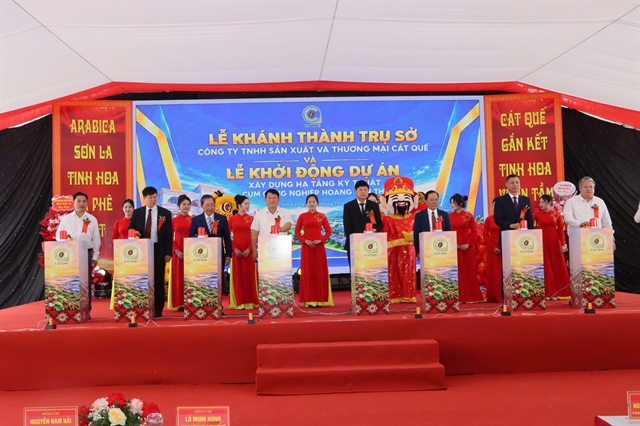
Sơn La launches $24 million industrial cluster project
1.
|
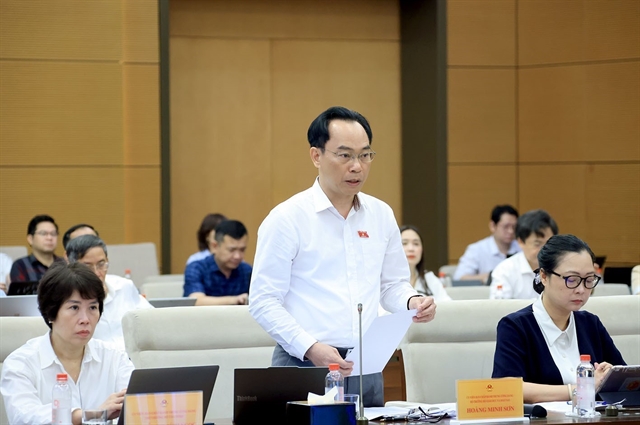
| Minister of Education and Training Hoàng Minh Sơn addressed issues concerning the education sector at a working session with the National Assembly’s Committee for Culture and Social Affairs on Sunday. — VNA/VNS Photo |
HÀ NỘI — Schools nationwide are short of 104,500 teachers compared with staffing norms, with lower secondary schools facing the largest shortage of nearly 42,500 teachers, Minister of Education and Training Hoàng Minh Sơn has said.
The figures were released at a hearing before the National Assembly’s Committee for Culture and Social Affairs on Sunday, where the minister addressed issues concerning the education sector.
According to the Ministry of Education and Training (MOET), as of the end of the 2025-26 academic year, Việt Nam had over 1.2 million preschool and general education teachers, up 3,942 from the previous academic year. Of these, over 1.1 million worked at public schools and 157,494 at non-public institutions.
There were also 98,477 managers at preschool and general education institutions.
As of June 2026, localities had recruited 14,994 teachers for public preschool and general education institutions during the 2025-26 academic year, including 3,116 preschool teachers, 5,241 primary school teachers, 4,524 lower secondary school teachers and 2,113 upper secondary school teachers.
However, the country still lacked 104,500 preschool and general education teachers.
At the session, Minister Sơn said developing the teaching workforce and educational management personnel is one of the key conditions for ensuring education quality and implementing the 2018 General Education Programme.
He said the redistribution of teachers among localities is being carried out in an urgent manner with many educational managers reassigned to classroom teaching following administrative restructuring.
The shortage and imbalanced distribution of teachers stem from various causes, including the failure of workforce planning and forecasting in some localities to keep pace with changes in student numbers, class sizes and population movements, he said.
He also pointed out the fact that as of May 31, more than 40,000 allocated teacher positions nationwide remained unfilled. Some localities also face difficulties in securing funding for labour contracts, paying overtime teaching wages and implementing policies to support, attract and retain teachers.
He said the ministry will continue coordinating with the Ministry of Home Affairs to review teacher staffing needs for 2027-31, while completing relevant mechanisms and policies and guiding, inspecting and urging localities to recruit, employ and develop the teaching workforce.
The minister also highlighted several other policies, including continued expansion of tuition fee exemption and reduction schemes, support for textbooks and school meals, scholarships and policy-based credit programmes.
Policies supporting students pursuing basic sciences, key engineering fields and strategic technologies have begun to show clear results.
Citing that the proportion of students enrolling in STEM fields reached 33.6 per cent in 2026, approaching the 35 per cent target set by Resolution 71 on breakthrough solutions on educational development and training, Sơn said universities have streamlined study programmes that are no longer aligned with social demand while introducing new programmes directly serving national development, including semiconductor technology, artificial intelligence, data science, nuclear technology, high-speed rail, digital technology and new energy.
Computer-based testing plan
The ministry will maintain the current high school graduation examination model while implementing computer-based testing following a roadmap.
According to the ministry, the current high school graduation examination serves several purposes, including assessing learning outcomes for graduation recognition, providing data for evaluating education quality and supplying reliable data that higher education and vocational education institutions can use in admissions.
“The examination is not a compulsory university entrance examination. Training institutions have the right to decide whether to use examination results or other admission methods in accordance with regulations,” said the ministry.
The ministry has submitted a proposal to the Prime Minister for organising the high school graduation examination on computers, with implementation to follow a plan appropriate to differences in infrastructure among localities.
It will also accelerate the development of a standardised question bank and increase the use of technology in supervision, security, data analysis and cheating prevention.
In the coming period, MOET will continue to strengthen the independence of inspection and supervision, study mechanisms for cross-checking, apply cameras and electronic tracking, and introduce measures to control unauthorised technological devices. Violations will be strictly handled to ensure discipline, safety and the reliability of the examination. — VNS
Society
 Society
 Society
 Society
 Society
 Society
 Society
 Society
 Society
 Society
 Society
 Society
 Society
 Society
 Society