 Society

MoIT to build system to flag unusual fuel price movements
1.
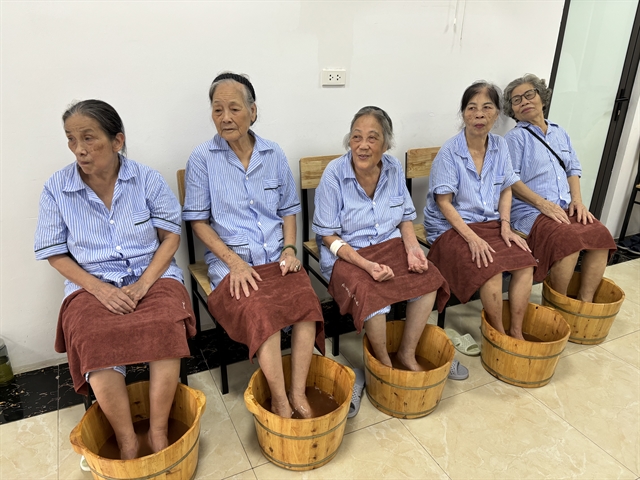 |
| Elderly people soak their feet in basins of herbal medicine at the day care centre in Tây Hồ Ward. The centre brings healthcare services closer to older citizens while allowing them to return home in the evening, while preserving the central role of the family in elderly care. — VNS Photo Khánh Dương |
Khánh Dương
HÀ NỘI — In a small room at a day care centre overlooking West Lake in Tây Hồ Ward, Hà Nội, a group of elderly people soak their feet in basins of herbal medicine, chatting and laughing as they begin a new day of care and companionship.
Far from sitting quietly, they exchange stories with one another and with healthcare workers, their faces bright with smiles.
For 86-year-old Ngô Thị Lành, who lives on Quảng Bá Street, the centre offers something more valuable than healthcare services.
“Happiness is what we cherish the most when coming here,” she told Việt Nam News.
During the day, her children and grandchildren are at work and school, leaving her alone at home, with watching television her only form of entertainment.
“Coming here, I feel more relaxed,” Lành said.
“At first, I hesitated to come, but my children encouraged me to join, saying that spending time here would help me feel less burdened by my daily household routine.”
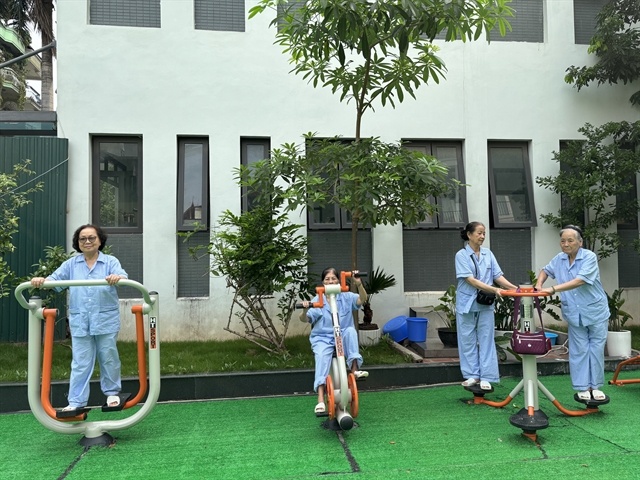 |
| Elderly people begin a new day with outdoor physical exercises. They also practise meditation and receive other healthcare services. — VNS Photo Khánh Dương |
Daily companionship
For more than a month, dozens of elderly residents in the ward have been coming to the public day care centre every day, from 7am to 5pm.
After the morning session, they have lunch and take a nap, followed by afternoon tea before continuing with activities until 5pm, when their children pick them up and take them home.
At the centre, they take part in outdoor physical activities, herbal foot soaks, acupuncture and physiotherapy. They also practise meditation and receive other healthcare services.
But the centre is about more than healthcare.
The elderly play chess, sing together, chat and make new friends, turning their daily visits into a time for both entertainment and friendship.
On her first day at the centre, Trần Thị Vân, who has mild Alzheimer’s disease, felt shy and kept to herself, sitting alone in a corner.
Lành and other elderly residents encouraged Vân to join the group, while Trần Thị Thu Thủy, the healthcare official in charge of the centre, repeatedly reassured her, telling her: “We, the healthcare workers, love and care for you as your children do at home. You can feel at ease when you are here.”
The warmth and care gradually helped Vân feel more comfortable. By the end of her first day, she was chatting with others and had forgotten the loneliness she had felt that morning.
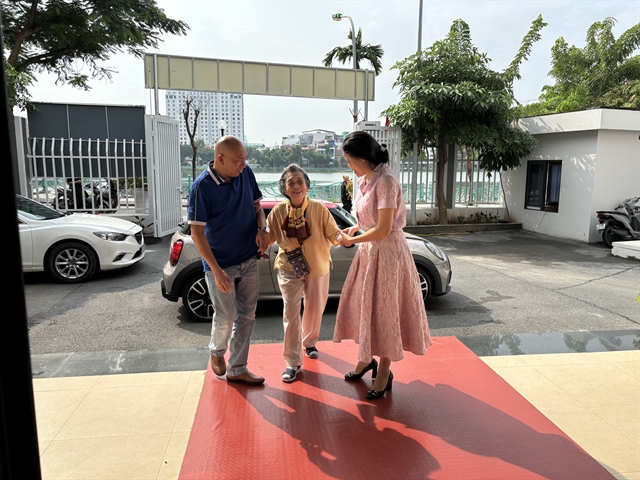 |
| A senior is warmly welcomed to the centre. Hà Nội is the first locality to pilot the model in six wards, attracting dozens of elderly people every day. — VNS Photo Khánh Dương |
After a one-month trial, positive feedback has prompted many people to visit the centre to learn more about the State-funded model.
Nguyễn Mai Phương brought her 90-year-old father to the centre to learn about the service, hoping he would have an enjoyable and healthy time there.
“I learned about the model online and also through recommendations from my colleagues. My father had been looking forward to coming to the centre for several days,” she said.
Care with dignity
The development of day-care centres for older people was first proposed one year ago by Communist Party General Secretary and State President Tô Lâm, who said the model should be developed nationwide to help older people combat loneliness.
Hà Nội is the first locality to pilot the model in six wards, putting into practice a resolution, issued in September 2025 by the Communist Party of Việt Nam on breakthrough measures for the protection, care and improvement of public health, or Resolution 72 for short.
Following the establishment of a day-care centre for older people in Long Biên Ward in early June, five other wards – Việt Hưng, Đống Đa, Tây Hồ, Quốc Oai and Bồ Đề – also launched similar centres, attracting dozens of elderly people every day.
After evaluating the results and drawing lessons from the pilot programme, the model is expected to be expanded to all 126 communes and wards across the city.
Thủy said the elderly day care centre is a humanitarian model. Most older people come for emotional support rather than medical treatment alone.
State-funded care centres bring healthcare services closer to older citizens while allowing them to return home in the evening, while preserving the central role of the family in elderly care.
“This is truly meaningful for the elderly," Thủy said.
"For many seniors, a place like this allows them to feel comfortable and relaxed, both physically and emotionally.
"It is not a place where families simply leave their parents behind. Instead, it gives older people a chance to feel as though they are going on a holiday or enjoying a retreat.”
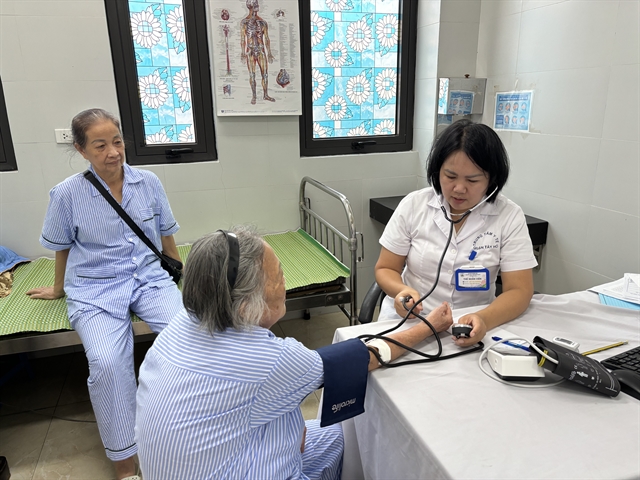 |
| A medical worker measures an elderly resident's blood pressure. Most older people come for emotional support rather than medical treatment alone. — VNS Photo Khánh Dương |
She said each elderly person would receive a health check when first arriving at the centre and have their medical information recorded and monitored by healthcare workers. Those with prescriptions would also be reminded to take their medication.
“For example, if someone has diabetes, their diet will be monitored and adjusted more strictly,” she added.
The estimated cost is currently around VNĐ250,000 per person per day, or approximately VNĐ6 million per month. However, local authorities are calling for greater social support and other resources to keep fees as low as possible.
This is significantly lower than the cost of private day care centres, where monthly fees can exceed VNĐ10 million per person.
“Hopefully, the free services can eventually be expanded to people who have made contributions to the nation, people from disadvantaged backgrounds and people with disabilities,” she said.
Room to grow
According to the National Population Database, Hà Nội currently has nearly 1.4 million people aged 60 and above, accounting for more than 16 per cent of the city’s total population. The figure could reach 1.71 million by 2030.
Đinh Hồng Phong, deputy director of the Hà Nội Department of Health, said the city would coordinate with the Việt Nam Association of the Elderly, intergenerational self-help clubs, the Women’s Union and the Youth Union to organise additional cultural and sporting activities, improving the effectiveness of the elderly day care centre model.
Dr Trần Viết Lực, deputy director of the National Geriatric Hospital, emphasised that daytime care facilities for old people were becoming an essential part of elderly healthcare.
He said it was a positive sign that the State had begun paying greater attention to the model.
“When the Government invests in this model, it can be developed in a more systematic way, on a larger scale with more consistent quality than privately-operated facilities,” he said.
Unlike hospitals, he said, day care centres for older people should focus not only on healthcare but also on mental well-being, physical activity, rehabilitation, nutrition and monitoring chronic conditions that have been stabilised.
“Most importantly, these centres can help improve the mental and emotional well-being of older people,” he said.
“As the public elderly care system develops, it is hoped that insurance policies will eventually cover part of the cost. This would significantly increase older people’s access to these services,” he said. — VNS
Society
 Society
 Society
 Society
 Society
 Society
 Society
 Society
 Society
 Society
 Society
 Society
 Society
 Society
 Society