 Society
Việt Nam, Laos firms sign deals on property, smart farming projects
1.
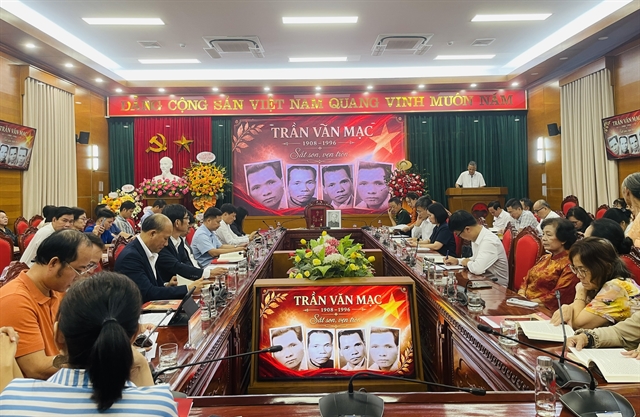 |
| Chairman of Hải Phòng City Historical Science Association, Phạm Xuân Thanh, delivers remarks at the scientific seminar titled "Trần Văn Mạc – Witness to the Flow of History". Photos Khánh Chi |
Nguyễn Khánh Chi
‘Having committed to the revolution, no distance is too far and no hardship too great; one must overcome everything and sacrifice for one's ideals,’ is insribed on the inside front cover of the memoir Sắt son, Vẹn tròn (temporarily translated as Unwavering and Fulfilled) by veteran revolutionary Trần Văn Mạc.
These words vividly portray the spirit and character of not only Mạc himself but also of all Vietnamese revolutionary soldiers, those who devoted their youth, their intellect, and their entire lives to the cause of national liberation, as well as the defence and construction of the Fatherland.
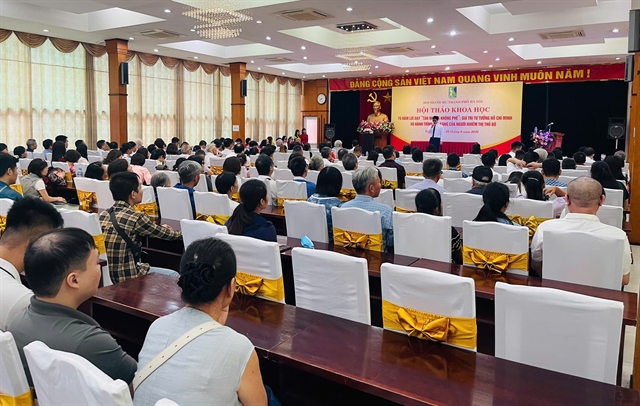
Those portrait and spirit were further illuminated at the scientific seminar titled "Trần Văn Mạc – Witness to the Flow of History" co-organised by the Institute of Cultural Anthropology (ACI), the Hồ Chí Minh National Academy of Politics, and his family on August 22, marking the 30th anniversary of his passing.
The event highlighted his life and revolutionary career via his memoirs and a ceremony donating his personal effects to the Museum of the Communist Party of Việt Nam.
Mạc was born in 1906 in the suburbs of Nam Định City, Nam Định Province (now in Ninh Bình Province), roughly 85km south-southeast of Hà Nội.
"Mạc began his life working as a domestic servant in the capital city. Unable to endure the humiliation, he returned to Nam Định to work as a labourer at the Nam Định Textile Mill," wrote Assoc. Prof. Dr. Đỗ Lai Thúy, Director of the ICA. She emphasised that Nam Định was the first industrial city in Northern Việt Nam during the French colonial period.
After witnessing the various forms of exploitation inflicted by the French colonialists upon the textile workers, he reached a political awakening and joined the revolution.
“I was a citizen of an occupied nation, constantly witnessing scenes of injustice, pressure, and oppression, moving from one form of exploitation to another. The people had no power. Vietnamese people live on their own land, why should they have to fear foreigners? The more I thought about it, the more indignant I became,” Mạc chronicled his journey to the revolution, a path forged through years of servitude, humiliation, and the relentless exploitation of colonial factory owners.
According to Thúy, Mạc’s revolutionary life was fraught with hardship but equally filled with glory. He endured imprisonment in nearly all the notorious colonial prisons, including Sơn La and Côn Đảo, as well as concentration camps such as Phú Thọ, Phấn Mễ, and Bá Vân. He also participated in open activities during the Indochinese Democratic Front period (1936–1939), eventually taking part in the uprising to seize power in his home city of Nam Định.
“Trần Văn Mạc’s experiences in the revolutionary struggle have become historical lessons for many generations of Vietnamese, especially for the young people born and raised after the wars,” she emphasised.
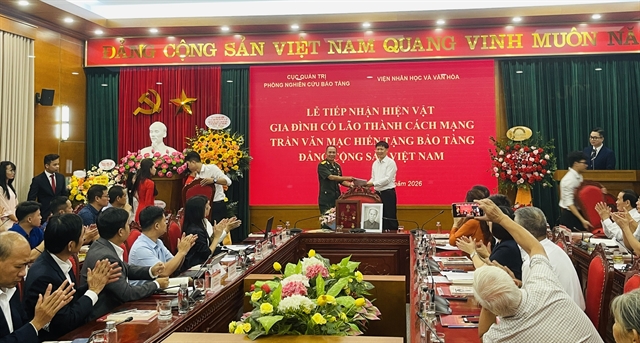 |
| On behalf of his family, Trần Anh Tuấn (left) symbolically presents Trần Văn Mạc’s memorabilia to a representative of the Museum of the Communist Party of Việt Nam. |
Revolutionary ideals
The history of the Vietnamese nation is a heroic epic written by countless generations of patriots - ordinary people who carried within them great ideals, ready to sacrifice personal interests for the independence and freedom of the nation and the happiness of its people.
Sharing his thoughts and feelings about his grandfather,Trần Lê Hưng said “The greatest legacy he left to his descendants is not material wealth or property, but an invaluable spiritual treasure: revolutionary ideals. It is a fierce belief in the truth and a burning desire for a just, democratic, and civilised society where people can live in genuine peace, independence, and freedom.”
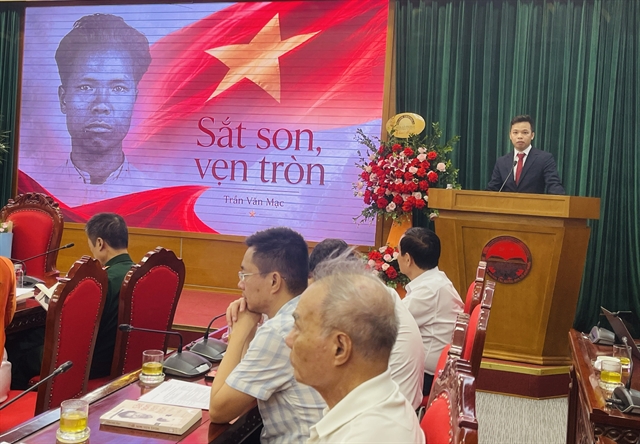 |
| Trần Lê Hưng highlights his grandfather's revolutionary ideals. |
“The ideal that he and previous generations pursued was national independence linked with socialism. This ideal was not abstract; it was manifested through concrete actions: the courage to fight against oppression and injustice, the willingness to sacrifice for a noble cause, and a sense of responsibility toward the community and society. It teaches future generations how to live with purpose, to remain steadfast in the face of hardship, and to resist the lure of mundane material temptations," said Associate Professor Dr Hưng from Gustave Eiffel University in France.
“Standing before the monumental legacy of our ancestors, I feel incredibly small. In this era of peace, when the sound of gunfire has ceased, our "enemies" take on different forms: economic lagging, the degradation of moral ideology, corruption, waste, non-traditional security threats, climate change, and the fierce competition of the digital age,” he told the audience who are scholars, researchers and lecturers from various localities nationwide.
Bùi Thị Thanh Thủy, Deputy Head of the Collection and Exhibition Department at the Vietnamese Women’s Museum, said “These memoirs are not merely the story of one individual; they are a testament to the will and spiritual fortitude of an entire generation—a generation that fought not only for the survival of the nation but for the future of its people and the generations to follow. The memoir serves as a letter to today’s youth, a reminder that our current peace and freedom were paid for with the blood and tears of countless people.”
His memoirs vividly illustrate this resolve 'When they called my cell number, though I had steeled myself to endure—a struggle between myself and the enemy—I tried to summon the strength to bear the pain. The enemy employed every trick, from sweet words to soothing deceptions, to break the prisoner’s spirit.’
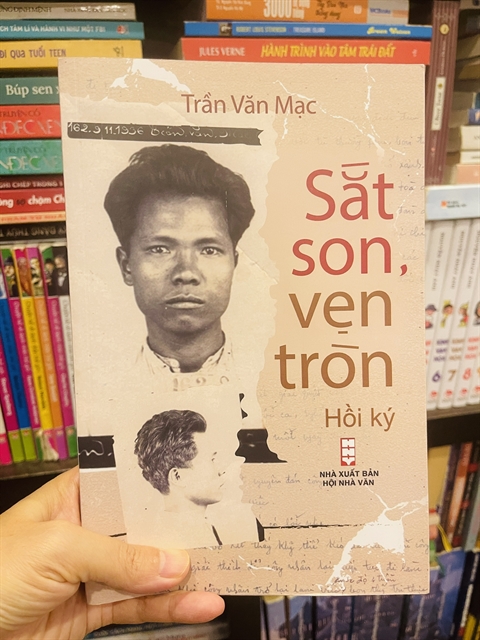 |
| The memoir Sắt son, Vẹn tròn (temporarily translated as Unwavering and Fulfilled) by veteran revolutionary Trần Văn Mạc. |
"The memoir is more than a historical record; it is an enduring source of inspiration for today’s youth. Throughout the text, Mạc emphasises the heavy responsibility young people bear toward their country, a struggle that must be self-motivated, autonomous, and at times, solitary," Thủy said, citing Mạc’s notes 'In solitary confinement, each comrade must fight their own battle—a lonely struggle against brutality, with one’s life hanging by a thread.'
In her presentation, Trần Văn Mạc - A historical witness of Hỏa Lò Prison, Dr. Nguyễn Thị Bích Thủy, Head of the Hỏa Lò Prison Relic Management Board, emphasised that following several uprisings, most notably the escape of seven political prisoners on December 24, 1932, many inmates were transferred to Sơn La Prison on February 18, 1933, including Mạc.
Sơn La Prison was one of the sites where French colonialists banished political prisoners, exploiting the harsh climate of the "sacred forests and poisonous waters."
From February 1933 until 1945, Mạc continued to endure years of brutal imprisonment at various sites, including a second incarceration at Hỏa Lò Prison in 1940.
Despite living under a harsh colonial regime and agonising conditions, he maintained his integrity, transforming the prison into a “revolutionary school” and leading prisoner struggles, said Thủy.
Sharing those views, Major, Dr. Trình Quốc Hưng of the People's Security Academy said "The continued utilisation, cross-referencing, and study of the memoir 'Sắt son, vẹn tròn' holds not only scientific value but also profound educational significance. The work should be regarded as a vital source of documentation for research, pedagogy, and the education of revolutionary traditions, particularly concerning the local history of Nam Định and the Vietnamese workers' movement in the 20th century."
 |
| Delegates view Trần Văn Mạc's memorabilia belonging including photos featuring him and his family, held within the framework of the scientific seminar. |
Memorabilia belonging
“Since my father’s death in 1996, it has been difficult to preserve his documents and belongings, leading to several being lost. Despite our family’s best efforts to protect them out of love for him, many items have still degraded or been damaged over time,” said Trần Anh Tuấn, regarding the donation of Mạc’s memorabilia belonging.
When they heard about the campaign by the Central Propaganda and Mass Mobilisation Commissions (now the Central Propaganda Committee) to collect materials for the Museum of the Communist Party of Việt Nam which is being built in Hà Nội, Tuấn said, all his family agreed to donate the father's keepsakes.
“It is our wish that his revolutionary ideals, his steadfast loyalty to the Party, and his dedication to his comrades will inspire others, particularly the youth,” said Tuấn.
Within the framework of the seminar, an exhibition of Mạc’s memorabilia was held, marking the first time those personal items have been displayed to the public. His handwritten notes and scripts brought memories back to life, deeply moving both his family and the delegates in attendance. VNS
Society
 Society
 Society
 Society
 Society
 Society
 Society
 Society
 Society
.jpg) Society
Society
 Society
 Society
 Society
 Society
 Society