 Society

AITO Looks Ahead to Europe, Building a Thriving Automotive Ecosystem
1.
.jpeg) |
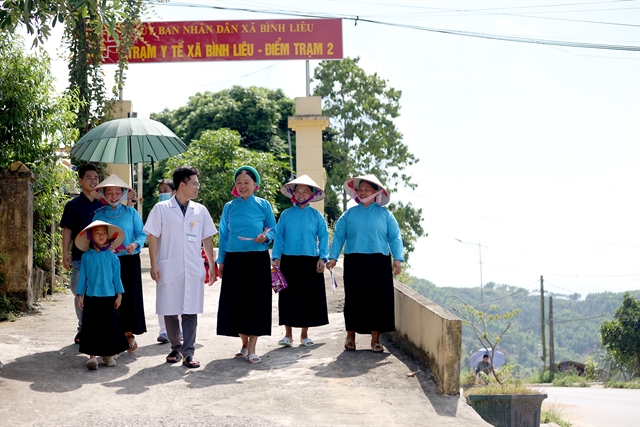
| Residents from remote villages receive free health check-ups and medication advice under Politburo Resolution No. 72-NQ/TW. VNA/VNS Photo Minh Quyết |
HÀ NỘI — As dawn broke over Nghĩa Thuận Commune in the northern mountainous province of Tuyên Quang, residents from remote villages began arriving at the local health centres for free medical check-ups.
Despite the rain, the centre was bustling with people from Mỏ Sai, Mã Hồng, Lùng Cáng and other villages, who were guided through registration and medical examinations.
“I’m very happy that the commune authorities and health centre informed us that everyone could have a check-up today. I brought my wife and child with me,” said Thào Vần Sính, a resident of Lùng Cáng Village.
“The doctors have been very helpful and enthusiastic. Everything is busy but well organised.”
Sính’s experience reflects a broader effort to bring healthcare services closer to people in remote and disadvantaged areas, following the implementation of Politburo Resolution No. 72-NQ/TW and Prime Minister’s Directive No. 17/CT-TTg on strengthening the protection, care and improvement of people’s health.
The policies are being translated into practical programmes, including free health screenings and consultations for millions of people nationwide, with a particular focus on remote, mountainous and border communities.
Bringing healthcare to the grassroots
In Nghĩa Thuận Commune, residents can access services that have traditionally required a trip to a higher-level medical facility, including electrocardiograms, ultrasound examinations, blood glucose tests, bone-density measurements and foot-pressure assessments.
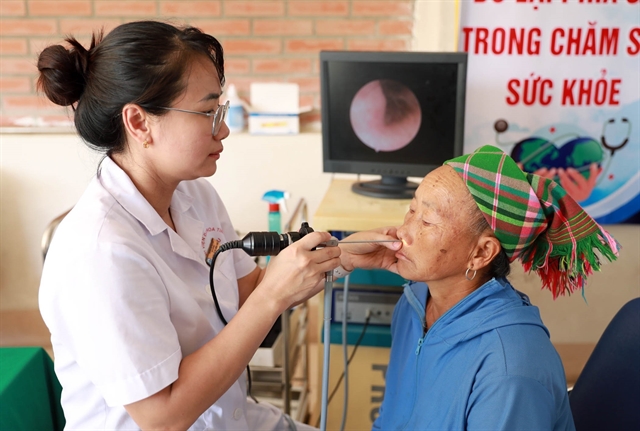 |
| A resident receives a free health check at Lai Châu Province General Hospital. The programme prioritises vulnerable groups, including older people, people with disabilities and low-income households. VNA/VNS Photo Quý Trung |
Vương Thị Duyên, a resident of Thanh Long Village, said the examination had given her greater confidence about her health.
“I had an ECG and an ultrasound," she said.
"The doctors carefully explained my symptoms and advised me on diet and healthcare. I feel reassured and now know better how to take care of myself."
During the first seven months of 2026, Nghĩa Thuận Commune organised periodic health check-ups for more than 8,000 residents, equivalent to over 86 per cent of its population, according to local authorities.
Similar efforts are under way in Nà Bủng Commune, a remote border area of Điện Biên Province.
In July, the communal People’s Committee organised free periodic health examinations, screenings and consultations for residents.
Hồ A Páo, Vice Chairman of the communal People’s Committee, said regular checks helped detect diseases at an early stage, allowing people to receive timely treatment while reducing medical costs and improving their quality of life.
The commune also encouraged families to ensure that children, older people and pregnant women receive regular medical care and full vaccinations, he said.
Bringing modern technology to remote areas
In Kỳ Thượng Commune, a mountainous area of Quảng Ninh Province where ethnic people account for more than 98 per cent of the population, efforts to improve access to healthcare have focused on bringing modern medical equipment directly to the community.
X-ray and ultrasound machines, as well as electrocardiography equipment, were made available locally to serve more than 3,000 residents.
Nịnh Thanh Xuân, a local resident, said the programme provided more than medical examinations.
“The doctors were very attentive and the process was well organised. We were examined and also advised on suitable diets and exercises for our age,” she said.
She described the programme as a meaningful demonstration of the Party and State’s attention to people’s health.
The latest initiative also highlights the growing role of digital technology in grassroots healthcare. Examination results are entered into residents’ Electronic Health Records, which are synchronised with the VNeID national digital identity application using their personal identification numbers.
Hoàng Trường Sơn, Secretary of the Kỳ Thượng Commune’s Party Committee and Chairman of the communal People’s Council, said improving access to healthcare was among the locality’s top priorities.
“Free health check-ups allow residents to access quality healthcare close to home while helping build a nationwide health database, improve health management and contribute to developing a healthier workforce,” he said.
The commune would continue mobilising the local political system to ensure residents have equal and convenient access to social welfare policies, Sơn added.
Towards a healthier population
Politburo Resolution No. 72-NQ/TW, dated September 9, 2025, sets out breakthrough solutions to strengthen the protection, care and improvement of people’s health.
According to the Ministry of Health, as of July 18, 2026, more than 32.28 million people, or nearly 30 per cent of the country's population, had received periodic health check-ups and free screenings, based on data from 34 centrally run cities and provinces.
In July alone, more than 2 million medical visits were recorded at commune-level health stations, while more than 1.8 million people received examinations at mobile medical sites. Another 7.6 million people received healthcare services at affiliated medical facilities.
The figures highlight the scale of efforts by the health sector and local authorities to expand access to preventive healthcare.
From remote mountain roads in Tuyên Quang and Quảng Ninh to isolated border villages in Điện Biên, healthcare services are increasingly being brought to people's doorsteps.
For residents in these communities, the change is more than a set of statistics. It means being able to receive medical advice and screening without travelling long distances and, increasingly, having their health information available through a smartphone.
The nationwide implementation of Resolution 72 is thus helping lay the foundations for a more accessible, technology-enabled and people-centred healthcare system in Việt Nam. — VNS
Society
 Society
 Society
 Society
 Society
 Society
 Society
 Society
 Society
 Society
 Society
 Society
 Society
 Society
 Society