 Society

2026 Swiss-Viet Economic Forum ties poised for growth as EFTA trade deal opens new opportunities
1.
|
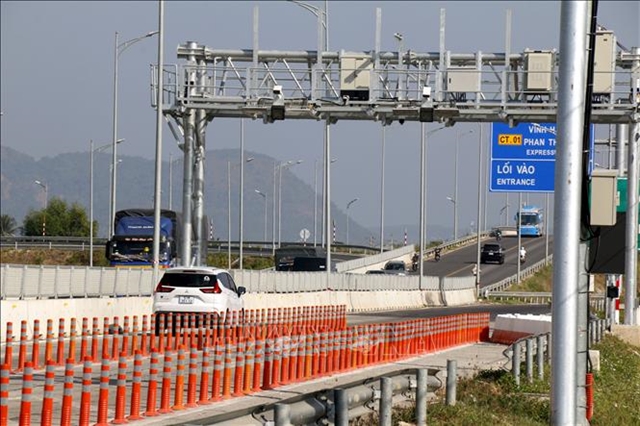
| The entrance to the Vĩnh Hảo–Phan Thiết Expressway in Lâm Đồng Province at the Ma Lâm interchange is equipped with an intelligent traffic monitoring system (ITS). VNA/VNS Photo Nguyễn Thanh. |
HÀ NỘI — The Government will accelerate the implementation of a project to build a data centre and systems for traffic management, monitoring, violation handling and traffic operation during 2026-2030, with a vision to 2050.
The Government Office made the statement in Notice No. 498/TB-VPCP dated September 25, 2026, announcing the conclusions of Permanent Deputy Prime Minister Phạm Gia Túc at a meeting to review a draft Government resolution on implementing Resolution No. 05-NQ/ĐU, dated June 12, 2026, of the Government Party Committee on mechanisms and policies for the project.
The project, approved by the Prime Minister under Decision No. 456/QĐ-TTg on March 20, 2026, aims to accelerate digital transformation in ensuring traffic order and safety and modernise traffic monitoring and operation.
The Government Party Committee subsequently issued Resolution No. 05-NQ/ĐU on June 12, 2026, directing the implementation of solutions to speed up the project.
The Ministry of Public Security has taken the lead in coordinating with ministries, sectors, localities and relevant agencies to draft the Government's implementation plan and complete procedures for submission to the Government.
Permanent Deputy PM Túc asked the Ministry of Public Security to work with the Government Office to review and finalise the draft Government resolution and submit it to the Prime Minister for issuance before September 28.
Under the project, the Ministry of Public Security will serve as the standing agency, coordinating with ministries, agencies and localities to identify specific tasks, assign a lead agency to each task and clearly define responsibilities.
Relevant ministries, sectors and localities are required to proactively carry out their assigned tasks in line with the project's urgency while ensuring compliance with legal procedures for each investment project.
The implementation must ensure quality, interoperability, connectivity, safety and efficiency, while avoiding duplication of tasks and preventing waste and negative practices, the notice said. — VNS
Society
 Society
 Society
 Society
 Society
 Society
 Society
 Society
 Society
 Society
 Society
 Society
 Society
 Society
 Society