 Society

Hà Nội exhibition brings forest experience to the city
1.

|
| Associate Professor Phùng Nguyễn Thế Nguyên, head of the School of Medicine at the University of Medicine and Pharmacy at HCM City, speaks at the launch of the vaccinology training programme in HCM City on September 25. — Photos Courtesy of the organisers |
HCM CITY — The School of Medicine at the University of Medicine and Pharmacy at HCM City on September 25 officially launched a post-graduate vaccinology training programme, marking a major milestone in strengthening preventive healthcare as Việt Nam faces a rapidly ageing population.
The initiative equips medical professionals with multidisciplinary expertise to integrate disease prevention into clinical practice, focusing on adults, older citizens, and patients with chronic health conditions.
As the country's demographic shifts and the burden of non-communicable diseases grows, the new curriculum represents a crucial shift from reactive treatment to proactive and life-course prevention.
Speaking at the launch, Associate Professor Phùng Nguyễn Thế Nguyên, head of the School of Medicine, said the advancement of modern medicine requires physicians not only to treat diseases but also to proactively prevent them.
“The training programme enables future healthcare professionals to integrate preventive thinking into clinical practice and better respond to evolving health needs,” he said.
Establishing strong foundations in vaccine science, safety, and counselling will empower doctors to confidently guide communities toward higher vaccination coverage, he added.
Developed alongside leading institutions including Hà Nội, Huế, and Cần Thơ medical universities, the training programme combines academic coursework, e-learning, and faculty training across 10 specialties.
|
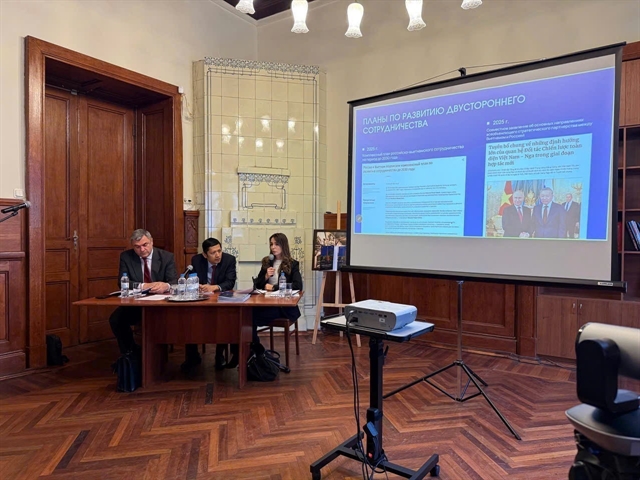
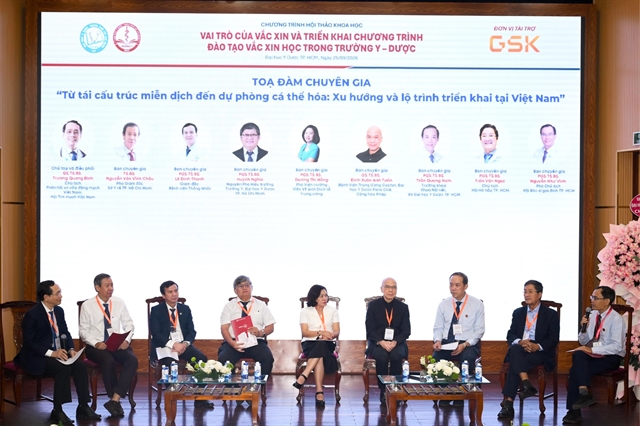
| At a scientific symposium during the launch of the vaccinology training programme in HCM City on September 25, experts and health officials discussed strategies to integrate adult immunisation into clinical care and tailor disease prevention for Việt Nam’s aging population. |
As part of the launch event, a scientific symposium featured an expert panel discussion titled “From Immune Reconstitution to Personalised Prevention: Trends and Implementation Roadmap in Việt Nam”.
Leading health experts and officials exchanged insights on integrating adult immunisation into clinical pathways, reshaping disease prevention frameworks, and establishing personalised healthcare strategies to address the country's changing epidemiological landscape.
International experts commended the country’s proactive and swift implementation.
Professor Sir Jonathan Nguyễn Văn Tâm, Emeritus Professor at the University of Nottingham School of Medicine and former Deputy Chief Medical Officer of England, said that Việt Nam’s development and national introduction of the vaccination programme was brilliant.
The country had achieved this rollout exceptionally fast, far outpacing the speed at which many Western nations could have implemented a similar initiative.
“It will form the bedrock of a movement that changes how Việt Nam approaches vaccination for older adults as they develop chronic conditions, which is essential for the future,” he said.
The training programme is backed by international academic partners, the British Embassy, and biopharmaceutical firm GSK Việt Nam.
Phạm Thị Mỹ Liên, president of GSK Việt Nam, said: “Strengthening healthcare professional capacity is a fundamental pillar of a sustainable health system,” reaffirming support for the country’s prevention-focused vision.
As a nation-first framework, the post-graduate programme paves the way for future integration into undergraduate medical curricula, building a sustainable healthcare workforce to safeguard public health in an ageing era. — VNS
Society
 Society
 Society
 Society
 Society
 Society
 Society
 Society
 Society
 Society
 Society
 Society
 Society
 Society