 Society

Miss Universe Hong Kong Winner Jen Zhou — On the Road to Puerto Rico
1.
|
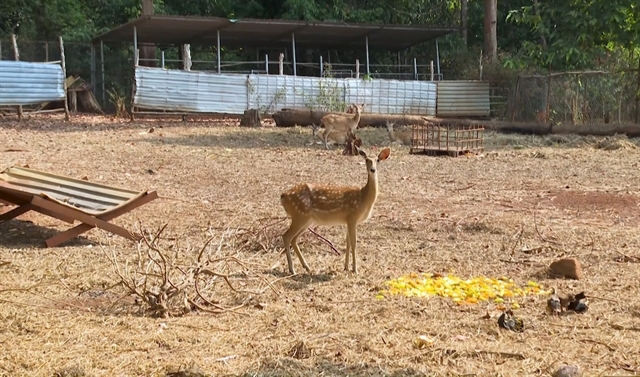
| Animals at the semi-wild zone of the Centre for Tourism Promotion, Rescue, and Conservation under Bù Gia Mập National Park in Đồng Nai city. — VNA/VNS Photo |
ĐỒNG NAI — The Centre for Tourism Promotion, Rescue, and Conservation under Bù Gia Mập National Park in Đồng Nai city has become a hub for treating, rehabilitating and releasing thousands of wild animals back into their natural habitat.
In semi-wild enclosures, staff monitor and treat a range of species, working to restore their ability to survive in the wild. The animals arrive with vastly different histories – some injured after being caught in snares, others seized from illegal captive-breeding operations. A number have spent so long in captivity that they've lost their natural survival instincts altogether.
According to wildlife rescue workers, treating injuries is only the first step. Full rehabilitation means rebuilding an animal's physical condition and retraining it to forage, move and adapt on its own before release.
Wildlife rescue, particularly of endangered, precious and rare species, is central to the park's conservation mission, said its Deputy Director Hoàng Anh Tuấn.
“Successfully rescuing each wild animal not only saves one life, but also sustains wild populations, preserves valuable genetic resources and maintains ecological balance”, Tuấn said.
Trần Văn Trưởng, Deputy Director of the centre, said the centre has seen encouraging momentum lately, with local residents increasingly handing animals over to authorities voluntarily rather than keeping them illegally.
According to Trưởng, the centre carried out 60 intake operations this year, taking in more than 70 animals, and ran 7 release operations, returning more than 20 animals to the wild. In the first six months of 2026 alone, it took in 88 animals for rescue and rehabilitation.
The centre has also drawn support from volunteers, students and families across various localities. Trưởng said their involvement serves a dual purpose, adding manpower while spreading the message of wildlife protection, particularly among the youth. — VNA/VNS
Society
 Society
 Society
 Society
 Society
 Society
 Society
 Society
 Society
 Society
 Society
 Society
 Society
 Society
 Society