 Society

Ping An Digital Bank Completes HKMA’s Second GenA.I. Sandbox Cohort
1.
|
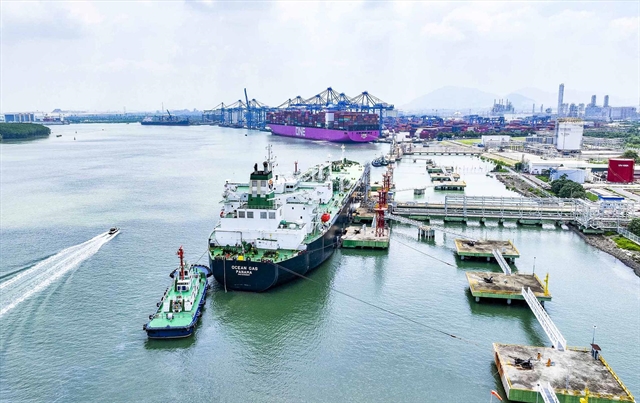
| A view of the Cái Mép - Thị Vải deep-water port cluster in HCM City. The city’s seaport infrastructure meets the regional linkage requirements of the Southeastern region. — VNA/VNS Photos |
HCM CITY — Administrative reorganisation presents a pivotal turning point for the Southeastern region to restructure its economic space and unlock growth bottlenecks, Associate Professor Dr Vũ Tuấn Hưng, Director of the Southern Institute of Social Sciences, told a national workshop on September 24.
Addressing the event titled Socio-economic Structure of Southeastern Provinces Post-Merger: Current Status and Development Orientation in HCM City, Hưng said post-merger spatial development must focus on creating a new economic ecosystem rather than merely streamlining local governance.
The workshop, organised by the Southern Institute of Social Sciences, drew over 100 delegates, including scientists, policy experts, and representatives from the Regional Academy of Politics II, universities, and research institutes across the southern region.
Building a new economic ecosystem
Hưng said administrative consolidations offer an opportunity to expand development scales and pool complementary resources across Southeastern localities.
However, turning this potential into tangible momentum requires a scientific approach to spatial restructuring, resource allocation, and regional integration.
“Redefining spatial development cannot stop at administrative streamlining. Its core must be building a new economic ecosystem where interconnected infrastructure, high-tech industry, logistics, and eco-agriculture smoothly complement one another,” Hưng said.
Experts warned that without timely scientific assessments, the Southeastern region risks resource waste, land-use planning conflicts, infrastructure bottlenecks, and supply chain disruptions.

|
| Experts discuss the socio-economic structure of Southeastern localities post-merger at a workshop in HCM City on September 24.— VNA/VNS Photos |
Key solutions for regional connectivity and workforce
To tackle critical infrastructure bottlenecks across Southeastern localities, Dr Hoàng Văn Tú from the HCM City Academy of Cadres proposed prioritising projects based on their network impact rather than isolated local demands.
High priority must go to key transport nodes and corridors that significantly reduce travel time between industrial zones, seaports, airports, and border crossings, Tú noted.
At the same time, prime land near transport hubs, ring roads, and railways should be reserved for high-value activities, measured by value added per hectare, high-skilled job creation, and energy efficiency.
Regional coordination should focus on specific project catalogues and transport corridors, guided by a shared regional dataset tracking logistics costs, land productivity, and high-quality foreign direct investment.
Meanwhile, Dr Nguyễn Phúc Khánh Linh from HCM City Open University called for accelerating key ring roads including Ring Roads 3, 4, 4.5, and 5 and rail links connecting industrial hubs in Đồng Nai and Tây Ninh directly to the Cái Mép - Thị Vải deep-water port cluster.
Linh also advocated for Transit-Oriented Development models to boost mass transit capacity and reduce urban congestion.
Addressing the labour market imbalance in newly merged Southeastern localities, she recommended custom training models between major universities in HCM City and peripheral industrial parks to equip local workers with modern manufacturing skills.
According to the experts, long-term talent retention requires synchronised investments in social infrastructure such as social housing, healthcare, and quality schools to narrow the living standard gap between core urban areas and peripheral zones.
They also highlighted the post-merger potential of key localities, including HCM City, Đồng Nai city, and Tây Ninh Province, aiming to form new economic spaces and value chains across the region.
The conference policy insights will help refine governance mechanisms and promote sustainable socio-economic development across the Southeastern region for the 2026-30 period. — VNS
Society
 Society
 Society
 Society
 Society
 Society
 Society
 Society
 Society
 Society
 Society
 Society
 Society
 Society
 Society
.jpeg)