 Economy



China’s Professional Hair Care Brand ISYUN Announces Victoria song as Global Brand Ambassador, Accelerating Global Expansion with Strategic Focus on Southeast Asia
1.
|
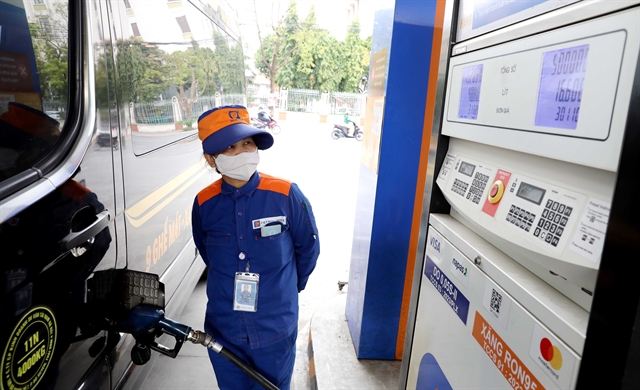
| A petrol station in Hưng Yên Province. — VNA/VNS Photo Thế Duyệt |
HÀ NỘI — The Ministry of Industry and Trade has proposed transferring the petrol price stabilisation fund which is being held by fuel wholesalers to a central government account opened by the Ministry of Finance at the State Treasury.
The proposal is raised in the latest draft of the decree on petrol and oil trading.
Active fuel wholesalers would have to determine their fund balances as of the day before the decree takes effect and transfer all positive balances to the Ministry of Finance’s account.
Wholesalers would also be required to report the transferred amounts to the Ministry of Finance and the Ministry of Industry and Trade.
Companies that have had their licences revoked, lost their status as fuel wholesalers or stopped trading fuel would also have to transfer any outstanding balances to the account.
The draft requires wholesalers with either positive or negative fund balances to undergo an independent audit covering the fund within 12 months of the decree taking effect.
Any difference identified by the audit would be settled against the reported figures.
After the settlement of all fund balances, the Ministry of Finance would hand over the fund account at the State Treasury to the Ministry of Industry and Trade.
Currently, the stabilisation fund is maintained in separate accounts managed by fuel wholesalers.
The draft also sets out criteria for identifying unusually sharp movements in petrol and oil prices.
Unusual movements are proposed to include frequent and consecutive increases or decreases in average retail prices over periods of one to four weeks that are not inline with normal market movements, rapid and large price changes over a week, and cumulative price movements of 15-20 per cent or more over a short period that could put significant pressure on consumer, production, business, macroeconomic stability or people's livelihoods.
An unusually high or low domestic price level compared with an earlier period would also be considered an unusual movement.
If unusual petrol and oil price movements have a significant impact on the economy, business or lives, the Ministry of Industry and Trade would be in charge of assess the situation.
In cases involving emergencies, accidents, disasters, natural disasters or epidemics, the ministry would also assess market developments and price levels to raise a proposal to the Ministry of Finance for submission to the government to decide whether to introduce price stabilisation measures.
The Ministry of Finance’s statistics showed that the fund had a balance of nearly VNĐ196.3 billion (US$7.4 million) at the end of the second quarter of 2026.
At individual wholesalers, several companies reported substantial positive balances. Vietnam National Petroleum Group (Petrolimex) had nearly VNĐ1.1 trillion, while Đồng Tháp Petroleum Trading Company had almost VNĐ297 billion and HCM City Petroleum Company had more than VNĐ270 billion.
Other wholesalers with positive balances included Thanh Lễ General Import-Export Trading Corporation, Hòa Khanh General Trading and Services Company, Military Petroleum Corporation, Hồng Đức Petroleum Company and Nam Sông Hậu Petroleum Investment and Trading Company.
At the same time, 11 fuel wholesalers had negative fund balances as of June 30. — BIZHUB/VNS
Economy
 Economy
 Economy
 Economy
 Economy
 Economy
 Economy
 Economy
 Economy
.jfif) Economy
Economy
 Economy
 Economy
.jfif) Economy
Economy
 Economy
 Economy