 Economy


VPS leads brokerage market share on HNX in Q3
1.
 |
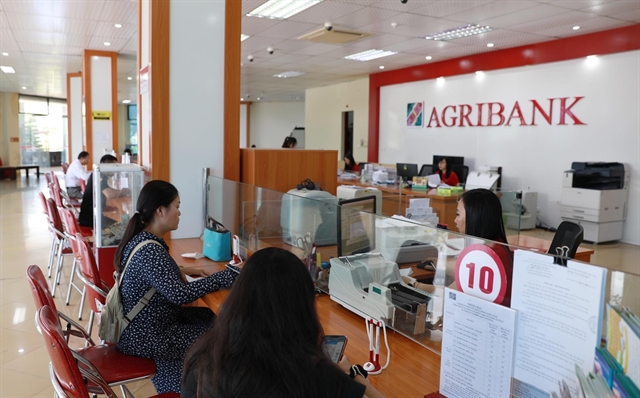
| Regulated entities must provide detailed information on their organisational structures, governance and management models, and internal control systems. —VNA/VNS Photo |
HÀ NỘI — The State Bank of Vietnam (SBV) has planned to increase the monitoring of key banking clients' information with an aim to prevent money laundering in the monetary and banking sectors.
Under an SBV draft circular on procedures for monitoring activities within the monetary and banking sectors, the SBV proposed incorporating information regarding bank executives, major foreign shareholders, VIP clients and politically exposed persons into its anti-money laundering (AML) supervisory data system, categorised by risk level.
The draft circular establishes specific requirements regarding the collection of governance and ownership data. Regulated entities must provide detailed information on their organisational structures, governance and management models, and internal control systems.
The list of members of the board of directors or board of members, the supervisory board, and the entire executive management team from division heads to the CEO must clearly disclose full names, nationalities, and charter capital ownership percentages. This requirement enables regulators to gain a complete picture of senior leadership and the extent of influence exerted by key executives within each institution.
Alongside senior leadership details, the ownership structures of financial institutions are also required to be fully transparent. Reporting entities must disclose the total number of shareholders and compile lists of the 10 largest foreign individual shareholders (including full names, nationalities and ownership percentages), and the ten largest foreign institutional shareholders (including the country of headquarters registration and shareholding percentages).
In addition, the scope of mandatory reporting data extends to total asset size, domestic and international operational networks, the number and business sectors of parent companies, subsidiaries and foreign affiliates and total staff numbers, including personnel specifically dedicated to AML activities.
Aside from credit institutions' internal data, customer risk monitoring is also being elevated to an unprecedented level of rigour. Specifically, banks are required to classify all active customers into low, medium or high-risk categories and clearly distinguish between resident and non-resident customers. Specific customer groups, such as politically exposed persons, VIPs, priority clients and institutional clients, must be separately tracked and accounted for.
The draft regulations mandate detailed reporting on institutional clients operating in sectors associated with significant money laundering risks. These sectors include crypto asset services; real estate trading and brokerage; dealing in precious metals, gemstones and jewellery; casinos and prize-winning games; money transfer services; foreign currency trading; correspondent banking; non-profit organisations; legal, accounting and trust services; and corporate service providers.
Concurrently, transaction flows across various channels, such as over-the-counter transactions, remote electronic transactions, ATMs, deposit products, trade finance, electronic fund transfers, foreign currency exchange and investments, as well as transactions involving high-risk countries and territories, are also subject to close monitoring within the data system.
According to the SBV, the national money laundering risk assessment for the 2018–2022 period identified currency and banking operations as high-risk areas, driven by factors such as massive transaction volumes, large customer bases and the growth of financial technology and cross-border transactions.
Previously, supervisory activities relied primarily on a compliance-based approach, focusing solely on adherence to legal regulations and internal policies. This method had drawbacks, as it failed to accurately reflect actual risk levels, limited the ability to detect violations early and resulted in suboptimal resource allocation.
The SBV has gradually integrated compliance supervision with risk-based supervision since 2023, and initiated the use of a scoring and classification tool to identify high-risk entities since 2025. However, this process remains in its early stages and requires a comprehensive legal framework.
The draft circular establishes a rigorous three-step process: the receipt, collection, aggregation and processing of data; the execution of either compliance-based or risk-based supervision; and the preparation of reports and recommendations for remedial actions.
Assessments will be based on three pillars including structural risk, inherent risks associated with customers, products, distribution channels and geography, and the internal risk control and prevention capabilities of each institution.
Classification results, which are categorised as low, medium or high risk, will serve as the key basis for the SBV to determine priority targets, as well as the frequency, scope and content of inspections and audits. This aims to ensure supervision is accurate, objective and timely, without disrupting the normal business operations of financial institutions. — BIZHUB/VNS
Economy
 Economy
 Economy
 Economy
 Economy
 Economy
 Economy
 Economy
 Economy
 Economy
 Economy
 Economy
 Economy
 Economy
 Economy