 Economy



Miss Universe Hong Kong Winner Jen Zhou — On the Road to Puerto Rico
1.
|
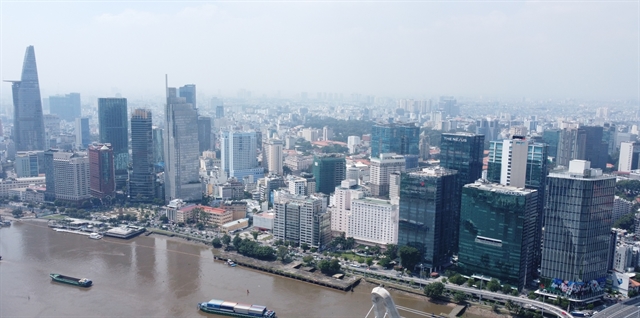
| The Vietnam International Financial Centre in HCM City will span 898 hectares across Sài Gòn and Bến Thành wards and the Thủ Thiêm urban area in An Khánh Ward. — VNA/VNS Photo |
HCM CITY — The Vietnam International Financial Centre (VIFC) in HCM City is expected to become a strategic gateway connecting Vietnamese enterprises to global capital markets.
Beyond just expanding funding sources, the centre is also meant to develop a comprehensive financial ecosystem that supports investment and innovation.
It is thus emerging as one of the country's most significant financial reforms.
For many businesses, its appeal extends beyond raising capital.
It is expected to improve access to international investors, a range of financing instruments and specialised financial services that remain limited in the country.
Nguyễn Đức Quốc Anh, founder of a property technology startup, said the initiative could help Vietnamese startups diversify their funding sources while increasing their visibility among overseas investors.
Beyond conventional bank lending and domestic venture capital, companies would gain opportunities to attract international investment, establish strategic partnerships and eventually pursue overseas listings, he said.
He added that an enabling regulatory environment would be equally important.
Startups often develop innovative business models that do not fit neatly within existing legal frameworks, making transparent and flexible regulations essential for turning innovation into commercial success.
Export-oriented businesses also see considerable potential.
Cross-border trade frequently involves complex payment arrangements, foreign exchange management and compliance with international banking standards.
While domestic banks have expanded their capabilities in recent years, certain specialised financial services still require companies to rely on overseas financial centres.
Bill Nguyễn, business development director at exporter Cainver Co Ltd, said many Vietnamese businesses continued to process parts of their international financial transactions abroad because specialised payment infrastructure remained unavailable domestically.
If such services become available through VIFC, exporters could reduce transaction costs, improve operational efficiency and complete international settlements more quickly while retaining more financial activities within Việt Nam, he added.
Beyond capital
Industry representatives say that Việt Nam should not attempt to replicate established financial hubs elsewhere in Asia and should instead build on the country's existing strengths.
HCM City is already Việt Nam's largest commercial, manufacturing and logistics hub, and integrating advanced financial services with these strengths could strengthen international trade, attract investment and support the country's burgeoning export economy.
Such expectations come as financing needs become increasingly diverse.
Large infrastructure projects require long-term funding.
Renewable energy developments need specialised financing structures.
Technology companies often seek equity investment instead of conventional loans, while manufacturers expanding internationally require sophisticated foreign exchange and risk management services.
Meeting these demands requires far more than simply increasing liquidity.
International financial centres typically bring together banks, investment funds, legal advisers, auditors, insurers, credit rating agencies and payment providers in a single ecosystem.
Their value lies in supporting every stage of investment, from structuring transactions and conducting due diligence to managing financial risks after capital has been deployed.
For Vietnamese businesses, access to these professional services may prove as valuable as access to international investors themselves.
Over the past two years, Việt Nam has gradually established the institutional foundations for the VIFC through a series of legislative measures, including Resolution 222, issued by the National Assembly in 2025 on the establishment of an international financial centre in Việt Nam. Administrative procedures for member registration and enterprise licensing have also begun in HCM City and Đà Nẵng ahead of broader operations.
The recently adopted Law on Urban Development has further strengthened the legal basis for developing the international financial centre.
However, businesses remain focused on practical outcomes rather than legislative milestones.
Their primary concern is whether the evolving framework will improve access to international financing, facilitate connections with global investors and deliver financial services that meet international standards.
Nguyễn Hữu Vũ Khoa, secretary general of the Global On-chain Economy Alliance, said the centre could provide domestic enterprises with broader access to global capital, more supportive financial policies and greater opportunities to expand internationally.
But he warned that capital alone would not guarantee success, adding that effective mechanisms must connect international financial institutions with viable domestic businesses and investment projects if the centre is to achieve its long-term objectives.
|
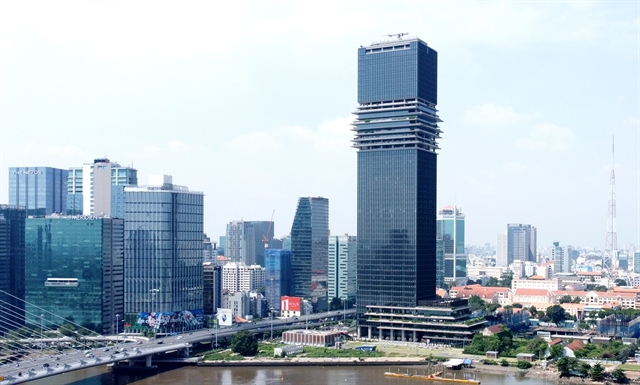
| Saigon Marina IFC is the first private-sector project supporting Việt Nam's ambition to develop an international financial centre in HCM City. — VNA/VNS Photo |
Investor confidence
International investors view the Vietnam International Financial Centre from a different perspective.
While Việt Nam's strong economic fundamentals remain attractive, investors place equal importance on regulatory certainty, transparent governance and internationally recognised financial infrastructure capable of supporting efficient and secure capital flows.
These issues have featured prominently in discussions between Vietnamese authorities and overseas financial institutions as the centre moves from institutional development to operation.
Resolution 222 and subsequent institutional reforms demonstrate the Government's commitment to integrating Việt Nam more closely with global financial markets.
However, legislation alone will not determine the project's success. Commercial opportunity remains the prime consideration for international investors.
On this front, Việt Nam continues to stand out among emerging Asian economies thanks to strong economic growth, an expanding manufacturing sector, deeper integration into global supply chains and increasing investment opportunities across infrastructure, renewable energy, logistics, financial services and digital technology.
The second consideration is whether those opportunities are supported by a predictable legal environment.
Institutional investors need confidence that contracts can be enforced, disputes can be resolved efficiently and investments will be protected by transparent rules.
Reducing legal uncertainty is often more valuable than offering generous investment incentives.
For investors already operating in Việt Nam, the next milestone is no longer regulatory approval but successful implementation.
Bùi Quang Duy, deputy global head of Investments for Climate Finance at ResponsAbility Investments AG, said international investors would closely monitor whether the centre facilitates real investment activity.
Rather than evaluating its institutional design alone, they would focus on whether VIFC could support complex cross-border transactions, including syndicated loans, green bonds, infrastructure financing and private equity investments, he said.
Successful early transactions would demonstrate that the regulatory framework works in practice and strengthen confidence among other international investors in the Vietnamese market, he said.
ResponsAbility, which has invested in Việt Nam for many years, is already working with Vietnamese authorities to explore how international capital can be channelled through the new platform into domestic development projects.
Duy added that building partnerships with long-term strategic investors familiar with the Vietnamese market would help support the centre during its early stages.
Investment ready
Development finance institutions emphasise that the availability of capital is not necessarily the main constraint.
Deedee Panuvatvanich, senior investment manager at Norway's Norfund, said significant international capital was already seeking suitable investment opportunities in Việt Nam, particularly in sustainable finance and green investment.
The greater challenge lies in matching investors with projects that meet expectations on governance, risk management and sustainability, according to the manager.
This highlights one of VIFC's most important long-term roles: bridging the gap between international investors and domestic enterprises.
Many institutional investors now require projects to meet environmental, social and governance (ESG) standards before committing capital.
Although these requirements have become standard practice globally, many Vietnamese businesses are still strengthening the governance structures, reporting systems and disclosure practices needed to meet them.
As a result, commercially attractive projects may struggle to attract international investment because they fall short of global standards rather than because they lack economic potential.
Norfund believes VIFC can help address this challenge through advisory services, technical assistance and closer engagement with businesses, helping enterprises better understand investor expectations while improving the overall quality of investment opportunities.
Emerging sectors such as financial technology, blockchain and digital assets are also expected to benefit from the new platform.
Nguyễn Ngọc Sơn Quỳnh, head of Strategy at MEXC Ventures Việt Nam, said the country's young workforce and expanding innovation ecosystem continued to attract international venture capital.
Supported by a credible regulatory framework, VIFC could become an important platform for fintech innovation, enabling investors to identify promising startups while helping Vietnamese companies expand into regional and global markets.
International investors also see opportunities for collaboration beyond financing, including technology transfer, talent development and innovation, all of which could strengthen Việt Nam's long-term competitiveness.
Making it work
The views of businesses, policymakers and investors point to a common conclusion: Việt Nam has largely completed the initial stage of establishing an international financial centre by creating the necessary legal and institutional foundations.
The next, and more challenging, phase will be translating those foundations into measurable economic outcomes.
For domestic businesses, success will be reflected in improved access to international capital, more sophisticated financial services and stronger integration with global markets.
For investors, success will depend on regulatory consistency, credible dispute resolution and a steady pipeline of investment-ready projects that meet international standards.
Ultimately, the long-term credibility of VIFC will not be measured by the number of registered institutions or new policies introduced.
Its success will depend on its ability to consistently connect global capital with productive investment opportunities across Việt Nam's economy, supporting domestic enterprises and the country's broader economic transformation. — VNS
Economy
 Economy
 Economy
.jpg) Economy
Economy
 Economy
 Economy
 Economy
 Economy
 Economy
 Economy
 Economy
 Economy
 Economy
.jpg) Economy
Economy
 Economy