 Economy


AIMCONNECT 2026 Held in Singapore, Bringing Global Automotive Leaders Together to Explore the Future of AI, Trust and Connected Mobility
1.
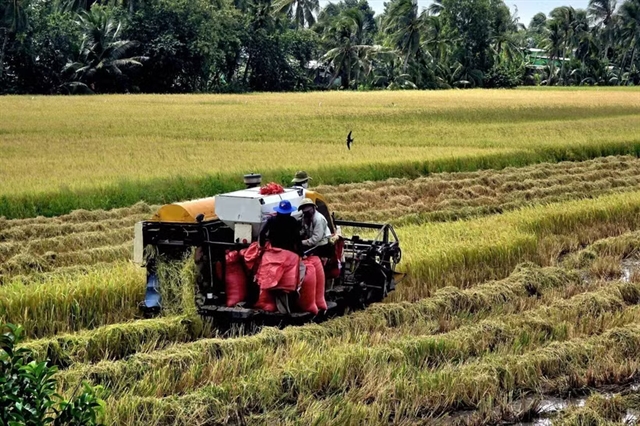 |
| Farmers in Cà Mau apply mechanisation in harvesting the summer-autumn rice crop. — Illustrative photo published by VNA |
HÀ NỘI — Permanent Deputy Prime Minister Phạm Gia Túc held a working session with several associations and leading exporters in the agriculture, forestry and fisheries sectors on Friday, during which he stressed the need for a strong shift from output-driven growth to one based on quality, deep processing, branding, science and technology, and innovation.
The Deputy PM said the development of the agriculture, forestry and fisheries sectors should not focus solely on increasing export value, but must be linked to comprehensive restructuring of agriculture towards modern, ecological, high-value-added and sustainable development.
At the same time, it is necessary to shift from production, purchasing and exports to market research, organisation of raw material areas, control of varieties and inputs, production standardisation, deep processing, branding, international distribution, and the maintenance and expansion of market share.
Túc underlined that value chain development should serve as the overarching direction, with businesses at the centre of organising production, processing and consumption chains; cooperatives serving as a bridge for organising production; farmers as the direct producers; and the State playing the role of facilitating development, improving institutions, investing in infrastructure and creating a favourable and transparent business environment.
There should be a strong shift from sector-based management to value chain and commodity-sector governance, with export efficiency, competitiveness and producer incomes serving as key measures for evaluating implementation results, he said.
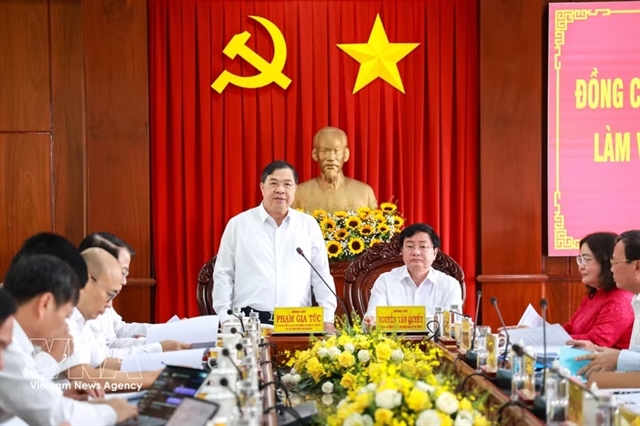
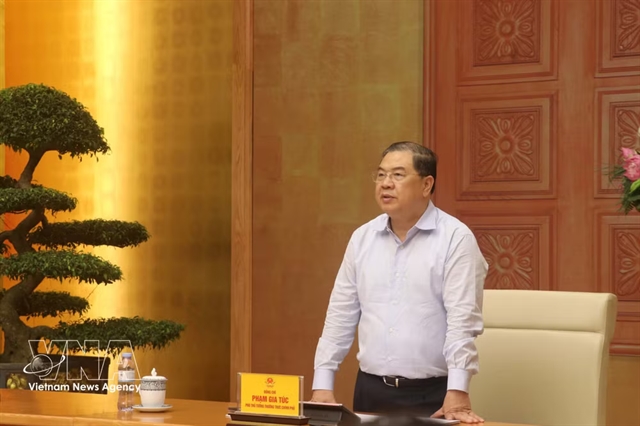 |
| Permanent Deputy Prime Minister Phạm Gia Túc addresses the working session. — VNA/VNS Photo |
The Deputy PM also stressed the need to renew management methods, shifting from administrative management to data-driven governance. A national data system covering production, processing, logistics and markets should be established to support the Government in forecasting, management and timely responses to market fluctuations. The target is to achieve US$100 billion in export revenue by 2030.
He affirmed that the Government will continue to reform administrative procedures, improve the business environment, facilitate business operations and minimise compliance costs. He advised associations and businesses to continue to submit proposals on how to settle problems arise during implementation.
According to Deputy Minister of Agriculture and Environment Võ Văn Hưng, the sector's nine-month export revenue was estimated at US$56.3 billion, up 7.8 per cent year-on-year and equivalent to about 75.9 per cent of the annual target of $74.2 billion. Imports were projected at $39.4 billion.
A positive sign was the sector’s trade surplus of $16.9 billion. The sector not only generates jobs but also records a trade surplus, which had increased nearly $2 billion from August. Notably, exports in September 2026 alone were estimated at $6.51 billion, showing that the export pace remained relatively strong.
Hưng said that major growth drivers have become increasingly clear. Nine-month fruit and vegetable exports reached $7.35 billion, up 19.9 per cent year-on-year; fisheries exports stood at about $9.17 billion, up 12.3 per cent; forestry exports reached nearly $14.4 billion, up 7.6 per cent; while exports of livestock products rose about 24.6 per cent. However, growth remained uneven across segments, with concerns about the quality of growth.
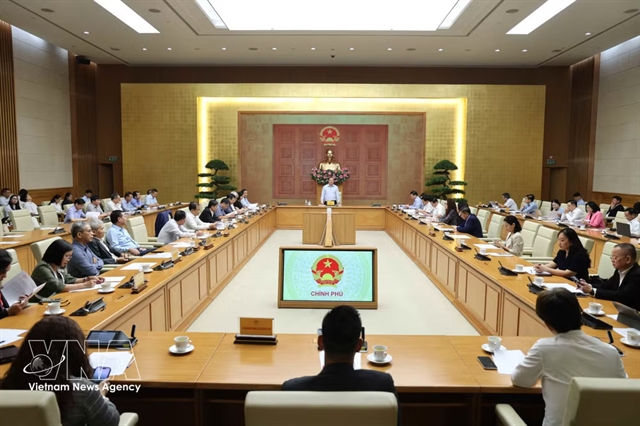 |
| An overview of the working session. — VNA/VNS Photo |
Markets continued to expand, but exports remained highly concentrated in several major markets. China accounted for about 24.4 per cent of total export value, the US, 19.8 per cent and Japan, 7.4 per cent.
He said this year’s export target of $74.2 billion could be reached or exceeded if the current export pace is maintained and there are no major fluctuations in prices, orders, logistics or market policies.
For the fourth quarter, Hưng said it is necessary to maintain stability and growth, strive to exceed the targets but not pursue export value at all costs; consolidate three key pillars, namely wood and wood products, fisheries, and fruit and vegetables; and manage exports by sector and market while focusing on resolving bottlenecks.
At the working session, leaders of the Ministries of Foreign Affairs, Industry and Trade, and Finance discussed and responded to numerous proposals from businesses, while affirming their commitment to working alongside businesses to address difficulties and obstacles and introducing policies to support export promotion. They also called for stronger direct exchanges to grasp information, provide market advice and issue timely warnings about market developments. — VNA/VNS
Economy
 Economy
 Economy
 Economy
 Economy
 Economy
 Economy
 Economy
.jpg) Economy
Economy
 Economy
 Economy
 Economy
 Economy
 Economy
 Economy