 Society
Việt Nam seeks to help businesses adopt greener production
1.
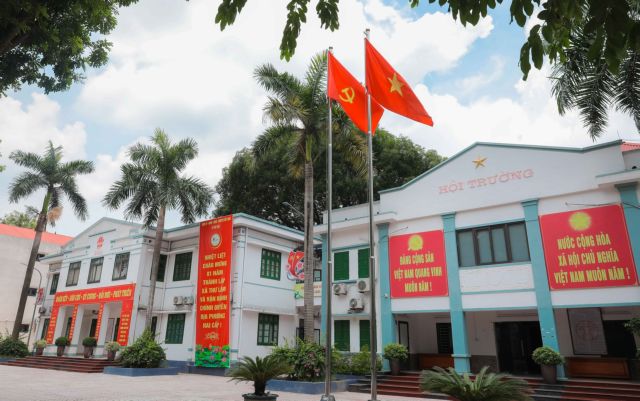 |
| Thư Lâm Commune's headquarters of local administration. — VNA/VNS Photo |
HÀ NỘI — Residents of Phúc Thịnh and Thư Lâm communes, the first two localities in Hà Nội selected to pilot the socialist commune and ward model, have voiced support for the initiative, hoping it will bring tangible improvements in infrastructure, public services and quality of life.
The pilot programme aims to build a modern, transparent and people-centred grassroots administration, with residents' quality of life, satisfaction and happiness as the ultimate goals of governance.
Busily preparing drinks for customers at her family's coffee shop, Ngô Thị Miên, a resident of Vân Nội Village in Phúc Thịnh Commune, said she had heard that her commune had been selected to pilot the 'socialist commune' model.
"To be honest, we don't fully understand the model yet, but we believe it is a good policy that aims to improve people's lives," she said.
"I simply hope Phúc Thịnh Commune will become cleaner, more civilised and safer. Building this model will certainly take time, but residents are willing to work with the authorities because we will ultimately benefit from the results."
Not only local residents but also village officials who work most closely with the community believe the new model will provide fresh momentum to improve living standards at the grassroots level.
They said success should not be measured solely by meeting administrative targets, but by delivering tangible improvements that directly benefit residents.
Ngô Văn Nhu, deputy head of Vân Nội Village, said villagers had welcomed the commune's selection for the pilot programme. They hope to see practical improvements in daily life, including better transport and irrigation infrastructure and additional community centres, playgrounds and sports facilities, as well as stronger support for agricultural production and higher incomes.
Residents also expect better healthcare services, more job opportunities and richer cultural and recreational activities, he said.
Villagers understand they will be the beneficiaries of local development and are willing to work alongside the authorities to help achieve the programme's goals, he added.
Village officials said they would play a leading role in raising public awareness and encouraging residents to support and participate in implementing the new model.
They stressed that the programme's success would depend not only on fulfilling its targets but also on active public engagement.
Ngô Quốc Anh, head of Cán Khê Village, said being selected for the pilot programme presented an opportunity for Phúc Thịnh to further improve residents' quality of life while building on its existing achievements.
He said the model aims not only to promote economic development but also to foster a more civilised living environment, preserve cultural identity, expand cultural and sports activities and strengthen community solidarity.
"When people enjoy stable livelihoods and their material and spiritual needs are both met, the goals of happiness envisioned by the programme will truly become a reality," he said.
New chapter
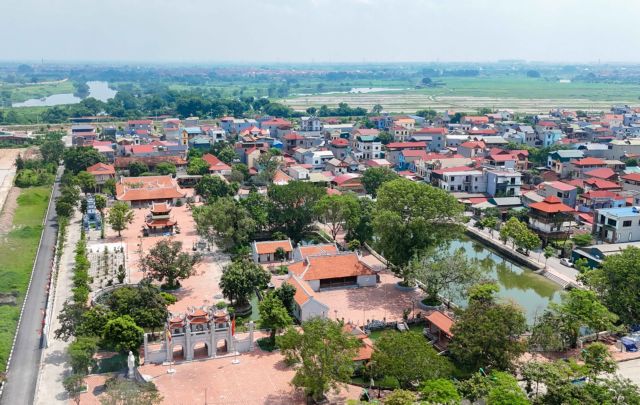 |
| Thư Lâm will establish mobile digital technology teams to help residents access electronic authentication and online public services. — VNA/VNS Photo |
Hoàng Hải Đăng, secretary of the Party Committee of Phúc Thịnh Commune, added: "We cannot simply issue a general plan and expect it to work. Every target, every task and every responsible individual must be clearly identified to ensure effective implementation."
Soon after the city adopted the resolution of applying the socialist model in the commune, local authorities organised meetings to disseminate the policy and launched an action programme translating it into practical objectives and measures.
Đăng described this preparation phase as crucial, saying that the more thoroughly responsibilities are reviewed and assigned now, the smoother and more effective implementation will be later.
Thư Lâm Commune has also moved swiftly, organising online meetings to brief officials, Party members and local residents on the new policy.
According to Nguyễn Thành Luân, vice chairman of the Thu Lâm Commune People's Committee, the commune has identified four priority areas: planning and economic infrastructure development, environmental protection, digital governance and public security.
The commune will accelerate urban planning, invest in transport and technical infrastructure, promote collective economic development, support traditional craft villages and apply digital technologies to improve production and marketing, he said.
It also plans to upgrade wastewater collection and treatment systems, strengthen hazardous waste management in craft villages, enforce household waste sorting and gradually relocate polluting production facilities away from residential areas.
As part of its digital transformation, Thư Lâm will establish mobile digital technology teams to help residents access electronic authentication and online public services. The commune aims to increase the share of fully online public services from 29.1 per cent to at least 60 per cent by the end of 2026 while expanding digital skills training for small household businesses.
Authorities also plan to improve crime reporting and case handling, with the goal of raising the crime resolution rate from 72 per cent to over 90 per cent.
Leaders of both communes said all governance and development efforts must be people-centred, with improving residents' quality of life and happiness as the ultimate objective.
They agreed that public support and satisfaction would be the key measure of the pilot programme's success. VNS
Society
 Society
 Society
 Society
 Society
 Society
 Society
 Society
 Society
 Society
 Society
 Society
 Society
 Society
 Society