 Society
Business incubator helps SMEs enhance competitiveness
1.
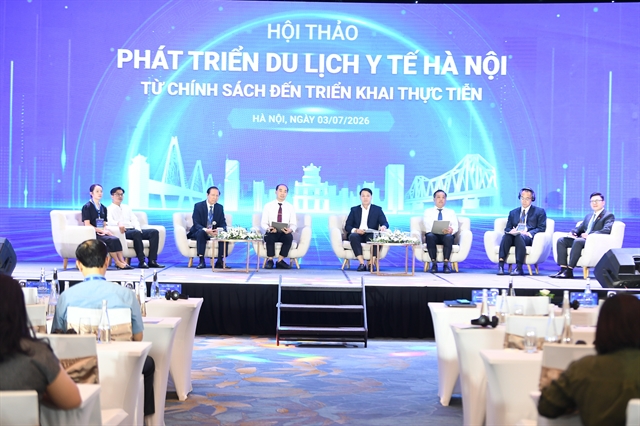 |
| A panel discussion at a forum to outline the development of medical tourism in Hà Nội for the 2026–30 period on Friday. — Photos courtesy of the Hanoi Oncology Hospital |
HÀ NỘI — Hà Nội has identified medical tourism as a key new development direction with an aim to enhance the quality of the healthcare system, attract domestic and international patients and drive socio-economic growth for the capital.
Participants heard at a forum to outline the development of medical tourism in Hà Nội for the 2026–30 period held by the Hà Nội Department of Health and the Hanoi Oncology Hospital on Friday.
The event serves as a forum for administrators, domestic and international experts, healthcare facilities, tourism enterprises, and relevant stakeholders to exchange experiences, share successful models, and propose solutions aimed at establishing Hà Nội as a high-quality medical tourism destination in the region.
Speaking at the event, Hà Nội Department of Health Deputy Director Nguyễn Đình Hưng said that an increasing number of overseas Vietnamese and foreign patients have recently chosen to come to Hà Nội for medical examinations and treatment.
“This underscores the growing professional reputation of Hà Nội's healthcare sector and highlights the capital's immense potential for medical tourism,” Hưng said.
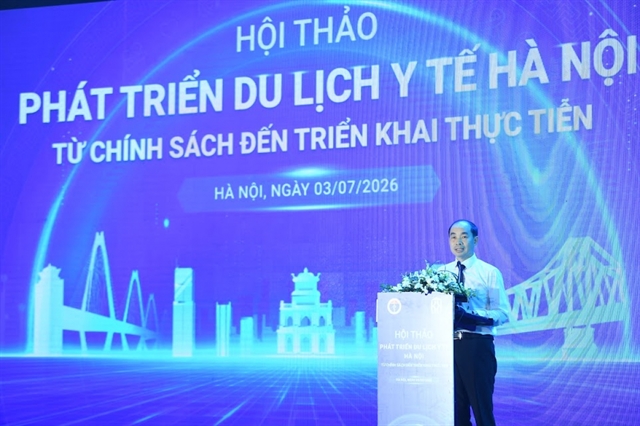 |
| Mr. Nguyễn Đình Hưng, Deputy Director of the Hà Nội Department of Health, speaks at the forum. — Photos courtesy of the Hanoi Oncology Hospital |
According to Hưng, Hà Nội is the country's largest medical hub, bringing together the very best of Vietnamese medicine, ranging from cutting-edge techniques such as organ transplantation, cardiology, oncology, and assisted reproduction to rehabilitation and traditional medicine. This represents an invaluable resource that not only serves public healthcare needs but also acts as a solid springboard for the development of medical tourism.
Hưng said that the capital's strategic direction for medical tourism development aligns perfectly with the major guidelines of the Party and the State. For instance, Politburo Resolution 72 sets the goal of building a Vietnamese healthcare system that is modern, high-quality, equitable, efficient, and internationally integrated, with the capital's healthcare sector serving as the core, the pillar, and the driving force.
Politburo Resolution 57 identifies science, technology, innovation, and digital transformation as new engines for national development. Politburo Resolution 59 on international integration creates conditions for the healthcare sector to expand cooperation and enhance its global competitiveness.
Notably, the 2024 amended Capital Law also establishes specific mechanisms enabling Hà Nội to invest in a high-quality healthcare system, foster international cooperation, and develop modern medical services.
"This can be considered a favourable time for Hà Nội to formulate a systematic, long-term strategy for medical tourism development," emphasised Hưng.
To realise this goal, Hưng stated that Hà Nội will focus on establishing a unified medical tourism network linking central and municipal hospitals with private healthcare facilities and developing distinctive medical tourism products.
The city will also accelerate digital transformation and the development of smart hospitals, while simultaneously strengthening collaboration across the healthcare, tourism, aviation, hospitality, insurance, and interpretation sectors to create an integrated service chain meeting international standards.
Forming a comprehensive medical tourism ecosystem
At the forum, participants focused discussions on various topics, such as the development orientation for medical tourism in Hà Nội and international experiences in establishing medical tourism models. They also discussed measures to transform hospitals' professional expertise into competitive products; the role of travel agencies in market development, and the creation of an ecosystem to support international patients.
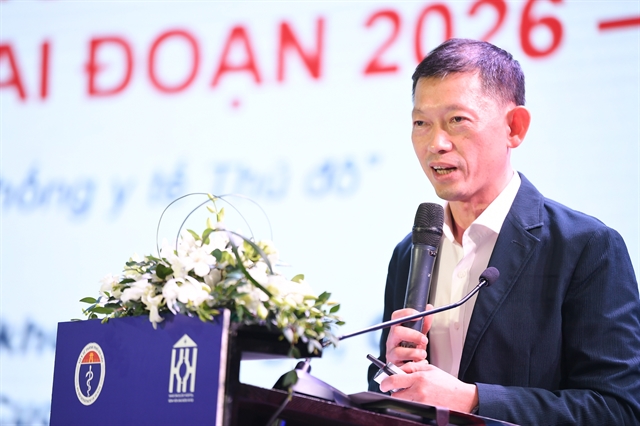 |
| Deputy Director of the Department of Medical Service Administration (the Ministry of Health) Dương Huy Lương, speaks at the event. — Photos courtesy of the Hanoi Oncology Hospital |
Deputy Director of the Department of Medical Service Administration (the Ministry of Health) Dương Huy Lương said that Hà Nội needs to promptly translate its medical tourism development plan into concrete action programmes and gradually establish criteria for medical facilities serving international patients, while simultaneously resolving issues regarding service pricing mechanisms, financial autonomy, and international insurance payments.
“Việt Nam's medical tourism sector is estimated to reach a value of US$2 billion and with effective solutions and implementation, this figure could rise to $3–3.5 billion by 2030,” Dr. Lương said.
He also proposed supporting hospitals in developing roadmaps to meet advanced quality standards and eventually achieve international accreditation, while prioritising the development of key specialties such as oncology, cardiology, odonto-stomatology, assisted reproduction, and traditional medicine.
In addition, Hà Nội needs to standardise medical tourism packages based on the patient journey and strengthen partnerships with travel agencies, accommodation providers, and transport operators. Simultaneously, the city should intensify promotion in target markets to attract international patients.
Dr. Lương added that the Ministry of Health is currently finalising a scheme to develop medical tourism for the 2026–30 period, aiming to position Việt Nam as a competitive medical tourism destination in Southeast Asia and gradually elevate it to the ranks of Asia's leaders.
According to the draft scheme, by 2030, Việt Nam plans to develop at least 20 specialised medical service packages and ensure that a minimum of 20 hospitals meet international standards, while simultaneously building a digital platform and a national brand for medical tourism.
A representative of the Vinmec healthcare system said that the system has welcomed patients and clients seeking medical services from over 20 countries.
Most recently, an Australian patient travelled to the system for prostate cancer treatment at Vinmec Times City International Hospital in Hà Nội.
The patient chose Vinmec due to the availability of prompt surgical access and modern technology. He placed his trust in the team of specialists, noting their advanced training in robotic surgery and urologic oncology, as well as their ability to communicate professionally in English, which facilitated the consultation and treatment process.
The organisers hope that the forum serves as a strategic step towards fully leveraging the potential of the capital's healthcare system and fostering collaboration between the healthcare and tourism sectors to create new products and services, thereby contributing to sustainable socio-economic development.
Hà Nội is drafting its medical tourism development plan for the 2026–30 period with the goal of establishing Việt Nam as a competitive medical tourism destination in Southeast Asia by 2030 and gradually rising to the forefront in Asia.
The plan aims to offer a comprehensive service ecosystem — spanning modern medicine, traditional medicine, rehabilitation, and holistic wellness — that approaches international standards; to build and position a national brand for Vietnamese medical tourism on the global stage; and to expand access to high-quality services while reducing the number of citizens travelling abroad for medical treatment. — VNS
Society
 Society
 Society
 Society
 Society
 Society
 Society
 Society
 Society
.jpg) Society
Society
 Society
 Society
 Society
 Society
 Society