 Society
Deputy PM requests to make profound impression in first year of Việt Nam Culture Day
1.
|
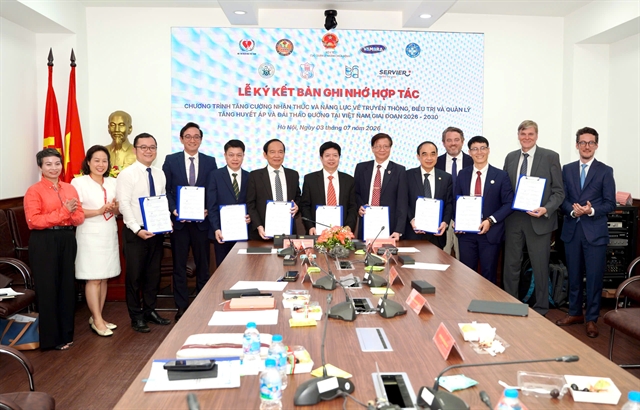
| Delegates sign a strategic initiative to address the burden of hypertension and diabetes in Việt Nam in the 2026-30 period. — VNS Photo Thanh Hải |
HÀ NỘI — The Department of Medical Service Administration (MSA), the Ministry of Health, Servier Vietnam and their partners, on July 3, signed a strategic initiative to address the burden of hypertension and diabetes in Việt Nam in the 2026-30 period.
The collaboration was within the framework of the programme to enhance awareness and capacity for the communication, treatment, and management of hypertension and diabetes in Việt Nam for the 2026–30 period.
The programme involves numerous key multi-sectoral partners, such as the Vietnam Society of Cardiology, the Vietnam Association of Endocrinology and Diabetes, the Vietnam Association for Research and Application of Biomedical Technology, the Vietnam Young Physicians Association, the Hanoi University of Public Health, the Hanoi Medical University, and the University Medical Centre Hồ Chí Minh City.
The programme seeks to strengthen the healthcare system capacity and improve hypertension and diabetes control effectiveness by 2030. It sets a goal of ensuring that at least 50 per cent of patients with hypertension and diabetes meet treatment targets by 2030.
The programme focuses on four core pillars, including professional standardisation, healthcare workforce capacity building, community communication, and project monitoring, research, and evaluation. It also emphasises the use of digital ecosystems and artificial intelligence to educate and empower patients to proactively manage their own health.
This long-term commitment aims to minimise cardiovascular complications and improve the quality of life for millions of Vietnamese people. The event marks a significant step forward in transitioning towards a comprehensive, integrated, and systemic approach to managing non-communicable diseases.
Speaking at the ceremony, MSA Deputy Director Nguyễn Trọng Khoa stated that the programme represents a significant step forward, building upon the success of the "First Day" programme, which was implemented from 2016 to 2025, contributing to enhanced capacity for managing non-communicable chronic diseases as well as improved quality of healthcare for the public.
“The programme represents a concrete step towards realising the Ministry of Health's strategic directions, contributing to reducing the disease burden and improving the population's quality of life, while simultaneously strengthening grassroots healthcare capacity and promoting digital transformation in chronic disease management,” said Dr Khoa.
Khoa added that chronic disease management required a comprehensive, continuous approach, integrating lifestyle changes and treatment adherence with close coordination among patients, families, healthcare workers, and the healthcare system across all levels of expertise.
At the event, Servier Vietnam General Director Serge Nicollerat reaffirmed the company's commitment to a long-term, sustainable partnership with Việt Nam's healthcare system.
“The programme embodies a spirit of collaborative action among regulatory bodies, healthcare professionals, hospitals, grassroots healthcare facilities, medical staff, and industry partners, all aiming to create a measurable, sustainable impact and deliver tangible benefits to the people of Việt Nam,” Nicollerat said.
The partnership reaffirms the "multi-stakeholder collaboration – unified action" approach, contributing to strengthening primary healthcare capacity, driving digital transformation in chronic disease management, and delivering tangible value for public health.
The programme reaffirms the commitment to close collaboration between state management agencies and cross-sector social partners, aiming to build health system capacity for chronic disease management at primary and basic healthcare levels, while also helping improve quality of life for the public. — VNS
Society
 Society
 Society
 Society
 Society
 Society
.jpg) Society
Society
 Society
 Society
 Society
 Society
 Society
 Society
 Society
 Society