 Life & Style

HKTDC Hong Kong International Lighting Fair (Autumn Edition) and Hong Kong International Outdoor and Tech Light Expo Set to Illuminate this October
1.
|
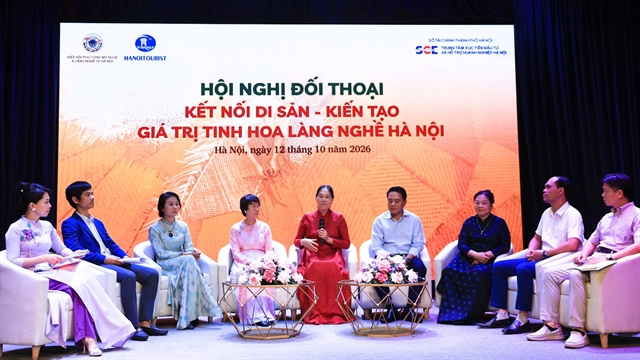
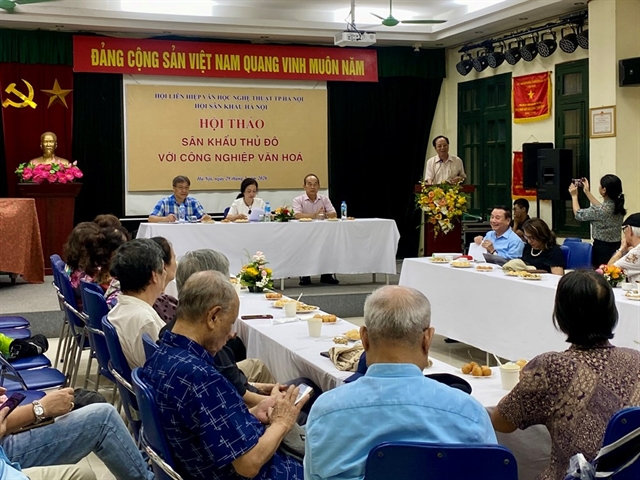
| Experts gather at the seminar titled 'Hà Nội's Theatre Sector and Cultural Industries', organised recently by the Hà Nội Theatre Association. — Photos hanoimoi.vn |
HÀ NỘI — Hà Nội's theatre sector has yet to fully harness its strengths to become a key driver of cultural industries, experts have said.
The capital is home to the country's largest network of professional theatres, spanning spoken drama, chèo (traditional opera), tuồng (classical opera), cải lương (reformed theatre), puppetry and music. Hà Nội also boasts a wealth of artists and some of Việt Nam's leading arts training institutions.
It also benefits from a rich tangible and intangible cultural heritage, as well as its status as a UNESCO Creative City.
Yet despite these advantages, the sector has yet to realise its full potential. Many acclaimed productions reach only limited audiences, while links with tourism, education, media, technology and other creative sectors remain underdeveloped.
According to playwright Lê Quý Hiền, Hà Nội's theatre sector has produced numerous acclaimed works that have resonated with audiences.
"Unlike literature, poetry, film, painting and photography, whose enduring works are preserved in libraries and museums for future generations, theatre is a live art form," Hiền said. "Even its most successful productions often have only a limited lifespan."
Hiền added that building a diverse and sustainable repertoire ultimately depends on funding. However, the Hà Nội Department of Culture and Sports and the municipal People's Committee currently fund only two new productions per theatre each year, making it difficult to sustain programmes that attract audiences year-round.
More than any other art form, theatre also depends on audiences to generate revenue and contribute meaningfully. Yet audiences have been steadily drifting away from the stage in recent years, according to People's Artist Lê Tiến Thọ, former chairman of the Việt Nam Theatre Artists Association.
"Theatre lacks themes that connect with today's audiences," Thọ said. "As advances in information technology and artificial intelligence reshape the arts, audiences can access a vast range of high-quality entertainment online for free, with nothing more than a smartphone or an internet-connected computer.
"Meanwhile, the theatre sector has been slow to adapt and remains ill-equipped to compete in the market economy."
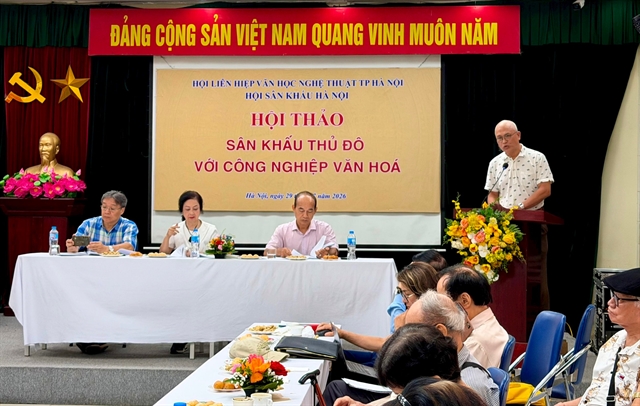
Experts gathering at a recent seminar organised by the Hà Nội Theatre Association agreed that unlocking theatre's potential would require a comprehensive and coordinated approach.
The event, titled Hà Nội's Theatre Sector and Cultural Industries, brought together researchers, playwrights and artists to examine the sector's opportunities and challenges and propose measures to strengthen the role of theatre in the city's cultural industries in line with Resolution 80.
People's Artist Trần Quốc Chiêm, chairman of the Hà Nội Union of Literature and Arts Associations, said Resolution 80 and an action programme launched by the Hà Nội Party Committee have created significant opportunities for the capital's cultural industries, with theatre identified as a sector of considerable potential.
To seize those opportunities, Hà Nội must invest in cultural infrastructure, integrate modern technology into stage productions, develop cultural industry hubs and create signature performing arts programmes for visitors, he said.
The capital should also make better use of its extensive network of grassroots amateur theatre clubs to expand creative spaces and foster greater appreciation of the performing arts within the community, he added.
Another priority is to strengthen links between theatre, tourism and education.
Theatre researcher Cao Ngọc said theatre is more than an art form; it has a unique ability to connect different sectors.
"A stage production naturally brings together literature, music, visual arts, design, stage technology and performance," Ngọc said. "This interdisciplinary character enables theatre to connect naturally with heritage sites, experiential education, cultural tourism and other creative sectors."
However, she said this potential remains largely untapped.
Despite its many theatres, the capital has yet to develop a cohesive theatre network with a shared strategy for branding, audience development and market expansion, similar to Broadway in the US, London's West End or Daehangno in South Korea.
Performances at the Thăng Long Imperial Citadel, the Temple of Literature Quốc Tử Giám Special National Relic Site and the pedestrian areas around Hoàn Kiếm Lake also remain largely one-off events, rather than regular cultural attractions integrated with tourism.
Ngọc argued that treating theatre primarily as a performing art or a standalone cultural institution prevents Hà Nội from turning its rich cultural resources into a competitive advantage for its cultural industries.
|
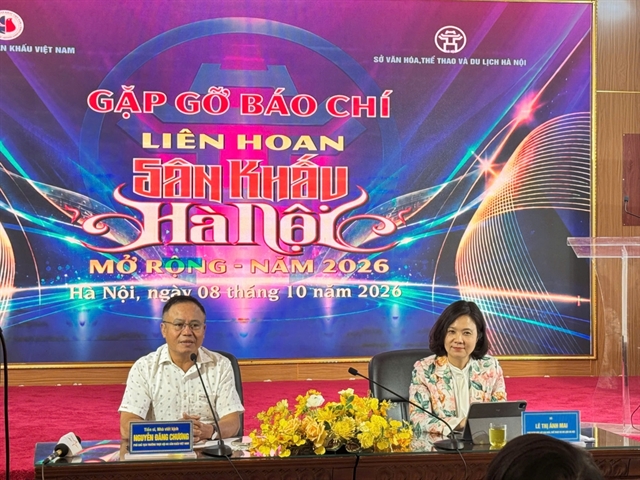
| The Hà Nội Theatre Association seminar brought together theatre researchers and artists. |
Instead, she proposed building an integrated theatre ecosystem that connects heritage, education, tourism, media, technology and the wider creative community.
She also called for shifting the focus from developing individual arts organisations to strengthening collaboration across the cultural industry ecosystem, and evaluating theatres not only by their internal performance, but also by their ability to create partnerships and broader cultural value.
Such an approach is not just a new way of thinking, but a strategic direction for establishing Hà Nội as the country's leading cultural industry hub while strengthening its position as a regional creative city, she said.
Ngọc added that people must remain at the centre of theatre development, supported by a unified cultural ecosystem.
Only then can the capital's theatre sector preserve Hà Nội's thousand-year cultural heritage while becoming a stronger driver of the cultural industries and the city's soft power. — VNS
Life & Style
 Life & Style
 Life & Style
 Life & Style
 Life & Style
 Life & Style
 Life & Style
 Life & Style
 Life & Style
 Life & Style
 Life & Style
 Life & Style
 Life & Style
 Life & Style
 Life & Style