 Society

Shorter Trips, Familiar Ways to Pay: How Airpaz Supports Flexible Booking with 100+ Payment Methods
1.
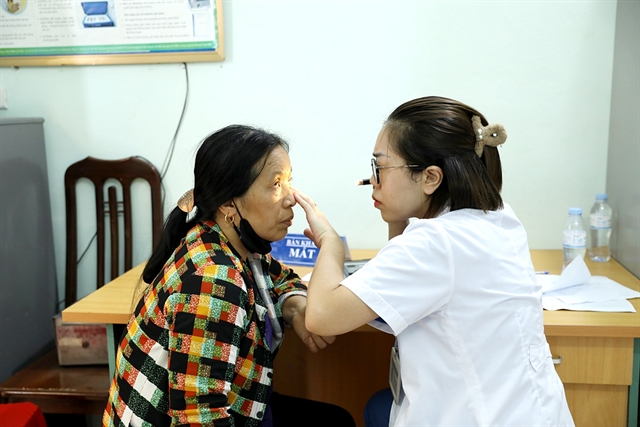 |
| A woman gets a free eye check. VNA/VNS Photo |
HÀ NỘI — A number of localities across the country are stepping up efforts to improve healthcare services through practical models and innovative solutions, helping deliver better health outcomes for residents.
The move is part of the Politburo's requirement for breakthrough solutions to strengthen the protection and improvement of people's health, continue to improve the quality of medical services and put the people at the centre of service, all while strengthening local medical capacity and promoting digital transformation.
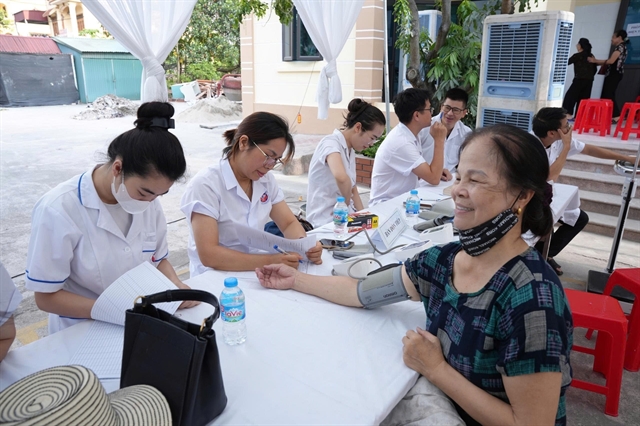
In Huế, a periodic health check or free screening programme has been implemented through 2030, aiming for 100 per cent of residents to get a health check at least once a year.
All of the patients' health information will be recorded and updated in their electronic health profiles, creating a platform for continuous health management throughout each person's life cycle.
One highlight of the programme is shifting from a treatment mindset to more proactive disease prevention, early detection of risks and long-term health management.
The central city prioritises vulnerable groups such as the elderly, people with disabilities, poor households, near-poor households, people with meritorious services and people with chronic diseases.
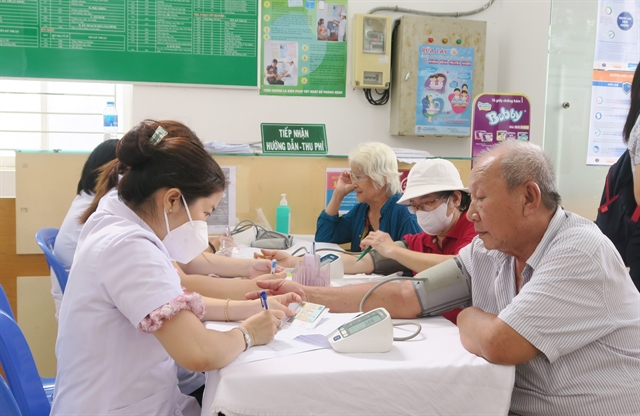
Similar to Huế, HCM City has been accelerating the build-up of its e-health records to better serve residents. By mid-June, the city’s health sector had updated its health database of more than 2.3 million people.
The database is an important resource for residents' personal e-health profiles that can help detect diseases early, improve the effectiveness of preventive healthcare and promote data-based health governance.
In Phú Thọ Province, the health sector has not only focused on digital transformation but has also improved the quality of medical examination and treatment at its facilities. Several of the province's healthcare clinics are taking patient satisfaction as a measure of service quality.
Hospitals have promoted administrative procedure reform, applied information technology, built a green, clean and safe medical examination and treatment environment, and deployed several different specialised techniques locally.
At Vĩnh Phúc Obstetrics and Paediatrics Hospital, the patient satisfaction rate in 2025 and the first months of 2026 reached over 98 per cent.
Meanwhile, Tam Dương Medical Centre has also deployed electronic medical records, citizen identification applications, VNeID in medical examination and treatment, non-cash payments and online results. These solutions contribute to shortening waiting times, improving transparency and making medical services more convenient for residents.
In addition to improving the quality of medical examination and treatment, providing care to vulnerable groups of children is also a major concern.
The northern province of Lai Châu has started the Journey to Sow Green Seeds of Hope programme, which provides free screening and surgery for disabled children and children with birth defects in difficult circumstances.
More than 300 children are expected to be examined, with qualified cases eligible for surgery by experts and doctors from central hospitals.
Preventive medicine and modern systems
Under Resolution 72-NQ/TW issued by the Party Central Committee, preventive health work continues to be identified as a key task to protect people's health from an early age.
Many localities are making use of solutions to prevent and control epidemics, improve surveillance capacity and prepare to respond to public health risks.
Thanh Hoá Province’s health sector is strengthening surveillance of summer infectious diseases such as hand, foot and mouth disease, dengue fever, measles and whooping cough, as well as preparing drugs, supplies, chemicals and plans for treatment when epidemics occur. Epidemic prevention is associated with improving vaccination rates, raising awareness and changing behaviours, and mobilising community participation.
The Central Highlands province of Gia Lai is working with the Central Highlands Institute of Hygiene and Epidemiology to improve epidemiological surveillance capacity, early detection of risks and professional support for local healthcare.
Focus has been placed on key areas including prevention and control of infectious and non-communicable diseases, vaccination, nutrition, food safety, medical digital transformation and health data management. In particular, support activities are focused on remote, ethnic communities and border areas.
In parallel with improving prevention capacity, many localities are investing in upgrades for a more modern medical system.
Bắc Ninh Province has started a project to further develop the health system, creating breakthroughs and improving the effectiveness of health care in the province through 2035. The project has a total estimated budget of more than VNĐ18 trillion (US$684 million) to meet the needs of more than 3.6 million residents in the area.
Goals for the initiative include building a high-quality, people-centred health system, developing local health care, improving preventive health capacity, promoting the digital transformation, applying technology in health management and training skilled healthcare workers.
The province also aims to create specialised medical centres, reduce the number of people who must be referred for treatment and improve access to high-tech services locally.
Results from localities nationwide show that the goals of Resolution 72-NQ/TW are gradually being realised through a variety of programmes and plans.
Improving local medical capacity, applying digital technology in health management, working to prevent disease and investing in a modern health system are helping to improve people's access to health services.
This is an important foundation for building a health system aimed at fairness, efficiency and sustainability, in which each person receives comprehensive healthcare, early detection of disease risks and benefits from quality health services within their own communities. — VNS
Society
 Society
 Society
 Society
 Society
 Society
 Society
 Society
 Society
 Society
 Society
 Society
 Society
 Society
 Society