 Society

Weaving the unique heritage of the Thu Lao
1.
|
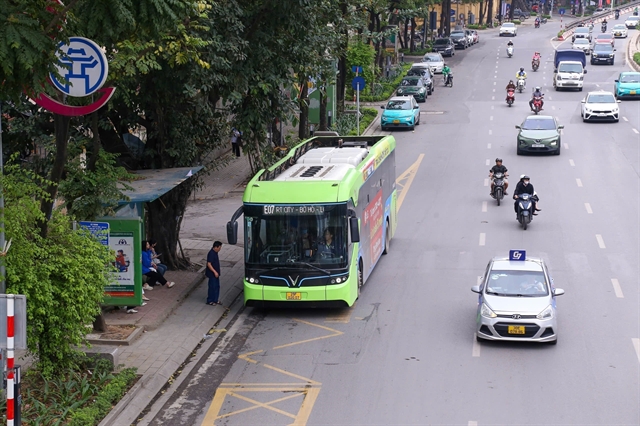
| An electric bus picks up passengers on a street in Hà Nội. — VNA/VNS Photo |
HÀ NỘI — Hà Nội is accelerating its transition to green transport through investments in metro lines, electric buses and supportive policies aimed at reducing emissions and promoting sustainable mobility.
With more than 8 million vehicles, including 6.9 million motorcycles and over 1.1 million cars, Hà Nội faces growing air pollution and traffic congestion, while public transport currently meets only around 20 per cent of travel demand.
Experts said the key to green transport lies not only in vehicles using cleaner fuel but also in developing an efficient public transport system that encourages people to shift away from private vehicles.
"Urban transportation challenges cannot be solved simply by expanding roads. Instead, it is necessary to reorganise urban space with priority given to public transportation, while creating favourable conditions for people to access modern mobility options," said architect Đào Ngọc Nghiêm, Vice Chairman of the Vietnam Urban Planning and Development Association.
Defining public transportation as the 'backbone' of urban development, the city has expanded its metro network and introduced more electric buses, while transport operators are converting their fleets to electric vehicles.
In 2025, Hà Nội's two metro lines served more than 20.6 million passengers, 7.13 per cent higher than the target, highlighting the growing role of public transport in the city.
Hà Nội is also integrating metro services with electric buses, taxis and public bicycles to create a more connected and accessible transport network.
To accelerate the shift to clean transport, the capital is drafting policies that would provide financial support for residents and businesses switching to electric vehicles, including subsidies for low-income households and reductions in registration fees.
Experts stressed that policy incentives should be accompanied by investment in charging infrastructure and improvements in public transport services to make green mobility more convenient and affordable.
By 2030, Hà Nội aims for public transport to account for 35–40 per cent of travel demand, supporting its long-term goal of becoming a greener, more sustainable and livable city. — VNA/VNS
Society
 Society
 Society
 Society
 Society
 Society
 Society
 Society
 Society
 Society
 Society
 Society
 Society
 Society
 Society