 Society
Looking back to look forward for Hà Nội
1.
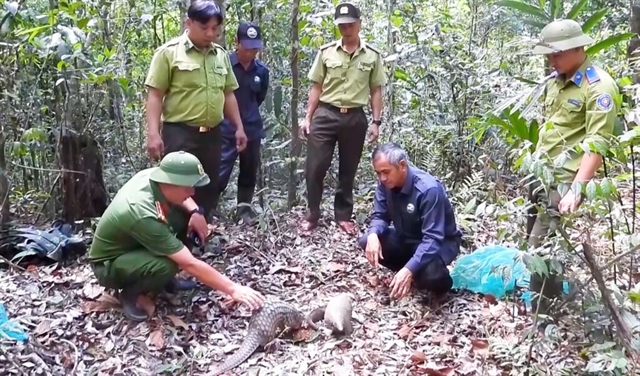 |
| Forest rangers release a pangolin back into the wild. VNA/VNS Photo |
GIA LAI In just the first five months of the year, Kon Ka Kinh National Park in Gia Lai Province successfully rescued nearly 100 endangered or rare wild animals, including the Javan pangolin, slow loris, red-faced monkey, pig-tailed monkey, red-cheeked gibbon, wild cat, golden mountain turtle and monitor lizard.
These results show that community awareness of wild animal protection has led to positive changes, as more and more people are working with authorities on preserving biodiversity and protecting the forest ecosystem.
Instead of ignoring the illegal wildlife trade, many local residents and social organisations have detected or prevented violations and coordinated with agencies to rescue and return rare wild animals to their natural environment.
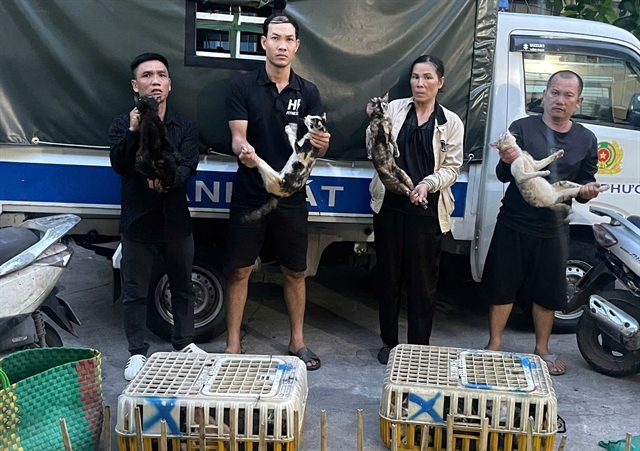
One example is Lê Văn Mão, deputy head of the Minh Triết Sponsorship Association for Poor Patients. After discovering a number of wild animals for sale, Mão spent his own money to buy them back and hand them over to forest rangers to release them back into the wild.
Mão said: “I feel very happy whenever I see a wild animal released back into the environment, because I'm helping protect rare and endangered wild animals."
Under the current process, all wild animals handed over or confiscated from hunters or the illegal wildlife trade are transferred to Kon Ka Kinh National Park's Centre for Rescue, Conservation and Biological Development.
There, the animals are given health exams, isolated for disease monitoring and rehabilitated before being eligible for release back into the wild.
According to wild animal rescue workers, the biggest challenge is treating injuries and restoring survival behaviours in the animals. Many individuals are trapped, seriously injured or kept in captivity for long periods of time, so they gradually lose their foraging and hunting instincts and adapt to their new environment.
Rescue centre director Trần Văn Thụ said: “We have to build an environment that closely resembles nature so that the animals can gradually recover, in both their physical condition and behaviour.”
“The goal is not only to heal their wounds, but also to help them survive on their own after being released," Thụ noted.
“Along with rescue work, the Kon Ka Kinh National Park Management Board coordinates with forest rangers to strengthen patrols, remove animal traps in deep forests and raise awareness among residents in areas near the park's buffer zone."
Lê Văn Vinh, vice director of Kon Ka Kinh National Park, said that illegal hunting, trading, transporting or exploiting of wild animals reduces biodiversity and is considered a serious violation of multiple laws and regulations.
Depending on the nature and severity of the violation, offenders may be subject to administrative sanctions or even criminal prosecution, Vinh said.
Nearly 100 endangered or rare wild animals have been successfully rescued since the beginning of the year, demonstrating a positive change in awareness and action among both local residents and authorities, he noted.
Vinh added that this success is also important to help preserve rare genetic resources and maintain the balance of the natural forest ecosystem. VNS
Society
 Society
 Society
 Society
 Society
 Society
 Society
 Society
 Society
 Society
 Society
 Society
 Society
 Society
 Society