 Society
Planning strategy gives Hà Nội room to raise stature
1.
|
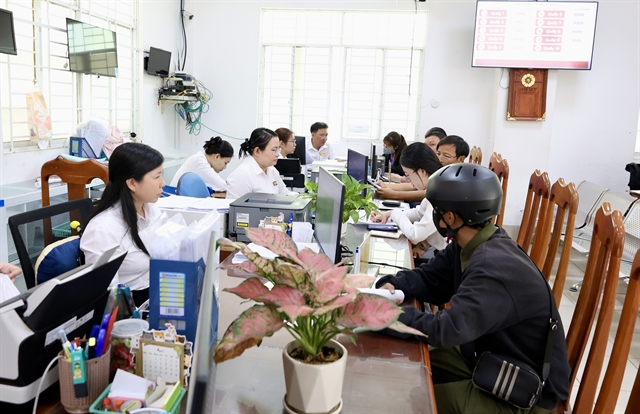
| A view of the Long Xuyên Ward Public Administration Service Centre in An Giang Province. — VNA/VNS Photo |
AN GIANG — An Giang Province has improved administrative services in the year after adopting a two-tier local government model, bringing faster and more accessible public services to residents.
Public administrative service centres across the Cửu Long (Mekong) Delta province have effectively implemented administrative procedures since the model came into being in July 2025.
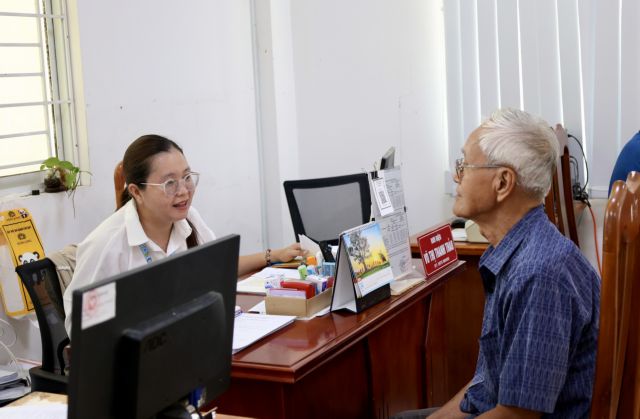
At reception areas, applicants are guided through filling documents.
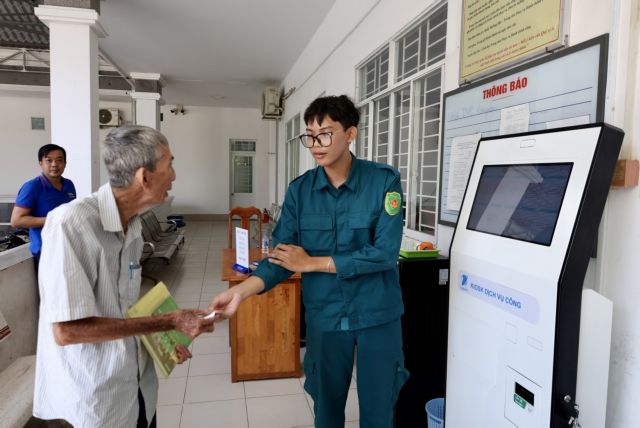
Nguyễn Tấn Minh, 73, of Long Xuyên Ward recently went for the first time to the local public administrative service centre since the new model was introduced.
Because of his age and poor eyesight, he struggled with the process, but the staff there guided him through every step, from obtaining a queue token and filling in forms to submitting his application.
The procedure was completed quickly, and he received an appointment slip shortly afterwards.
|
| An applicant receives assistance with administrative procedures at the Long Xuyên Ward Public Administration Service Centre. — VNA/VNS Photo |
Lê Văn Đạt, 60, visited the same centre to apply for a duplicate birth certificate after losing the original.
The procedure had to be completed online.
With guidance from staff, he submitted the electronic application in less than 10 minutes.
Similar efforts are being made across the province to make public services more public-friendly.
In Phú Lâm Commune, the large geographical area makes travel difficult for locals. So authorities have started a programme for officials to travel to villages to assist people with administrative procedures.
Mobile teams visit areas far from the commune administrative service centre, helping residents submit online applications, search for procedures, and resolve issues.
The programme prioritises older people, those with mobility difficulties, and residents living alone.

|
| Staff at the Phú Lâm Commune Public Administration Service Centre visit people at home to assist them with administrative procedures through the National Public Service Portal and the VNeID app. — VNA/VNS Photo |
One of the most noticeable changes at the Long Xuyên Ward Public Administrative Service Centre is its friendlier, faster, and more people-centred service.
Võ Thanh Sơn, deputy director of the centre, said it handles almost 400 administrative procedures and gets more than 200 applications every day.
“All applications are handled in time, while many are completed ahead of schedule.”
The ward has a range of support programmes, including public service consultations in hamlets, guidance for students on using online public services, and co-operation with telecommunications companies to enable remote queuing registration.
It has also established technology support teams to assist people with digital procedures.
|
| A staff member at the Long Xuyên Ward public administration service centre in An Giang Province guides a local with carrying out administrative procedures. — VNA/VNS Photo |
In Tân Châu Ward, the public administrative service centre continues to operate under a one-stop and inter-agency one-stop mechanism.
Võ Thị Kim Định, Deputy Secretary of the Tân Châu Ward Party Committee, said the centre follows a “friendly government” model that places people’s satisfaction at the heart of public service.
The ward would continue working with community digital technology teams to help residents use online public services, expand cashless payments, and make better use of electronic data integrated into the VNeID application, she said.
Despite the positive results, public administrative service centres across the province continue to face several challenges.
Lê Trường Sơn, deputy head of the province People's Committee Office and director of the Provincial Public Administrative Service Centre, said there had been occasions when online payment systems or the National Public Service Portal experienced technical faults.
As a result, some people were unable to complete transactions and had to visit public administrative service centres in person, he said.
To address this problem, the province has increased direct support at the grassroots level, invested in digital infrastructure, and expanded the activities of community digital technology teams, he said.
|
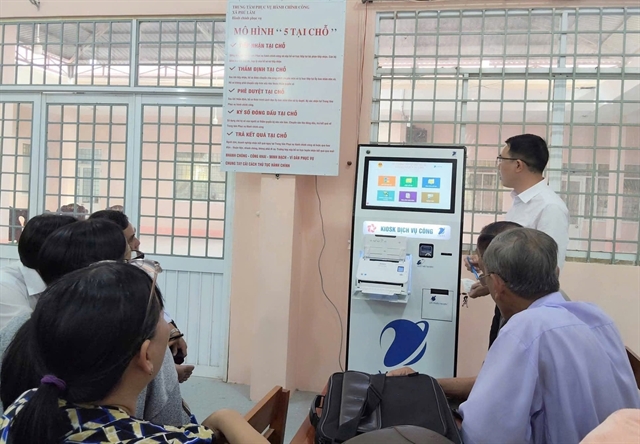
| An employee at the Phú Lâm Commune Public Administration Service Centre helps people with submitting and tracking applications using a smart kiosk. — VNA/VNS Photo |
On June 1, the standing board of the provincial Party Committee held a conference to review one year of operation of the two-tier local government model.
According to a report tabled at the event, the province has processed more than 587,000 administrative applications since, with 98.56 per cent resolved in time.
Its citizen and business service index reached 95.86 points in the first quarter of 2026 to rank 18th among the country's 34 provinces and cities.
All commune-level public administrative service centres now have access to high-speed fibre-optic internet.
The “Digital Literacy for All” movement, combined with a policy of waiving fees for online public services, has helped create a genuinely integrated digital ecosystem.
Other innovative initiatives, including the “single contact point for application tracking” mechanism, have further strengthened it.
Nguyễn Tiến Hải, Secretary of the provincial Party Committee, said: “The two-tier local government model helps streamline the administrative apparatus and bring government closer to residents.”
To improve the model's effectiveness, the province plans to promote decentralisation, accelerate administrative reform, strengthen digital infrastructure, develop interconnected databases, and place residents and businesses at the centre of public service delivery. — VNS
Society
 Society
 Society
 Society
 Society
 Society
 Society
 Society
 Society
 Society
 Society
 Society
 Society
 Society
 Society