 Society

AIMCONNECT 2026 Held in Singapore, Bringing Global Automotive Leaders Together to Explore the Future of AI, Trust and Connected Mobility
1.
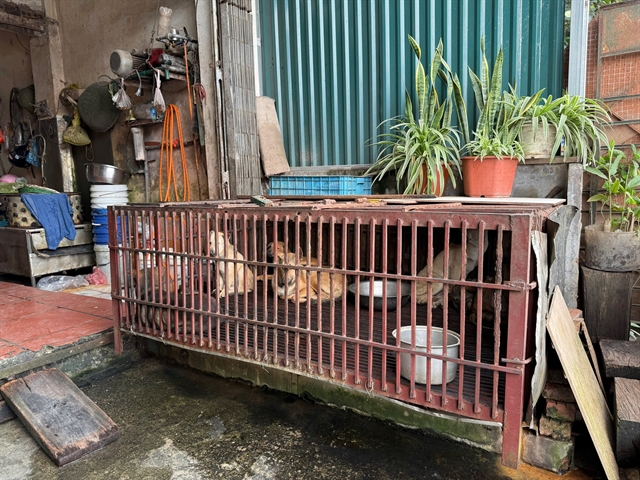 |
| The old iron cage is now just a memory as Ms. Ánh has moved on to a new path. — Photo by Việt Anh |
HÀ NỘI — For over 10 years, Trần Thị Ánh and her husband have been waking up at 3 am every day to prepare goods for the morning market at their small dog-meat restaurant on Hữu Hưng Street, Tây Mỗ Ward, Hà Nội.
As their children grew up, they said they didn't want their parents to continue that business. For that reason, Ánh was the first in the family and in the area to agree to and voluntarily close her dog-meat trade business.
Now, she no longer has to wake up early. Instead, she spends her evenings in front of her phone, learning how to take product photos and write engaging captions for social media. Her new job – running a noodle shop while also selling healthy food products online – is enough to support her family. And she's moving forward, one step at a time.
Ánh is one of the first 24 business households across 14 pilot wards in Hà Nội to register to participate in a livelihood transition programme, leaving behind the dog and cat meat trade to begin a new commercial journey. Behind that decision lies a public-private-civil society partnership model that leverages international expertise and resources - one that specialists and regulatory authorities are recognising as a bright spot worth scaling up.
Persistent problem, new approach
The project pilot model on rabies prevention and sustainable economic development, phased-transitioning dog and cat meat trade activities across 14 wards in Hà Nội, is being implemented by Hà Nội's Department of Livestock, Fisheries and Veterinary Medicine in partnership with Soi Dog Foundation and Vietnamese social enterprise SBCC Vietnam (Social and Behaviour Change Communication for Sustainable Development).
The project was approved by the Hanoi People's Committee on 24 July 2025, and marks the first time a combined intervention model - integrating disease prevention, livelihood transition and behaviour change communication - has been systematically deployed in Hà Nội in this field.
Before organising any training courses, the project team spent months conducting field surveys across all 14 wards, engaging with 113 dog and cat meat businesses and 68 pet service establishments. The purpose was to gain a clear picture of actual conditions and to understand the concerns and aspirations of each business household, forming the evidence base for the most practical support measures possible.
"For the project to go the distance, everything must begin with genuine understanding," said Bùi Thị Duyên, Director of SBCC Vietnam.
"Together with local authorities, we took the time to listen first - and only then did we work alongside people to untangle each obstacle and find a new direction that both aligns with policy direction and sits well with the community."
A public-private-civil society model: harnessing multi-source strength
The strength of this model lies in its multi-stakeholder structure, in which each party's role is clearly defined and mutually reinforcing.
Soi Dog Foundation - an international organisation with over two decades of experience in animal welfare and rabies prevention across Asia - contributes technical expertise, methodology and other resources. SBCC Vietnam is responsible for designing and implementing behaviour change communication interventions, drawing on deep knowledge of the local socio-cultural context. The Hà Nội Department of Livestock, Fisheries and Veterinary Medicine, together with the administrations of the pilot wards, ensures legal grounding, community connectivity and the sustainability of outcomes after the project concludes.
A series of specialised training courses in rabies management and behaviour change communication skills have been delivered to grassroots officials - building internal capacity so that local authorities can independently sustain and scale up results without dependence on external resources. This is the critical mechanism underpinning the model's long-term sustainability.
Behavioural science: the root of the intervention
All project activities are grounded in Social and Behaviour Change Communication (SBCC) methodology - an approach validated over decades across fields ranging from public health to environmental conservation worldwide.
SBCC treats human behaviour as the product of a complex system - encompassing knowledge, beliefs, social norms, and economic environment - and intervenes simultaneously across multiple layers of that system. Rather than relying on emotional appeals or top-down administrative pressure alone, the model creates conditions in which people can reach their own awareness and make their own choices about change.
Community feedback following the interventions has been consistently positive, reflecting a high level of acceptance of this approach.
Early results surpass expectations
To date, eight businesses have voluntarily ceased operations. The fact that 24 households have proactively registered for the livelihood transition programme represents a result that has exceeded the project management board's initial expectations - a particularly encouraging signal given that this trade has been woven into the fabric of these families across multiple generations.
Three online selling skills courses have been delivered in a practical, market-ready format, targeting opportunities participants can act on immediately. A series of livelihood transition training courses has been tailored to the specific needs of different participant groups. In parallel, technical training for rabies management officials and project implementation staff has been conducted continuously, building a capable human resource system that can sustain the work over the long term.
Rabies: a public health challenge that cannot be ignored
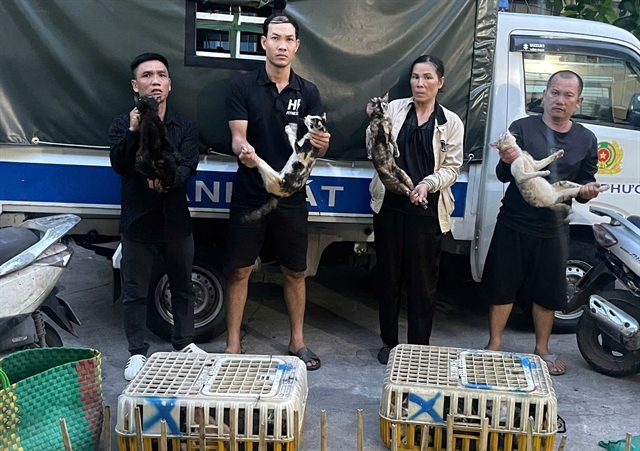
The project is designed around a One Health approach - treating human health, animal health, and environmental health as part of a single, integrated picture. Việt Nam remains among the countries with high rabies mortality rates in the region, and the supply chain of collecting, transporting and slaughtering dogs and cats represents one of the most dangerous pathways for rabies virus transmission. Each business that successfully transitions means one link in that disease transmission chain is permanently severed - a public health benefit that is both tangible and measurable.
Practical experience for Hà Nội during its transition period
Hà Nội today is transforming at an unprecedented pace. Urban expansion, the wave of digital transformation, and local economic restructuring - all of these place urgent demands on livelihood transition for the hundreds of thousands of households currently living from traditional trades, informal occupations, or sectors directly affected by new policies.
The pilot model across 14 wards points to a viable path forward: combining international resources and expertise with genuine engagement from state management bodies; grounding interventions in evidence-based behaviour change science; and placing people at the centre of the transition process rather than treating them merely as passive policy beneficiaries.
This is a model that can - and should - be studied for replication: not only in this particular field, but for any livelihood transition challenge that Hà Nội is facing, or will face, in the years ahead. — VNS
Society
 Society
 Society
 Society
 Society
 Society
 Society
 Society
 Society
 Society
 Society
 Society
 Society
 Society
 Society