 Society

Vietnamese Prime Minister meets Cambodian National Assembly President
1.
|
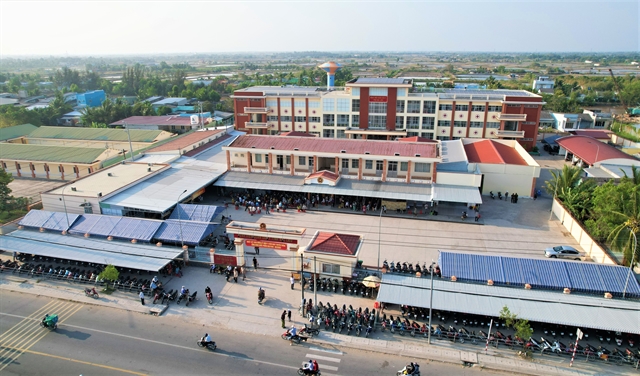
| The Bạc Liêu Military–Civilian Hospital in Cà Mau Province has invested in modern equipment to improve healthcare services. — VNA/VNS Photo |
CÀ MAU – The southernmost province of Cà Mau is stepping up efforts to remove long-standing bottlenecks in its healthcare system as it seeks to improve citizens’ access to advanced medical services.
The move follows Resolution No. 72 issued by the Politburo on September 9, 2025, which sets out breakthrough measures to strengthen public healthcare.
The province views the resolution as a road map for restructuring its healthcare system, placing people at the centre of policy-making and prioritising public health.
By 2030, it aims to provide basic hospital fee exemptions in line with the national health insurance roadmap.
To achieve this, it is enhancing communication to promote a culture of health across daily life while expanding effective models to build trust in public healthcare services.
Its healthcare sector still faces major challenges typical of remote areas.
It has more than 4,880 public healthcare workers, including 1,126 doctors, but workforce shortages and uneven quality remain major constraints.
|
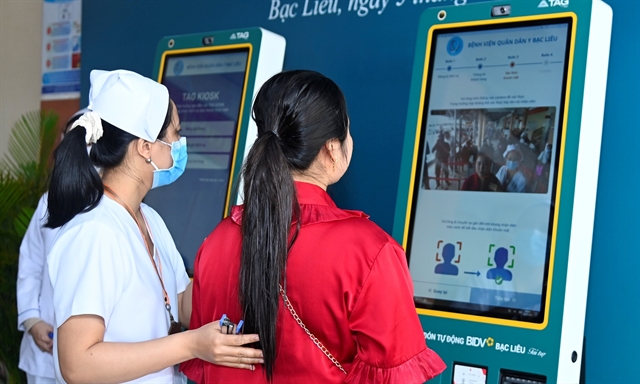
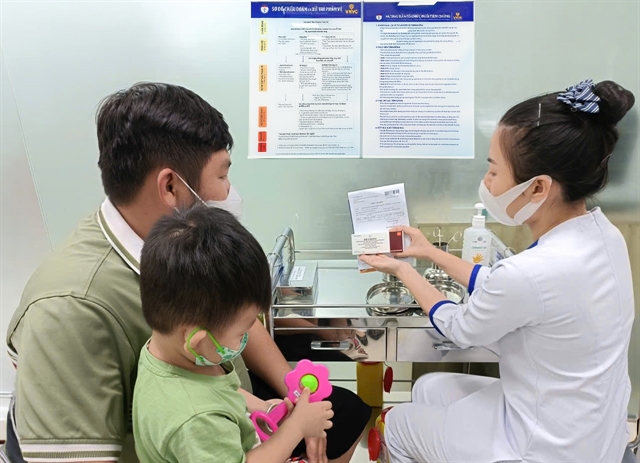
| Medical staff at Bạc Liêu Military–Civilian Hospital in Cà Mau Province guide a resident to register for a check-up at a kiosk, helping reduce waiting times and improve the patient experience. — VNA/VNS Photo |
At a meeting with a Ministry of Health delegation last month, Nguyễn Chí Thanh, director of the Cà Mau Department of Health, said all 64 commune health stations now have doctors, but there are localised staff shortages and ageing facilities.
The province's People’s Committee has approved an infrastructure investment plan worth VNĐ6.05 trillion (US$237 million).
The funding will be used to procure modern medical equipment, including 1.5T MRI scanners, 128-slice CT scanners, digital subtraction angiography systems, and specialised chemotherapy and radiotherapy equipment.
The province is building a 1,200-bed hospital, expected to be completed by the end of this year, which will become the most modern medical centre in the Cửu Long (Mekong) Delta.
It is implementing policies to train and attract high-quality human resources to master advanced techniques such as radiofrequency ablation for liver tumours, vacuum-assisted breast biopsy, intensity-modulated radiation therapy, cerebral vascular intervention and paediatric orthopaedic trauma surgery.
|
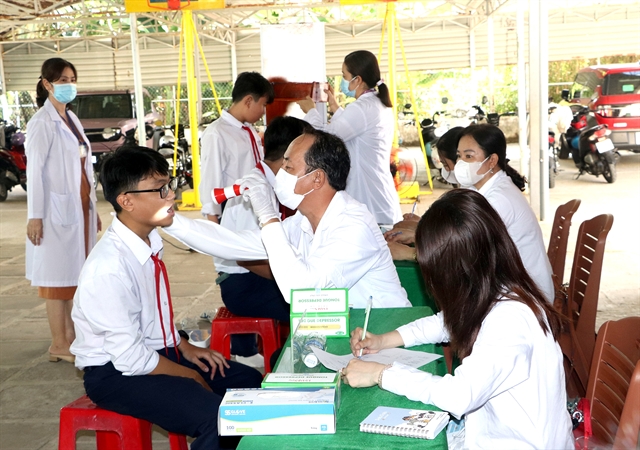
| Health screening being done at Tân Thành Secondary School in Tân Thành Ward on April 7 after the launch of Việt Nam’s National Health Day by the People’s Committee. — VNA/VNS Photo |
Digital transformation has been identified as a central solution to ease the sector’s challenges.
All healthcare facilities in the province are now connected to the Việt Nam Social Insurance Assessment Portal, enabling data sharing.
The use of citizen ID cards for medical services has reached 96.2 per cent.
Hospitals in the province are able to provide nearly 70 per cent of the technical services listed by the Ministry of Health.
By 2027, the province targets that all healthcare facilities will meet advanced standards for information security.
Once a shared data system is completed, each resident will have a unique medical ID, enabling doctors to access lifelong health records anywhere.
This is expected to reduce waiting times and costs for patients.
|
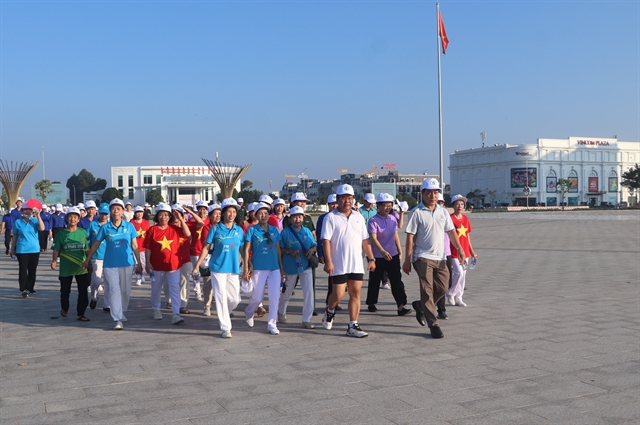
| Officials and residents in Cà Mau Province join a walk at Phan Ngọc Hiển Square on April 7 after the launch of Việt Nam’s National Health Day by the People’s Committee. — VNA/VNS Photo |
Co-operation agreement
The Department of Health and its HCM City counterpart signed a co-operation agreement on April 2 for the 2026–30 period, marking a key step towards making Ca Mau a high-quality healthcare hub in the delta.
Under the deal, the two sides will focus on sharing and applying 55 advanced medical techniques in four key areas: vascular and oncology surgery, orthopaedic trauma surgery, intensive care and paraclinical services, and rehabilitation and high-tech aesthetic treatment.
Eight key healthcare units in Cà Mau will receive direct training from leading hospitals in HCM City.
To prepare, the province has identified training needs for 33 doctors, three medical physicists, 13 technicians, and four nurses.
The support from HCM City is expected to enable Ca Mau to provide the remaining 30 per cent of technical services listed by the Ministry of Health.

|
| The Cà Mau and HCM City Departments of Health on April 2 sign an agreement for supporting healthcare development in the province in the 2026–30 period. — VNA/VNS Photo |
Speaking at the signing ceremony, Nguyễn Minh Luân, deputy chairman of the Cà Mau People’s Committee, said: “The province always pays special attention to investment in the healthcare sector, considering it a key task to improve the quality of public health services.”
He expressed hope that hospitals under the HCM City Department of Health would enhance support for healthcare units in Cà Mau, particularly in technology transfer, high-quality workforce training and digital transformation.
These efforts are key to meeting rising healthcare demand and advancing Cà Mau’s goal of becoming a regional centre for high-quality medical services, he said.
Tăng Chí Thượng, director of the HCM City Department of Health, said: “HCM City will closely follow Cà Mau’s needs to develop specialised healthcare, especially in stroke, cardiovascular disease, oncology, and obstetrics and paediatrics, helping reduce referrals to higher-level hospitals.” — VNS
Society
 Society
 Society
 Society
 Society
 Society
 Society
 Society
 Society
 Society
 Society
 Society
 Society
 Society
 Society