 Society
Vietnamese Prime Minister meets Cambodian National Assembly President
1.
|
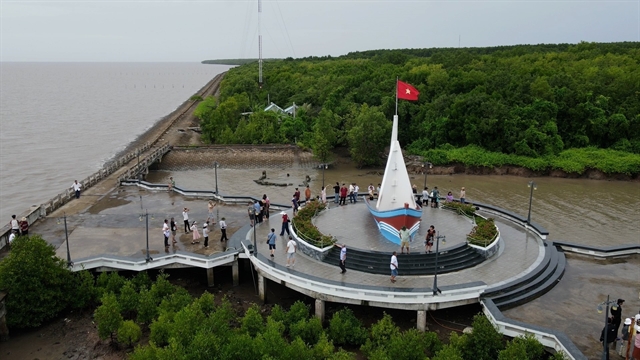
| Cà Mau Cape Tourist Area in Đất Mũi Commune attracts a large number of tourists. — VNA/VNS Photo |
CÀ MAU – The southernmost province of Cà Mau is stepping up international integration efforts to boost exports, attract investment, and strengthen its key economic sectors.
Speaking at a recent conference to review the province’s implementation of international integration, Nguyễn Chí Thiện, Director of the province Department of Industry and Trade, said the province’s integration efforts continue to receive close guidance from the provincial Party Committee and People’s Committee.
Co-ordination among departments and localities has improved, helping integration activities develop more strongly, he said.
The province has 708 active investment projects with a total registered capital of VNĐ344 trillion (US$13 billion), including 31 foreign direct investment projects worth $4.85 billion.
In the first quarter of this year, the province attracted 13 new investment projects with total capital exceeding VNĐ11 trillion ($417 million), alongside strong growth in exports and seafood output.
Export turnover was estimated at $605 million in the first quarter, reaching 21.6 per cent of the annual plan and rising 16.7 per cent year-on-year.
|
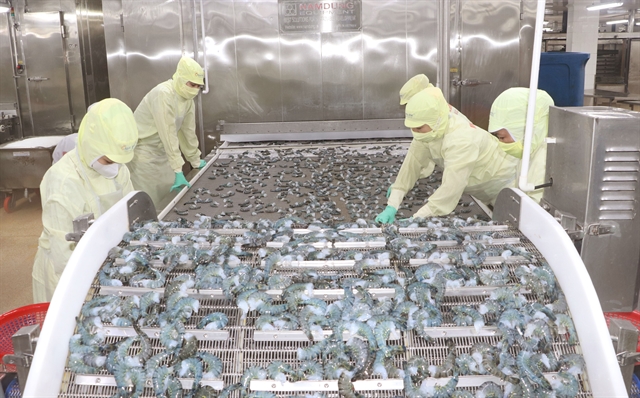
| Seafood enterprises in Cà Mau Province apply science and technology in export processing. — VNA/VNS Photo |
Tô Hoài Phương, Director of the provincial Department of Agriculture and Environment, said international integration offers opportunities for agriculture and seafood processing to maintain growth.
In the first quarter, aquatic output reached an estimated 263,500 tonnes, accounting for 19.7 per cent of the yearly plan and increasing by 5.8 per cent year-on-year.
Large seafood exporters in the province have developed linked farming areas that meet international standards.
These include super-intensive and high-tech shrimp farming models, as well as clean, circular, zero-discharge systems that help protect the environment.
They also include shrimp farms certified under international standards such as the Aquaculture Stewardship Council, Global Good Agricultural Practices, Best Aquaculture Practices, and organic certification.
To meet integration requirements in agriculture, Phương said the agriculture sector will expand ecological shrimp farming, strengthen fishing vessel management to combat illegal, unreported and unregulated fishing, and promote digital transformation.
It will also focus on product traceability, which allows buyers to track the origin of goods to meet international market requirements, he said.
|
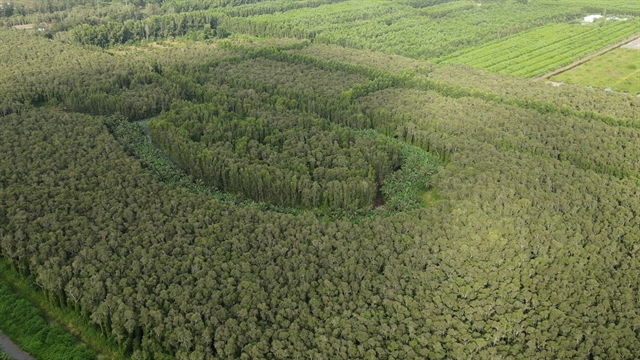
| Mangrove forests at U Minh Hạ National Park in Cà Mau Province boast rich biodiversity. — VNA/VNS Photo |
Nguyễn Quốc Thanh, Director of the provincial Department of Culture, Sports and Tourism, said festivals and tourist sites have attracted more international visitors.
Co-operation with media outlets, particularly the Vietnam News Agency, has helped promote the image and people of Cà Mau to foreigners, contributing to foreign investment attraction, he said.
To maintain growth in international arrivals, the province is renewing its promotion strategy, he said.
“Beyond advertising, Cà Mau needs to develop distinctive tourism highlights based on its mangrove ecosystems and river culture. It will also standardise accommodation and travel services to international standards to improve competitiveness,” he said.
The province welcomed an estimated 2.39 million visitors in the first quarter of this year, including 37,625 international arrivals, up 4.12 per cent year-on-year.
|
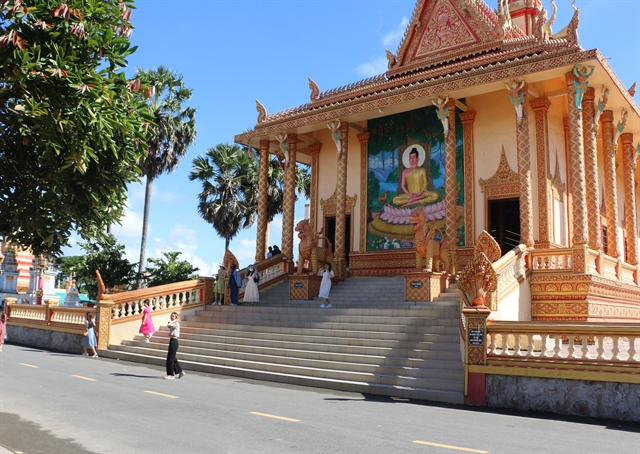
| Xiêm Cán Pagoda is a typical tourist attraction in Cà Mau Province. — VNA/VNS Photo |
Lữ Quang Ngời, Chairman of the provincial People’s Committee, said international integration is not only the task of individual sectors or localities but of the entire political system, business community and society.
The province will continue to enhance international co-operation and seize opportunities to overcome challenges from global political fluctuations, he said.
It will also introduce timely measures to support residents and businesses affected by fuel price volatility, he said.
He urged departments and sectors to improve forecasting capacity for global market trends to better respond to export challenges, while continuing to refine and implement policies on international integration.
They were also asked to closely monitor developments in global politics, trade, export markets and commodity prices.
The province will improve mechanisms for investment and trade promotion, support businesses, and expand both traditional and international markets.
It will continue to promote the application of science and technology in seafood production and processing to meet global demand. — VNS
Society
 Society
 Society
 Society
 Society
 Society
 Society
 Society
 Society
 Society
 Society
 Society
 Society
 Society
 Society