 Society
Commune-level digital transformation app launched
1.
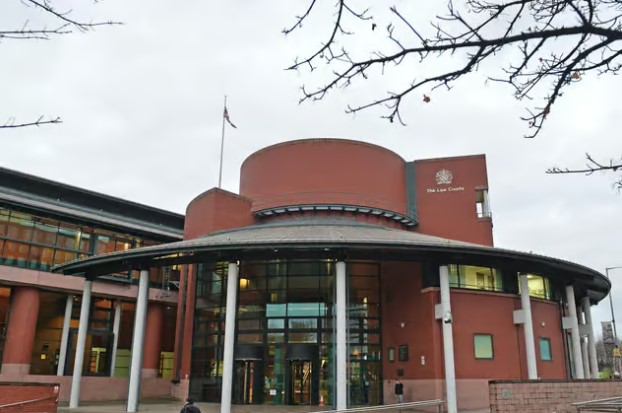 |
| Preston Crown Court in the UK. Photo courtesy of lep.co.uk |
PRESTON A Vietnamese national accused of being involved in the cultivation of more than 250 cannabis plants at a house in the UK told a court he was being held captive and thought he was originally getting a job as a cleaner.
Manh Nguyen, 32, tried to escape from the property in Leyland, Lancashire, but said he was captured by gang bosses who beat him and chained his ankles to stop him fleeing again.
When he appeared before a judge at Preston Crown Court on April 9, Nguyen pleaded guilty to being concerned in the production of cannabis and was sentenced to 41 weeks in prison.
The Lancashire Post newspaper reported that because he had already spent more than six months in jail on remand waiting for a court appearance, he is likely to be released almost immediately. Recorder Fiona Clancy told him his sentence of less than a year fell short of automatic deportation, although the final decision would rest with the Home Office.
David Clarke, prosecuting, said Nguyen entered the UK illegally in the summer of 2023 and had been struggling to find employment. Police raided the house on Canberra Road in September last year after residents raised suspicion about the premises being used for cannabis production.
When they entered, they found Nguyen in the hallway. They also discovered 56 cannabis plants in the downstairs lounge, with 146 in three upstairs bedrooms and a further 50 in the attic. The plants were at various stages of maturity, with a 'substantial' number well-established.
The estimated street value of the drug haul was at least US$70,000, although that did not include the 50 in the attic and 70 small plants in one of the bedrooms, making the potential return much higher.
Officers also found two mobile phones, one of which was described as a 'burner' for use by the drugs gang. It was clear that Nguyen had been living at the address because there was fresh food in the fridge and clothing and toothbrushes in the bathroom.
In a prepared statement to police, he said he had been looking for work and had met a 'Mr Zu' in Liverpool who had offered him a job cleaning the house in Leyland. When he was driven there, he realised it was a cannabis farm and immediately told Mr Zu he didn’t want the job.
He was threatened with physical violence and locked in. At one point, he had tried to escape “because he didn’t want to be involved in the cannabis growing”. But he had been captured and taken back to the house, where his feet were shackled to prevent another escape.
He was beaten and told he had to look after the plants. He was given food and accommodation, but no money. “He was threatened and coerced by Mr Zu and felt he had no choice but to stay,” added David Clarke.
Barrister Constance Halliwell, for Nguyen, said her client had been in the UK illegally for three years and had made an asylum application, which had then been withdrawn. He had been unable to make a fresh application because of the time he had spent in custody on remand. He had been locked in the house, threatened with violence if he didn’t look after the plants and at one time had been shackled by the ankle. “He found he had no choice but to stay,” she explained.
Recorder Clancy said Nguyen’s case did not reach the threshold for modern-day slavery. Under guidelines, she could only sentence him to a maximum of 12 months in prison and, because she had to allow him a 20 per cent reduction for pleading guilty, he did not meet the criteria for automatic deportation (12 months or more).
She said he had played a lesser role in the cannabis cultivation, and he had no previous convictions in the UK. She ordered the destruction of the drugs and paraphernalia found on Canberra Road and the confiscation of the two mobile phones. VNS
Society
 Society
 Society
 Society
 Society
 Society
 Society
 Society
 Society
 Society
 Society
 Society
 Society
 Society
 Society