 Society

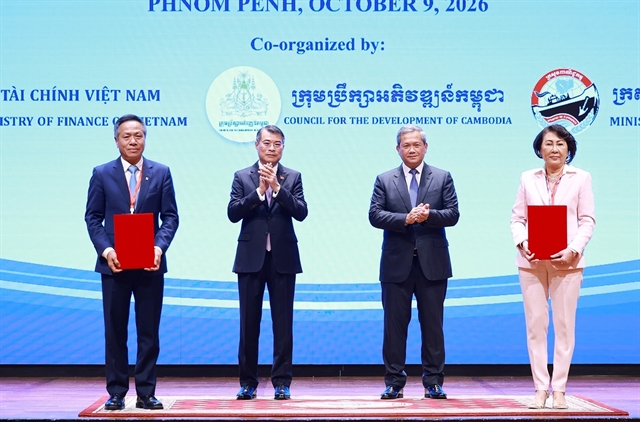
Vietnamese Prime Minister meets Cambodian National Assembly President
1.
|
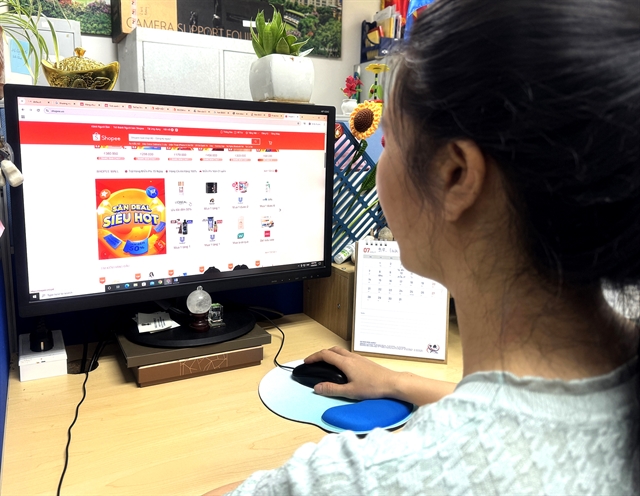
| Online shopping is a common habit among office workers. — VNA/VNS Photos Hương Giang |
HÀ NỘI — The explosive growth of social media and e-commerce has transformed how people shop, but it has also fuelled a surge in misleading advertising and counterfeit goods, leaving consumers increasingly exposed to risk.
What appears to be a convenient digital marketplace is, in many cases, riddled with sophisticated traps. With a single click, trust can quickly be exchanged for fake or substandard products, online newspaper Vietnamplus.vn reported.
As the line between genuine and counterfeit continues to blur, tightening control over online advertising and sales is becoming an urgent task to protect both consumers and the integrity of the market.
A growing threat to consumers
Concerns over false advertising have been mounting across the country. By mid-2025, voters in Hà Nội, Bình Phước and Kiên Giang had reported cases of well-known individuals promoting products with exaggerated or unverified claims. Many of these goods had not undergone proper quality checks, misleading consumers and posing potential health risks.
By early 2026, voters in Đắk Lắk and Ninh Bình raised similar concerns, particularly over the unchecked promotion and sale of fake and low-quality goods on social media platforms. Health supplements were singled out as a major risk. They urged the Government to strengthen oversight, warning that weak controls could undermine consumer rights, public health and social order.
In response, the Ministry of Culture, Sports and Tourism has pledged to tighten management. Efforts are underway to refine the legal framework governing online services and enforce a newly issued code of conduct for digital platforms, aimed at promoting responsible behaviour among organisations and individuals.
Authorities are also drafting amendments to existing regulations to introduce stronger penalties, while stepping up inspections and requiring major platforms such as Facebook, Google and TikTok to remove illegal advertisements. Training programmes targeting influencers and content creators are also being expanded.
Despite these measures, violations remain widespread and increasingly sophisticated. From cosmetics and dietary supplements to household goods, products are often marketed with exaggerated claims, edited images and persuasive messaging designed to exploit consumer psychology.
|
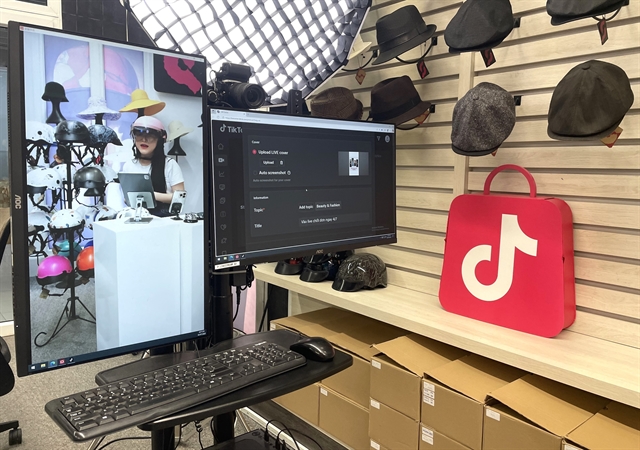
| TikTok Shop is one of the fastest-growing platforms. |
Many sellers operate anonymously, making it difficult to trace responsibility. Once profits are made, accounts can disappear overnight, leaving consumers with little recourse.
Recent cases highlight the scale of the problem. Authorities have uncovered large networks distributing counterfeit cosmetics, promoted with bold claims such as whitening in seven days or permanent acne removal. In some instances, users suffered skin irritation or burns after using these products.
HCM City’s economic police have dismantled a large-scale counterfeit cosmetics ring, arresting five suspects and seizing more than 10,000 fake products bearing well-known international brands, many falsely labelled Made in USA or Made in Thailand.
Similarly, many items advertised as imported or 100 per cent genuine supplements have turned out to be unverified goods of unknown origin, sometimes promoted through fake accounts or even endorsed by public figures to build trust.
Nguyễn Thị L., a resident of Bắc Ninh Province, said she had repeatedly purchased online remedies for chronic knee pain after seeing advertisements promising rapid results.
“None of them worked,” she said, adding that she suspects the products were counterfeit and calling for stricter penalties.
Nguyễn Hải Yến, a student in Hà Nội, shared a similar experience. After buying a discounted Korean moisturiser online, she received a product with a strong chemical smell and unclear labelling. The seller’s page disappeared soon after.
“Good advertising doesn’t mean a good product,” she said. “People need to be far more cautious when shopping online.”
Closing gaps, rebuilding trust
Experts say the problem is being driven by the rapid pace of technological change, which has outstripped regulatory frameworks and enforcement tools. Existing regulations remain fragmented, with some lacking clarity or sufficient deterrent effect.
At the same time, profit-driven sellers continue to exploit loopholes, while many consumers lack the knowledge to distinguish genuine products from fakes. Stronger and more coherent regulation is therefore essential. This includes updating legal frameworks, tightening rules for online advertising and sales, especially for sensitive products, and increasing penalties to deter violations.
The draft revised Penal Code, prepared by the Ministry of Public Security, adds over 160 offences and raises fines. It introduces prison sentences for producing or trading counterfeit food and food additives, including on e-commerce platforms.
Fines would double, from VNĐ20-100 million (US$760-$3,795) to VNĐ40-200 million; businesses could face VNĐ18-36 billion fines and asset confiscation. Individuals may be banned from practising for 1-5 years. Producing or selling fake food on platforms with 500 or more viewers could carry five to 10 years’ imprisonment, and firms causing major harm may face permanent closure.
Authorities are also being urged to make greater use of technologies such as artificial intelligence and big data to detect and handle violations more effectively. Meanwhile, e-commerce and social media platforms must take greater responsibility for monitoring content and sellers.
Consumer awareness is another critical factor. Public education campaigns can help people identify counterfeit goods and make safer purchasing decisions, reducing vulnerability to fraud.
The role of the community and media is equally important. Encouraging the reporting of violations and ensuring timely coverage of misconduct can help build social pressure against dishonest practices.
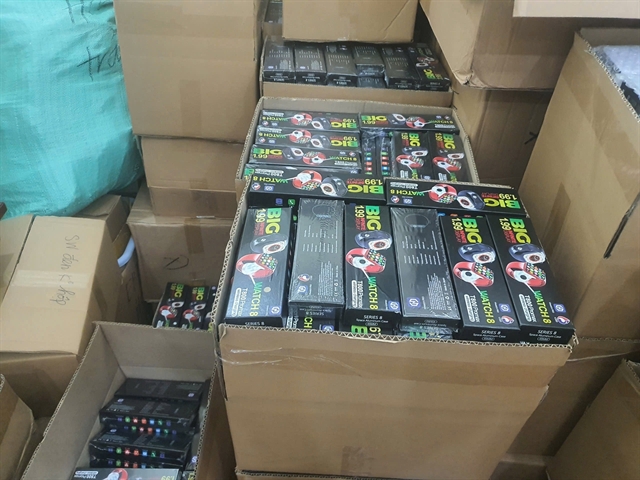
|
| Items seized by authorities during a raid on a large-scale counterfeit goods ring operating under the cover of e‑commerce in Hà Nội. |
A shared responsibility
According to the Ministry of Public Security, thousands of cases involving counterfeit food products were uncovered in 2025, with hundreds leading to criminal prosecution, highlighting the seriousness of the issue.
In one notable case, the People’s Court of HCM City tried individuals accused of deceiving consumers through livestream sales of dietary supplements, underlining the growing misuse of social media influence for commercial gain.
While Việt Nam has introduced key legislation, including the Law on Advertising and the Law on Consumer Protection, gaps remain, particularly in addressing cross-border digital platforms.
Experts warn that without stronger legal mechanisms and more effective monitoring tools, violations will continue to grow in scale and complexity.
Dr Nguyễn Đức Tài, director of the Institute for Applied Science, Technology and Law, said Việt Nam lacks mechanisms and technical tools to detect online fraud, and influencer-driven scams are particularly dangerous.
A tight legal framework and transparent monitoring system are urgently needed to protect markets, consumers and legitimate businesses. Regulators, companies and consumers must act decisively, as only coordinated efforts can stop online counterfeits and restore trust in a healthy, sustainable digital marketplace. — VNS
Society
 Society
 Society
 Society
 Society
 Society
 Society
 Society
 Society
 Society
 Society
 Society
 Society
 Society
 Society